Why Install Artificial Grass Around Your Pool

Emily Greenfield
February 7, 2022
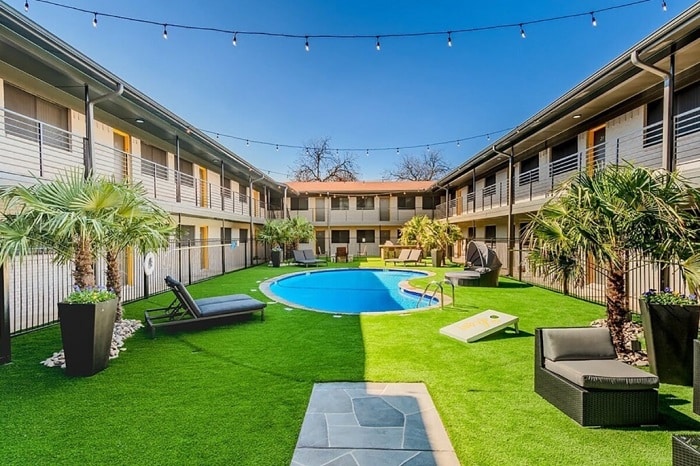
While most people first think of paving when it comes to surfacing around their residential pool, pool owners are increasingly turning to artificial turf instead. Synthetic grass offers a number of benefits over other surfacing options that make it safer and easier to maintain, as well as looking great and being more cost-effective than paving.
So why are Las Vegas pool owners choosing to install artificial grass around their pools?
Artificial turf is a great non-slip surface. Besides increasing your grip with a more textured surface, artificial grass around pool also allows water to drain through to the ground, reducing the risk of slipping due to puddles and pooled water.
If you do fall, artificial grass also provides a softer and less abrasive surface to land on, reducing the chance of bruises and grazes, as well as more serious injuries that can be caused by landing on hard paving.
Keeping your pool clean can require the use of a range of chemicals that can stain surfaces and damage plant life, giving your yard an unsightly appearance around the pool. In contrast, high quality artificial turf around pool is not affected by the chemicals you use in your pool. As a result, you don’t need to worry about every splash damaging your lawn.
Paving can easily become discolored due to water from your pool and exposure to the sun. Paving also needs to be sealed on a regular basis, which can be both time-consuming and costly. Furthermore, it can take frequent jet washing to keep the paving around your swimming pool looking pristine.
Synthetic grass does not have these problems, and its color does not fade as a result of weathering. It also prevents the growth of weeds, which can be a major irritant for pool owners with a paving surround.
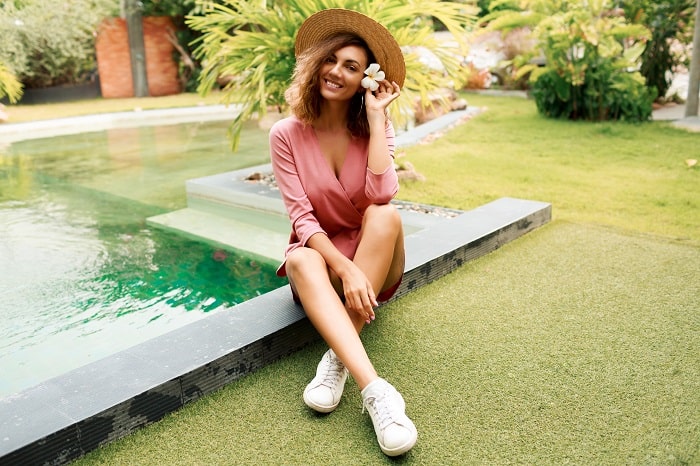
Artificial grass can withstand the wear and tear of kids and pets running around, and artificial turf requires very little work to maintain. With the right maintenance, a quality artificial grass installation can last 20 to 25 years and still look as good as new, backed by Festival Turf’s 15-year warranty. In most cases, you will simply need to brush the turf to remove debris once a fortnight or so.
Artificial turf also stands up to heavy lawn furniture without becoming creased or damaged, so you can pull your sun loungers up to the pool without worrying about damaging your lawn.
Drainage is one of the biggest advantages artificial turf has over paving or real grass around a pool. Quality turf uses a perforated backing that lets water pass through into the ground instead of pooling on the surface, which is exactly what you want when kids are running in and out of the water all day. For the full breakdown of how this works, see our guide to artificial grass drainage.
Maintaining a real grass lawn around a pool in a desert climate takes a serious amount of water, fuel, and often pesticides that can wash into the pool itself. Artificial grass removes all of that. For more on the environmental case for synthetic turf, read our guide on eco-friendly artificial grass.
Pool areas deal with constant moisture, splashing, sunscreen residue, and humidity, all things that can lead to odor or mold if a surface isn’t built to handle it. Quality artificial turf is designed with a perforated, breathable backing that prevents water and moisture from getting trapped underneath, which is where mold and mildew typically start.
If you’re comparing turf options, ask about infill materials designed to resist bacteria growth. For more on keeping your turf smelling fresh long-term, see our guides on artificial grass odor removal and preventing mold on artificial turf.
Artificial grass around a pool is a strong upgrade, but it’s worth going in with realistic expectations. Proper installation matters more here than almost anywhere else in your yard: the base underneath needs to be graded and compacted correctly so water actually drains the way it’s supposed to, rather than pooling at the edges.
If you already have concrete or pavers around your pool, turf can often be installed directly over that existing hardscape, which keeps costs down and avoids a full demo. Talk with a licensed installer about your specific pool deck setup before you buy, since drainage needs can vary depending on what’s underneath.
This is also a good time to think about maintenance basics like brushing turf fibers periodically to keep them upright, covered in more detail in our artificial turf maintenance guide.
Unlike paving, which can become uncomfortably hot in the sun, artificial grass is cool and soft on bare feet, making it the ideal surface for a pool surround. It also looks great, giving you a green, well-trimmed lawn all year round that won’t be damaged or discolored by your pool use. To discuss the best synthetic turf options for your pool surround, get in touch with us today.
This is one of the most common questions pool owners ask, and it’s a fair one in Sun Belt climates. Any surface, including concrete, pavers, and real grass, heats up in direct summer sun. Artificial grass is no exception, but there are ways to manage it.
Choosing turf with a lighter color palette and cooling infill options can significantly reduce surface temperature compared to standard turf. Placing your poolside turf in a spot with partial shade from an umbrella, pergola, or nearby structure also helps keep it comfortable underfoot during peak afternoon heat. For a full rundown of cooling options, see our guide on how to keep artificial grass cool.
Compare that to bare concrete or pavers, which can reach painful temperatures in direct sun with no cooling options at all. In this comparison, artificial grass is still the more comfortable choice for bare feet.
Any surface in direct sun will warm up, including artificial grass, concrete, and pavers. Choosing lighter-colored turf, adding cooling infill, and placing turf in a partially shaded area all help keep it comfortable underfoot.
No, artificial grass provides better traction than wet concrete or paving because of its textured surface and drainage backing, which prevents water from pooling on top.
Quality artificial turf is designed to resist chlorine and saltwater splash without fading or breaking down, unlike real grass, which can be damaged by regular chemical exposure.
In many cases, yes. Turf can often be installed directly over existing concrete or pavers, which can reduce cost and installation time. A licensed installer can assess your specific setup.
With proper installation and basic maintenance, quality artificial grass typically lasts 20 to 25 years, backed by Festival Turf’s 15-year warranty.
You can also find us on:

 Benefits of Artificial Grass for Playgrounds: A Safer, Longer-Lasting Surfa...