The Complete Guide to Artificial Grass Odor Removal for Pet Owners

Emily Greenfield
February 13, 2026
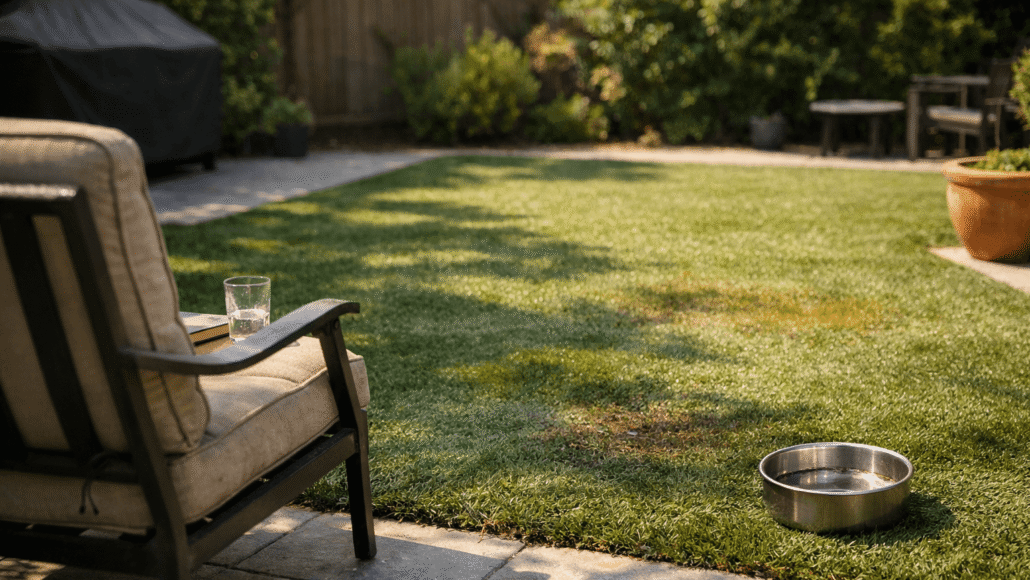

It’s a hot Saturday afternoon, and instead of fresh air, you’re greeted by a sharp, ammonia-heavy stench. You traded your mower for a synthetic surface to save time, yet the “dog smell” has become an unavoidable barrier to enjoying your backyard.
Unlike natural grass, which uses bacteria to recycle waste, synthetic turf is an inert polymer that simply traps uric acid. This waste crystallizes and bonds to the blades and backing, turning your yard into a source of frustration without a rigorous artificial grass odor removal strategy.
Before you can fix the smell, you’ve got to diagnose why it’s occurring. Usually, the issue stems from either the way the lawn was built or the specific biological habits of your pets.
The most common cause of chronic odor is poor synthetic grass drainage. Many installers use a “road base” composed of gravel mixed with fine dust, and when you compact this material, the dust fills every void to create a surface as hard and impermeable as concrete. Urine passes through the artificial turf but hits this compacted layer and pools, creating a septic, anaerobic environment just 2–3 inches below the surface.
To fix this, you need a sub-base of clean, crushed angular stone without fines. This creates a layer with high void space that allows rapid vertical drainage. You should also avoid using a weed barrier directly under the turf in pet zones, since this fabric acts like a diaper that traps organic solids and urine. Over time, the fabric becomes a urine-soaked rag that’s impossible to clean without removing the entire lawn.
Even with proper drainage, your pet’s biology creates its own challenges. When your dog urinates, the liquid consists of 91–96% water and a small percentage of organic compounds like urea and uric acid. While the water evaporates, the uric acid stays behind to form microscopic crystals that are insoluble in water (with a solubility of only 60 mg/L at 20°C), which is why a standard hose rinse won’t dissolve them.
Over time, bacteria secrete a slimy matrix called a “biofilm” around these crystals and fibers, forming a shield that protects odor-causing bacteria from simple detergents. Some artificial grass for dogs includes antimicrobial technology to help fight this, but heat remains an enemy. On hot days, synthetic turf can reach surface temperatures up to 200°F, accelerating the bacterial reaction and making the ammonia smell significantly worse.
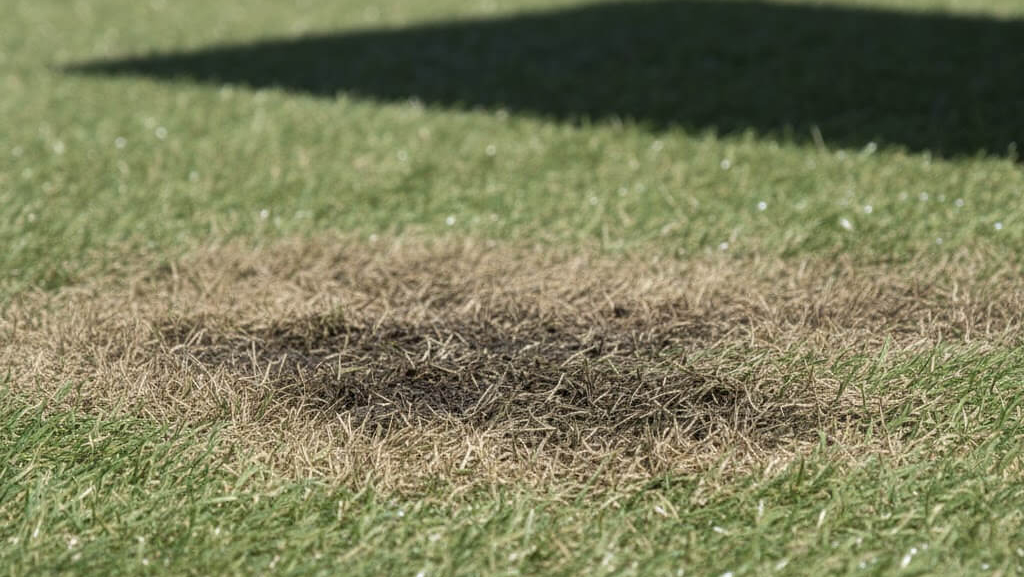
Now that you understand the causes, you’ve got to move beyond surface cleaning to restore your lawn. Follow this systematic routine to attack the odor at the molecular level.
Don’t let solid waste sit. Pick up feces as soon as you see them, since solids break down quickly in high heat and liquefy into the thatch layer. If residue remains, use a stiff-bristled nylon brush and a mild soap solution to scrub the spot immediately. Skipping this step allows the organic matter to feed bacterial colonies that cause long-term odors.
Once you’ve removed solids, dilution becomes your first line of defense. You should flush your pet’s favorite potty spots with water at least 1–2 times weekly to prevent urea from reaching high concentrations and to stop the formation of heavy crystal deposits. Targeted rinsing is more effective than a light sprinkle over the entire yard, so aim to saturate the area until water flushes contaminants through the backing and into the stone base.
Water alone won’t solve the problem because it can’t break down uric acid. For effective sanitation, you need an enzymatic turf cleaner for dogs. These cleaners use bio-engineered proteins that act like a “lock and key” to digest specific substrates.
For best results, apply the cleaner in the evening or on a cool day, since enzymes must remain wet to work and bacterial action stops if the solution dries out too fast. Saturate the area heavily so the fluid reaches the sub-base just as the urine did. Proper artificial turf maintenance includes knowing which cleaning solutions are safe for synthetic fibers and won’t degrade UV coatings over time.
Beyond cleaning, your choice of infill (the granular material that keeps blades upright) plays a critical role in odor control. Standard silica sand is a poor choice for turf for pets because it traps moisture and urine, but zeolite works as an effective outdoor dog odor eliminator.
This volcanic mineral has a cation exchange capacity, meaning it works like a molecular sponge that traps ammonium ions before they can turn into ammonia gas. Check your infill levels annually and top it up if coverage drops below the recommended 1–3 lbs per square foot to maintain its odor-neutralizing capacity.
Sometimes the waste reservoir in the sub-base is simply too large for home treatments. If you’ve neglected the yard for 6–12 months, you might need a professional deep clean. Pros use extraction machines that inject hot water and enzymes into the turf while simultaneously vacuuming the dirty liquid out, physically removing the dissolved crystals from the system.
Cleaning solves immediate problems, but consistency is what separates a fresh yard from a failed investment. How do you maintain artificial grass effectively? Treat your turf like a biological filter that needs regular servicing.
Use this schedule to stay ahead of the “off-gassing” effect:
Following this schedule consistently prevents odor buildup. Power brooms and other artificial grass products designed for synthetic turf make routine maintenance faster and more effective.
While maintenance keeps odors at bay, smart design in the planning stage can prevent them altogether. Creative artificial grass and paving ideas let you create designated “potty zones,” and by using pavers or large stepping stones to break up the yard, you reduce the surface area where urine can hide.
If you’re installing indoor fake grass in a sunroom or apartment, you’ll need a different approach: use a tray system with a drainage drawer, since indoor systems can’t flush waste into the soil and require manual cleaning 100% of the time.
Even with a solid routine, certain common errors can damage your investment or worsen the smell while you’re focused on cleanliness.
Avoiding these pitfalls ensures your maintenance efforts aren’t undermined by harmful chemicals.

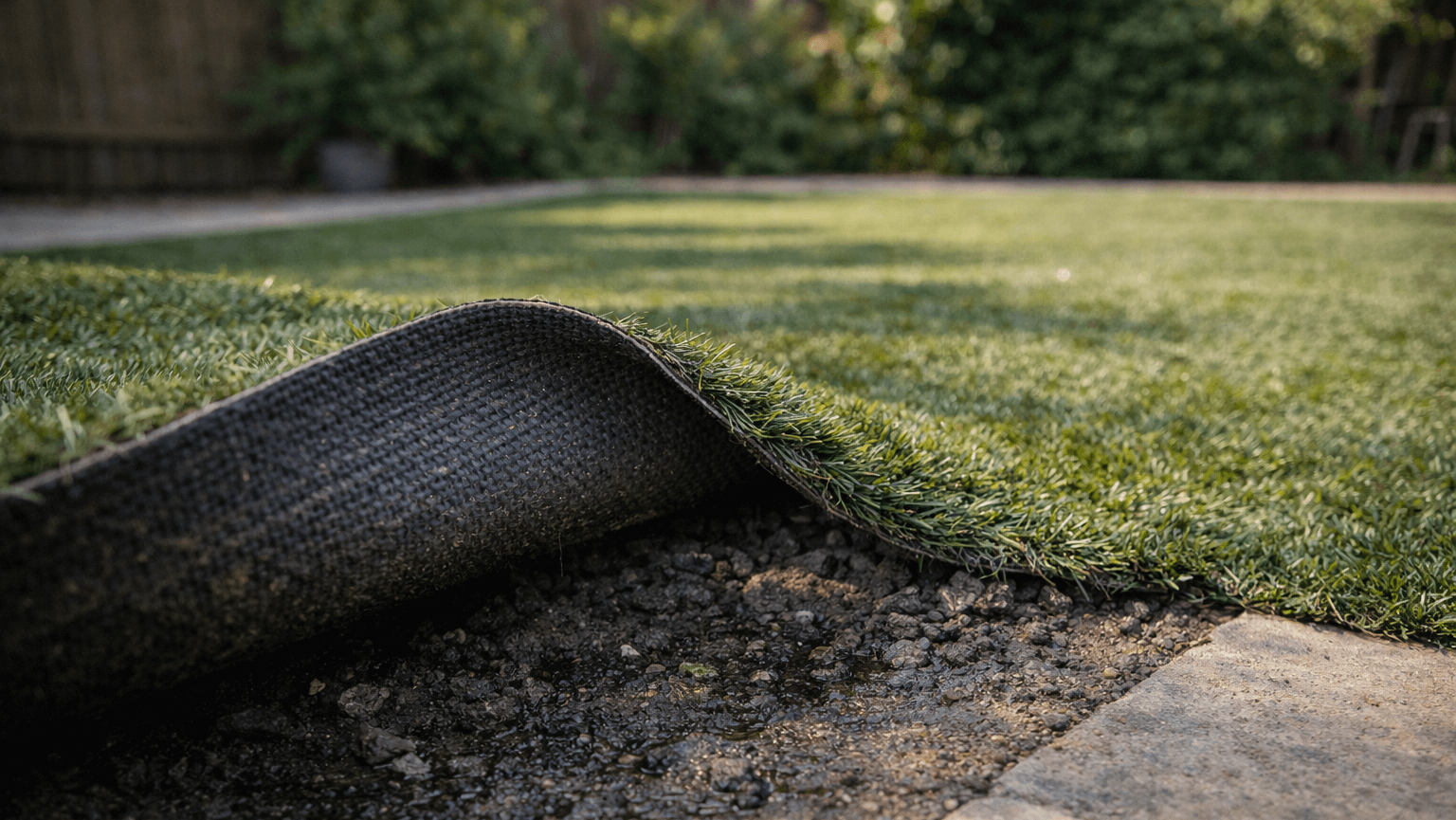
If you’ve cleaned the surface and the smell remains, the problem is likely deep in the sub-base, where basic artificial grass odor removal techniques won’t reach. You may have a “swamp effect” where urine is trapped between the turf and the soil, which means you might need to pull back a corner of the turf to inspect the base for sludge buildup.
How do you cut artificial grass for repairs? Use a sharp blade on the underside, cutting along the stitch rows. If you find the stone base is clogged with organic fines or has failed due to compaction, you may need to excavate the affected base material and rebuild the sub-base with proper drainage aggregate.
In some cases, however, the damage runs too deep for repairs alone. Understanding the different types of artificial grass and their drainage ratings can help you decide if a complete replacement is necessary, especially for pet turf used in tight side yards where ventilation is poor.

Successful artificial grass odor removal depends on a systemic approach that includes installation engineering, active infills like zeolite, and biological maintenance with enzymes. If you view your yard as a biological filter rather than a plastic rug, you can keep it fresh with minimal effort. Don’t wait for the smell to become unbearable. A small amount of weekly maintenance ensures your lawn remains a clean space for your family and your pets.

