Types of Artificial Grass: Which Is Right for You?

Emily Greenfield
September 17, 2024
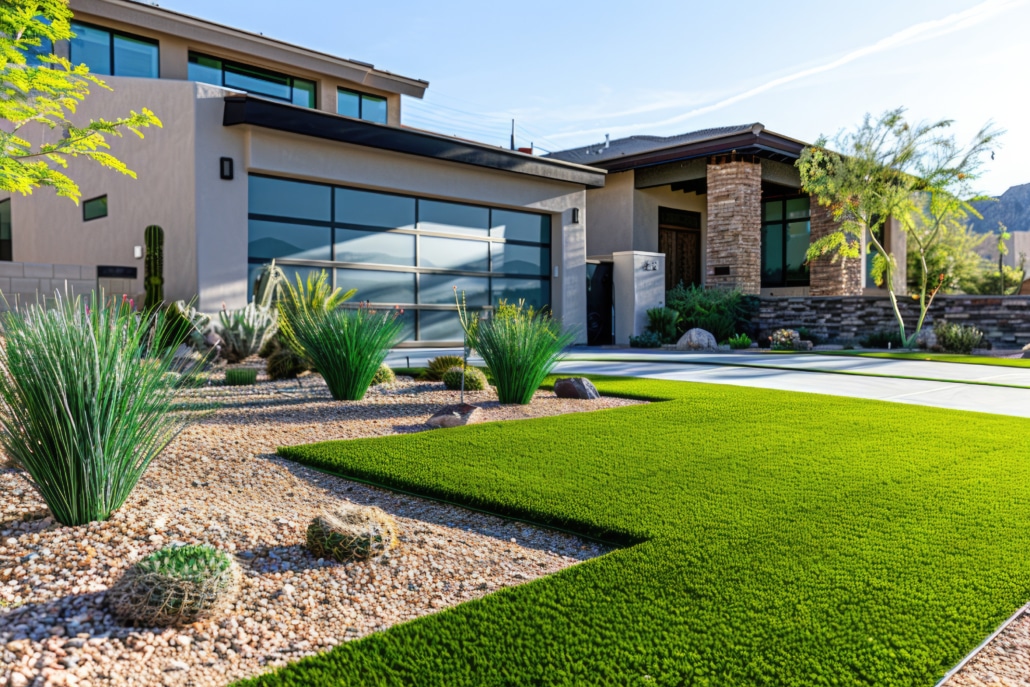
There are three main types of artificial grass by material (polyethylene, polypropylene, and nylon), three types by fiber structure (monofilament, slit-film, and curled thatch yarn), and seven types by application, from residential lawns to putting greens, pool surrounds, and event turf. The right choice depends on where the turf goes, who’s using the space, and how much wear it needs to survive.
This guide breaks down every type of artificial grass, what it’s actually made of, and which use case it fits best. Use the comparison table below for a quick answer, or keep reading for the full breakdown.
| Type | Material | Fiber Style | Typical Pile Height | Best For |
|---|---|---|---|---|
| Landscape turf | Polyethylene | Monofilament | 1.5″ to 2″ | Residential lawns, backyards |
| Pet turf | Polyethylene, polyurethane backing | Monofilament | 1.25″ to 1.65″ | Dog runs, yards with pets |
| Putting green turf | Nylon or polypropylene blend | Slit-film, textured | Under 0.75″ | Golf greens, short-game practice |
| Playground turf | Polyethylene | Monofilament with thatch | 1″ to 1.5″ | Play areas, daycares, parks |
| Pool turf | Polyethylene | Monofilament | 1″ to 1.5″ | Pool decks, patios |
| Sports and event turf | Nylon or polyethylene blend | Slit-film, dual-fiber | 0.75″ to 1.5″ | Athletic fields, festivals, temporary installs |
| Commercial and decorative turf | Polypropylene | Fibrillated | Under 1″ | Rooftops, low-traffic display areas |
Every type of artificial grass starts with one of three base materials. Each has a different balance of softness, durability, and cost.
Polyethylene is the most common material in landscape turf, and for good reason. It has a soft, natural feel underfoot, resists UV fading, and holds up well in both high heat and heavy foot traffic. It’s the material behind most residential lawns, pet areas, and playground turf because it balances realism with durability.
Polypropylene is the most budget-friendly option. It has a softer feel than nylon but flattens more easily under pressure and performs worse in extreme heat, which makes it a better fit for low-traffic or decorative spaces like rooftop displays than for a backyard that sees daily use.
Nylon holds its shape under heavy use and extreme temperatures, which is why it shows up most often in putting greens and sports applications. That strength comes with a stiffer feel and a higher price point, so it’s rarely the right call for a soft residential lawn.
Blended or mixed-fiber turf combines two materials, most often nylon and polyethylene, to balance the durability of one with the softness of the other. It’s a middle-ground option for spaces that need to handle real wear and tear without feeling harsh underfoot.
Material is only half the story. How the individual fibers are shaped changes how the artificial grass looks, drains, and performs, and it’s a distinction most buying guides leave out entirely.
Monofilament fibers are single, rounded blades that stand upright, the same way real grass blades do. This is what gives landscape and pet turf their natural look and consistent ball roll on putting greens.
Slit-film fibers are wider, flatter ribbons that are often crosshatched together. They’re built to encapsulate infill and absorb heavy impact, which makes them common in sports and high-traffic commercial turf.
Curled or textured yarn is added as a thatch layer beneath the main blades to mimic the look of dead grass at the base of a real lawn. It adds realism to landscape turf and isn’t typically used on putting greens or sports fields, where a cleaner surface matters more than appearance.
Knowing the fiber structure matters as much as knowing the material. A polyethylene turf with monofilament fibers and one with slit-film fibers can look and perform very differently, even though they’re technically the same base material.
The backing is the part of artificial grass most buyers never think about until something goes wrong, usually odor. Quality turf has two backing layers: a primary woven layer the fibers are stitched into, and a secondary layer that seals everything in place.
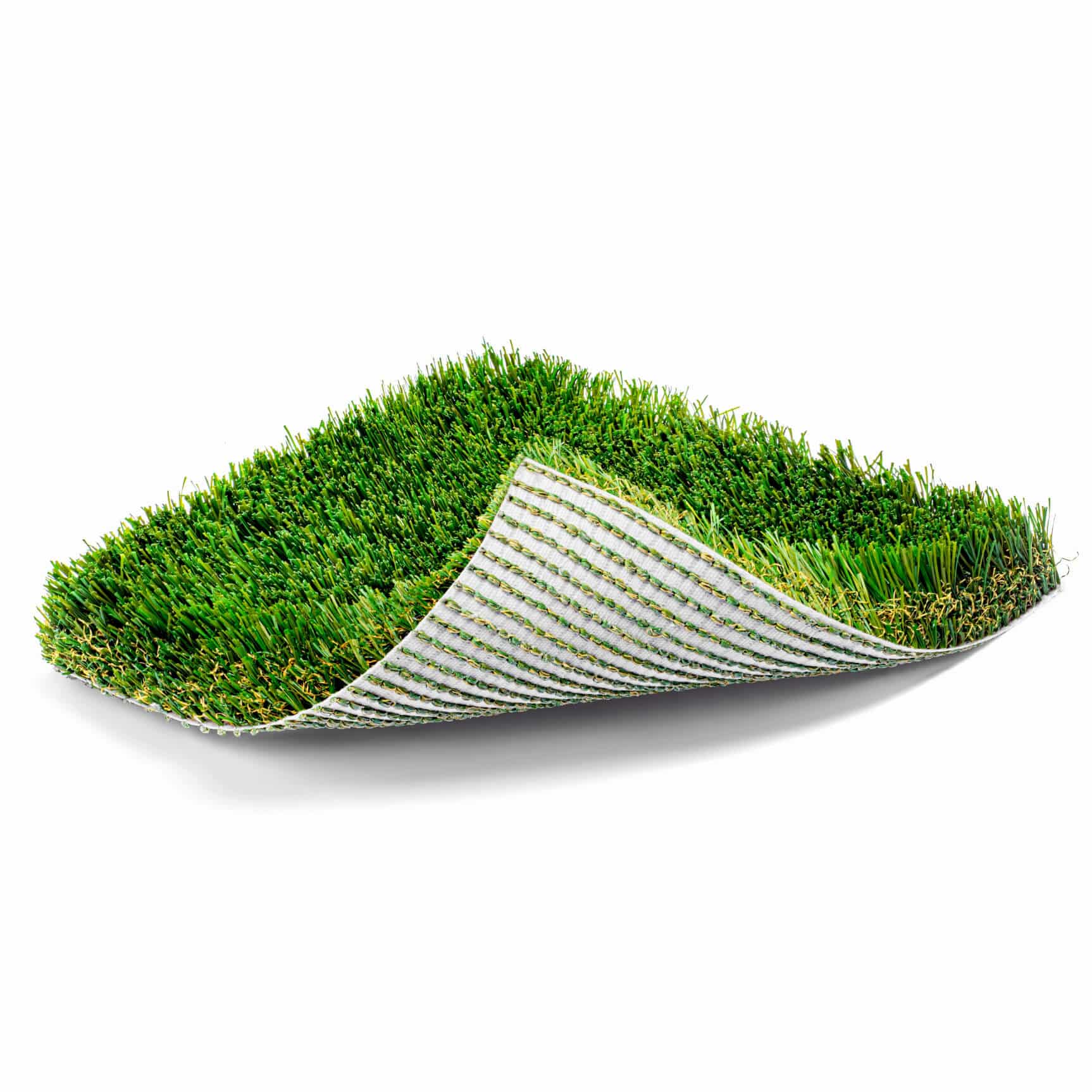
That secondary layer is where material choice matters most. Latex backing is common in lower-cost turf, but it traps odor, which becomes a real problem in pet areas over time. Polyurethane backing doesn’t hold onto odor the same way, which is why it’s the standard across Festival Turf’s pet-suitable product lines.
Drainage rate is the other backing-related spec worth checking. Look for a perforated backing that drains at 40 inches per hour or more per square yard. That’s fast enough to clear a pool deck minutes after a swim or handle a monsoon downpour without pooling. Pairing the right backing with the right infill matters just as much, especially in pet and high-moisture areas where odor control is the priority.
Material and fiber structure tell you what the turf is made of. Application tells you where it belongs.
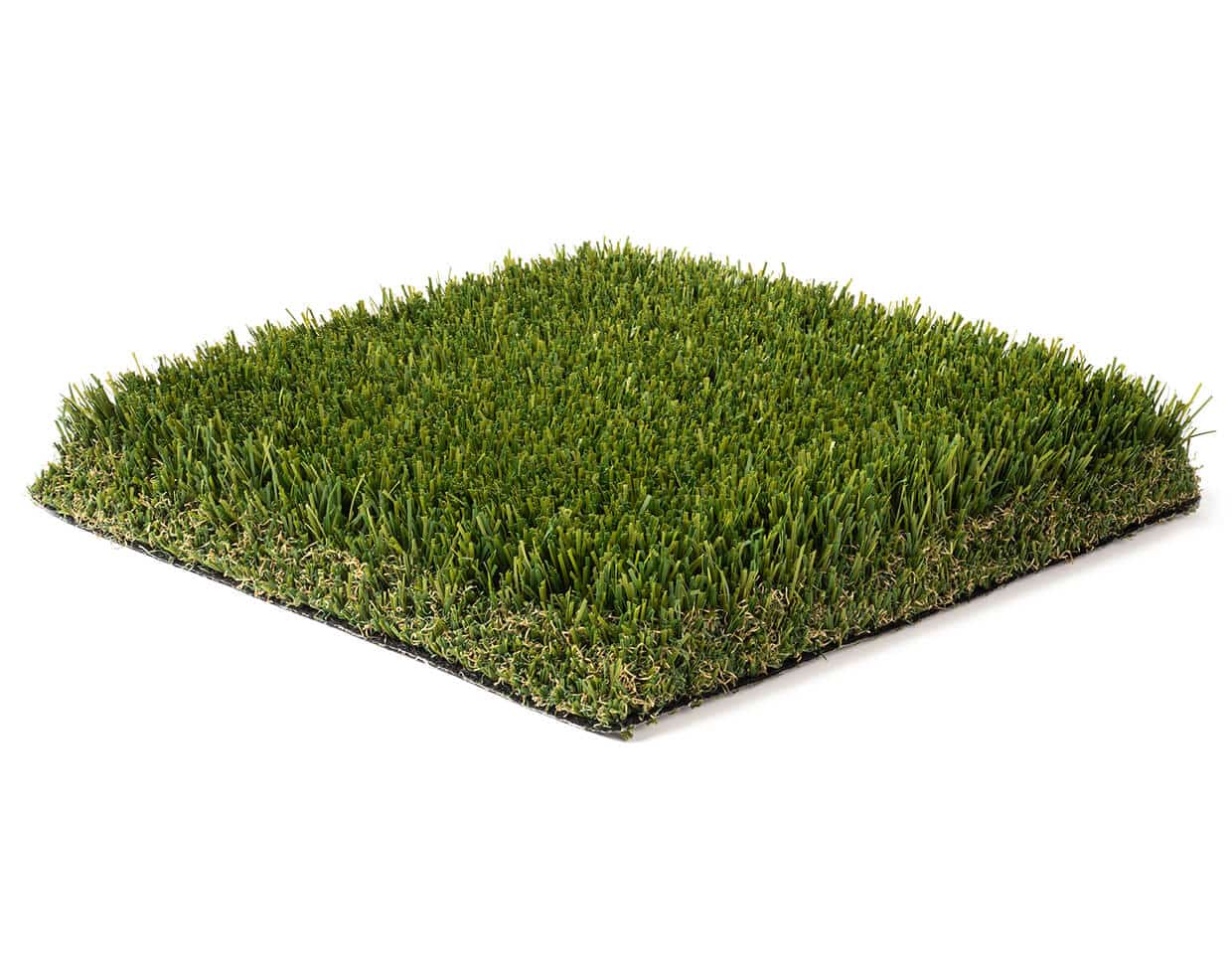
This is the type most homeowners picture: a soft, realistic polyethylene lawn built for everyday use across a backyard, front yard, or side lot. It should hold up to moderate foot traffic, stay cool enough to walk on barefoot, and drain quickly after rain.
Pet turf needs a shorter pile height for easier waste cleanup, a polyurethane backing that won’t trap odor, and fast drainage to handle repeated use in the same spots. Antimicrobial infill options add another layer of odor control for households with multiple dogs.

Putting green turf uses a short, dense pile, often nylon or a nylon blend, to replicate true ball roll. Pile height typically stays under three-quarters of an inch, since anything longer slows the ball down and looks less like a real green.
Safety comes first with playground turf. A cushioned pad underneath the turf absorbs impact from falls, and a soft, non-abrasive polyethylene blade keeps skin safe during active play. Good drainage also means the surface is usable again minutes after rain.
Turf around a pool needs to resist chlorine, drain fast, and stay slip-resistant when wet. A shorter pile height keeps the surface comfortable barefoot while standing up to constant splash exposure.
Athletic fields need slit-film or dual-fiber turf built to handle cleats, sliding, and constant impact. The same durability profile makes this category the right fit for temporary event installations, from festival grounds to activation spaces, where the surface has to survive a weekend of heavy foot traffic without matting down.
Schools, gyms, hospitals, rooftops, and even memorial spaces each have different demands, but they share a need for low maintenance and consistent appearance at scale. Rooftop and decorative commercial spaces can often use a lighter, more budget-friendly polypropylene, while high-traffic commercial areas need the same durability standards as residential landscape turf. Festival Turf supplies dedicated product lines for schools, gyms, hospitals, and rooftop installations.
Not all artificial grass is manufactured to the same standard. Festival Turf products are REACH, RoHS, and PAHs certified, meaning they’re tested against strict limits on heavy metals and harmful substances, and every product line is 100% recyclable at the end of its life. With proper care, artificial grass typically lasts 20 to 25 years, which means significantly less water use, no mowing, and no fertilizer or pesticide runoff over the life of the product compared to a natural lawn.
Homeowners should start with polyethylene landscape turf and decide on pile height based on how the space will actually be used day to day, not just how it looks in photos.
Pet owners should prioritize polyurethane backing and a shorter, denser pile over anything else. Odor control and drainage matter more here than in any other category.
Event planners and commercial buyers need turf that can be installed, used hard for a short window, and hold its appearance the entire time, which points toward slit-film or blended sports-grade turf.
Contractors buying in bulk need consistent inventory and specs they can rely on project after project, which is where a supplier with deep stock and standardized product lines matters more than a one-off retail purchase.
Polyethylene turf with a polyurethane backing and antimicrobial infill is the best option for dogs. The shorter pile height makes cleanup easier, and the backing won’t trap urine odor the way latex does.
Polyethylene is better for most backyard lawns. It has a softer, more natural feel underfoot, while nylon is stiffer and better suited to putting greens and sports turf where durability matters more than comfort.
There’s no functional difference. Artificial turf and synthetic grass are two names for the same product category, though “turf” is used more often for sports and commercial applications and “grass” more often for residential lawns.
Properly maintained artificial grass typically lasts 20 to 25 years. Festival Turf backs every product with a 15-year warranty covering fading, workmanship, and materials.
Yes. Festival Turf ships free samples so you can feel the material, pile height, and backing in person before ordering.
Choosing the right type of artificial grass comes down to how you’ll use the space, your local climate, and your budget. Whether you need pet-friendly turf for a backyard, a nylon putting green surface, or a polyethylene lawn for the kids, Festival Turf carries the largest synthetic turf inventory in the US with a lowest price guarantee and a 15-year warranty on every product.
Not sure which type fits your space? Order free samples and feel the difference before you buy, or contact our team for personalized guidance.

 Pricing Guide: How Much Does Artificial Grass Cost?