Artificial Hedge Wall Ideas for Home and Garden Spaces
March 24, 2026
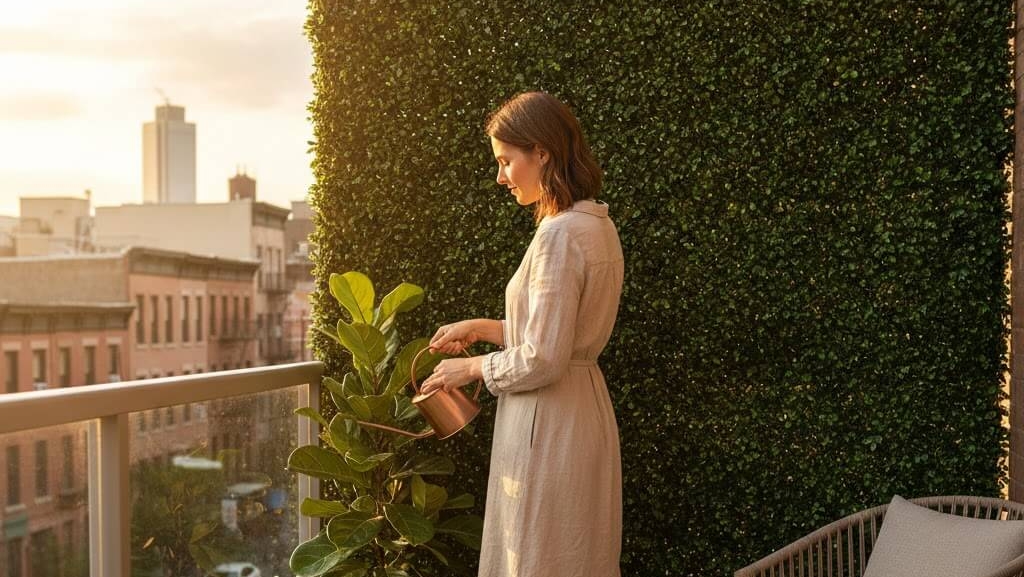

Outdoor areas need structure, privacy, and plants that stay green all year without needing a lot of care. Artificial hedge walls give you all three: no watering, trimming, or seasonal decline.
Artificial hedge wall ideas are useful ways to add privacy to a patio, frame a pool, or add vertical green to a balcony while staying bright and colorful in any weather.
An artificial hedge wall is a fake vertical screen that looks like real hedge plants. You can attach these panels to fences, frames, or free-standing structures to get privacy, keep the wind out, or make decorative barriers right away.
Artificial hedges stay full and green from day one, even in shaded areas, extreme heat, or urban balconies where real plants have trouble. In contrast, real hedges require years to grow and regular watering, pruning, and fertilizing.
Polyethylene that is resistant to UV rays is molded to look like boxwood, ivy, or a mix of plants for most fake hedges. Good panels have a variety of green colors to look natural and a mesh backing to let air flow and water drain. For a dense, formal look, use boxwood hedge panels. For a flowing texture, use ivy. For layered depth, use mixed greenery.
Fake hedge walls fix privacy problems right away: no waiting for growth. There are no gaps or thin spots. They keep neighbors from seeing into your yard, cut down on street noise, and make clear outdoor rooms without taking up space with big planters or fences. Fake hedge wall systems stay green all year long, even in the winter when seasonal plants lose their leaves or turn brown. Heat, cold, and drought don’t change how they look.
The amount of maintenance stays low. Rinsing every now and then gets rid of dust. No pest control, pruning, or fertilizing. This makes hedge walls useful for renters, busy homeowners, and businesses where the look of the property is important.
Not every hedge panel will work in every place. Choosing the right system means making sure that the material quality, size, and design fit your needs. For example, if you want to block wind on a rooftop or make a decorative backdrop for outdoor furniture, you need to choose the right system.
Privacy walls need to be thick, with lots of leaves packed closely together and few gaps that people can see through. You need strong coverage to screen hot tubs or pools effectively. Decorative accents let you use lighter, airier panels where you can put more emphasis on texture and visual interest than on complete opacity.
Wind barriers need to be built well. To keep from warping or coming loose in strong winds, rooftop installations and balconies that are out in the open need extra support and secure mounting.
The standard size for panels is 20 by 20 or 40 by 40 inches. Smaller panels can be made into any shape you want. Larger panels cover more ground more quickly, but they limit design choices. For vertical garden wall installations, first measure the space you have and make sure the panels line up with the size of the fence posts or frame to cut down on cutting.
Height is important for privacy. A hedge wall that is 6 feet tall blocks views from patios on the ground. Taller installations (8 feet or more) block views from windows on the second floor. Consider both aesthetics and privacy needs when choosing panel height.
The length of time something lasts depends on how well it protects against UV rays. UV stabilizers in good panels keep them from fading and becoming brittle. Within a few months, budget options may lose their value. In the meantime, premium systems last 5 to 10 years and lose very little color.
For some uses, fire resistance is important. Some cities and towns require fire-rated materials to be used near buildings. Before you install, check the codes in your area.
Mold can’t grow when there is good drainage and air flow. Panels with mesh backs let water through and air flow. Solid backing holds in moisture and makes maintenance harder.
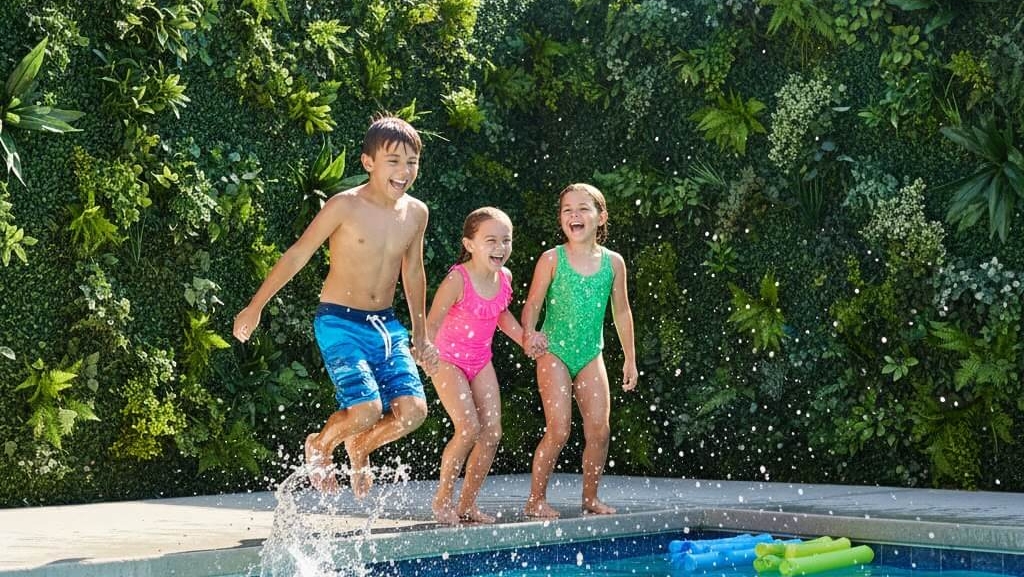
Hedge walls work beyond basic privacy screens. These applications solve specific outdoor design challenges.
Freestanding hedge panels divide large patios into intimate zones. A 6-foot wall of artificial hedge privacy screening separates dining from lounging without permanent construction. Mount panels to lightweight frames for easy repositioning: ideal for rentals. Pair with artificial turf. When paired with quality artificial grass products, hedge walls complete outdoor transformations requiring virtually no upkeep.
L-shaped or U-shaped wall hedge configurations around seating create visual boundaries without full enclosure. This defines space while maintaining sightlines. Combine with outdoor furniture for resort-style ambiance that makes seating areas feel intentional.
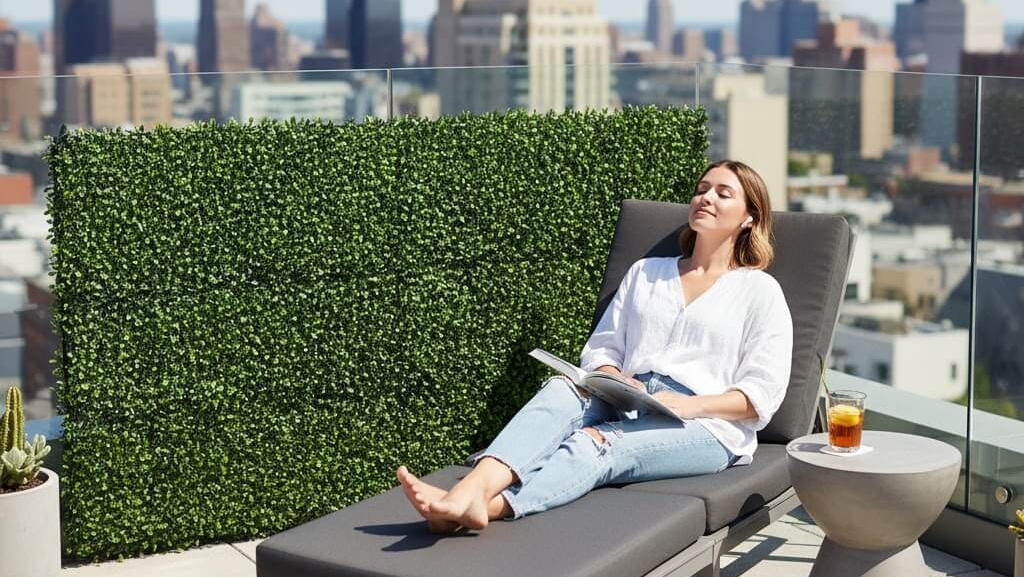
Outdoor installations of fake hedge walls are good for rooftop spaces. These places usually can’t hold heavy planters, so synthetic panels are the best green option. To keep your privacy and keep the wind out, attach panels to railings or make frames that stand on their own with heavy bases.
Pick panels that are rated for UV protection for rooftop installations because these places get the most sun. Materials of lower quality fade quickly in direct sunlight.
Hedge walls around pools give you privacy and make the hard edges of fencing softer. Put up panels along chain-link or wrought iron fences to make them instantly private. Synthetic materials are better than living hedges because they can stand up to chlorine and water. Panels with mesh backs let water spray through without breaking. Pair with different types of artificial grass for cohesive, resort-style pool areas without natural landscaping maintenance.
Balconies in cities often don’t offer privacy from other units. Adding greenery to planters or railings with artificial hedges solves this problem. Use lightweight panels that are made to be mounted vertically; heavy installations can go over weight limits.
Check local building codes before installation. Some properties don’t allow changes to balconies or require certain ways to mount them.
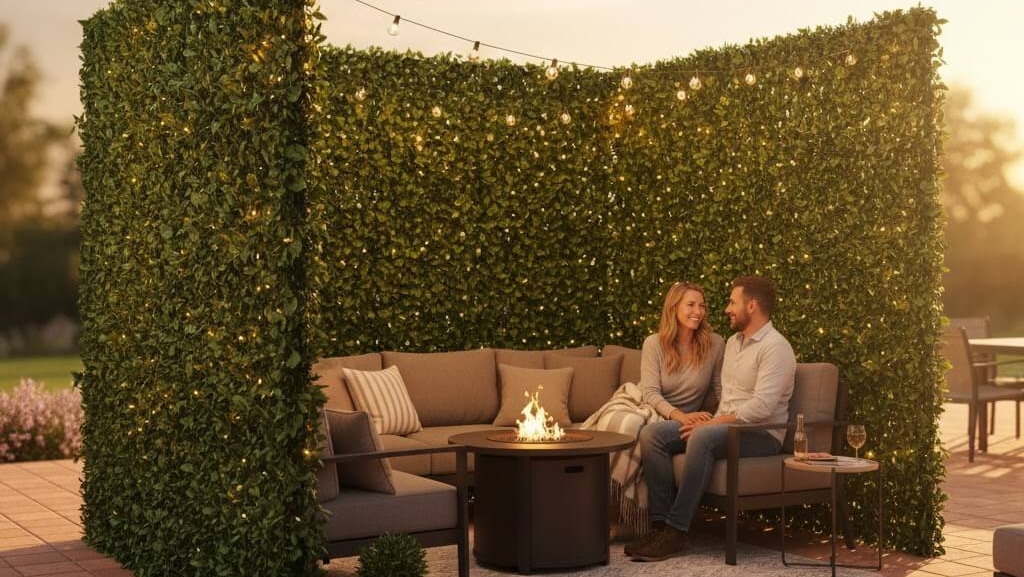
Strategic placement makes hedge walls look intentional. For spaces with depth, layer greenery with potted plants, furniture, or lights. Think about how to use lighting to set the mood at night. String lights or uplighting can do this while also bringing out texture.
Use different types of panels to make things look more interesting. To keep things from looking boring, switch up the boxwood and ivy patterns. Use trim pieces or planters to cleanly frame the edges. Raw edges make things look less polished.
Most hedge wall systems use zip ties, mounting clips, or frames to put them up. To keep the panels from sagging, attach them every 12 to 18 inches along the top, bottom, and sides. Use zip ties that won’t break down and are UV-resistant.
Frames for freestanding installations need to be strong, like wood or metal posts set in concrete or heavy bases. Make the frames a little smaller than the panels so that they can expand with heat. When putting panels together, slightly overlap them to hide the seams.
Before you finish, test how well it holds up to the wind. More tie points or stronger backing are needed in areas with high winds to keep things in place.
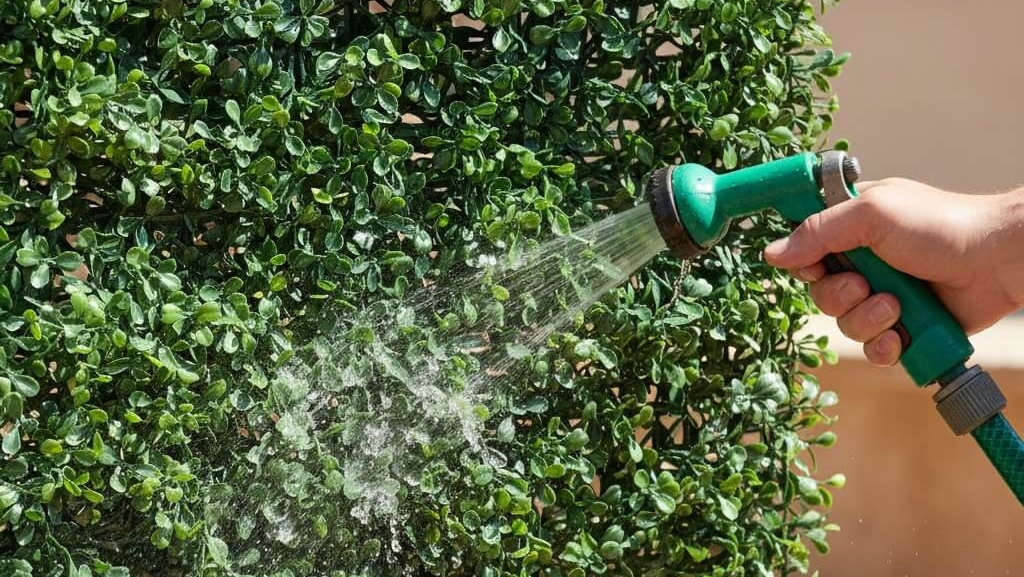
Artificial hedge walls require minimal maintenance compared to living plants, but simple care extends their lifespan and appearance. Rinse panels monthly with a garden hose to remove dust, pollen, and debris that dull the foliage color. For stubborn dirt, use mild soap and water with a soft brush, avoiding harsh chemicals that degrade UV protection or cause discoloration.
Inspect mounting hardware twice yearly, tightening loose zip ties or replacing corroded fasteners before they fail. Check for panel separation along seams and re-secure any gaps that develop over time. This preventive approach mirrors the minimal care required for artificial turf maintenance, where simple regular attention preserves long-term performance.
Protect artificial hedges from direct contact with heat sources like grills or fire pits, as extreme temperatures can melt synthetic materials. During severe storms, inspect panels for wind damage and repair loose sections promptly to prevent further deterioration.
Store any removable panels indoors during extended periods of non-use to maximize their lifespan. Quality artificial hedge walls typically maintain their appearance for 5-10 years with proper care, delivering long-term value without the recurring costs of plant replacement, fertilization, or professional trimming services. This durability makes them a practical investment for homeowners seeking permanent privacy and greenery solutions.
Artificial hedge wall ideas solve privacy and greenery challenges where natural hedges fail. From rooftop terraces to poolside barriers, these versatile systems deliver immediate visual impact without the ongoing demands of watering, pruning, or seasonal decline.
By selecting quality UV-resistant materials, installing them securely with proper mounting techniques, and maintaining them through occasional rinsing, homeowners and businesses can enjoy lush green walls that stay vibrant year-round.
Whether creating intimate outdoor rooms, hiding unsightly views, or adding dimension to bare spaces, artificial hedge walls offer practical, long-lasting solutions that transform ordinary areas into private retreats with minimal effort and maximum aesthetic return.


