How to Clean Artificial Grass: Step-by-Step Guide

Emily Greenfield
November 6, 2023
Artificial grass takes a fraction of the maintenance real grass does, but “low maintenance” doesn’t mean “no maintenance.” A quick rinse and the occasional deep clean is really all it takes to keep synthetic turf looking as good as the day it was installed, whether you’re dealing with everyday dust, pet messes, or a spill from last weekend’s barbecue.
This guide covers exactly how to clean artificial grass step by step, how often to do it, what to use for pet stains and odor, and which products and tools to avoid so you don’t damage the turf while trying to clean it.
As a general rule, rinse artificial grass with a hose every one to two weeks and do a more thorough deep clean once a month. If you have pets, live in a dusty or high-pollen area, or the lawn gets heavy daily use, rinse more often, closer to once a week, and spot-clean pet areas as needed rather than waiting for a scheduled cleaning.
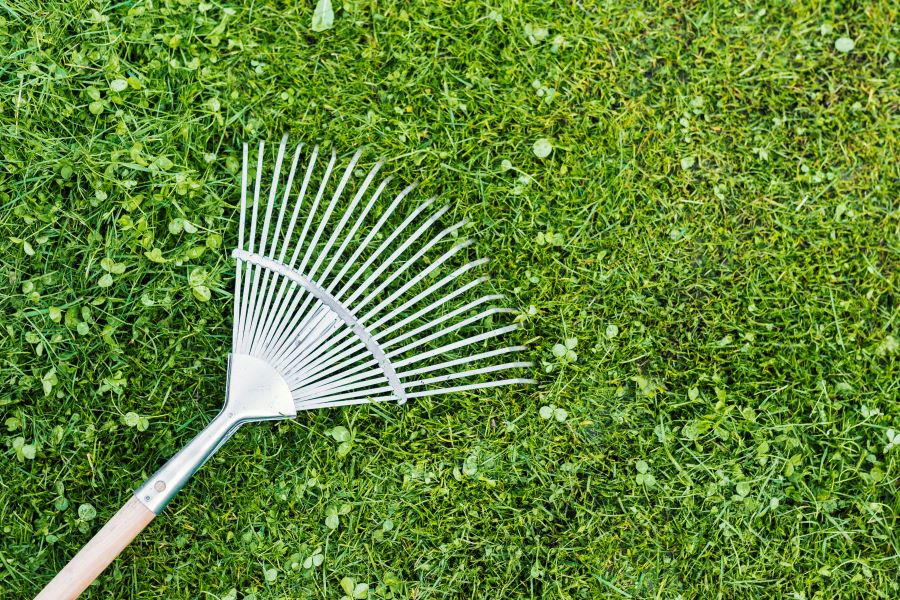
You don’t need much to keep synthetic turf clean, but the right tools matter:
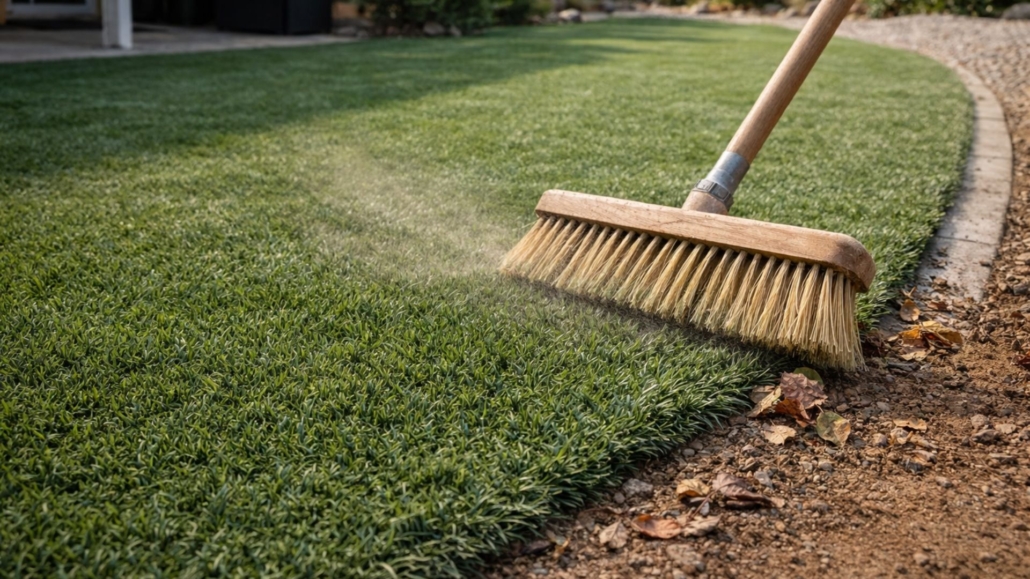
Cleaning artificial grass properly comes down to six simple steps, done in order, so nothing gets missed and nothing has to be redone.
Start by clearing leaves, twigs, and larger debris with a stiff broom or flexible rake. Getting the bigger stuff out of the way first makes the rest of the cleaning process faster and keeps debris from working its way deeper into the turf backing.
Hose down the entire area with plain water. This clears dust, pollen, and smaller debris, and it’s usually enough on its own for routine, weekly upkeep. Stick to a standard garden hose rather than a pressure washer. Pressure washers can dislodge infill and put unnecessary stress on the fibers over time.
For food spills, drink stains, or general grime, mix a mild detergent with water and apply it directly to the affected area with a spray bottle or watering can. Let it sit for a few minutes, then work it in gently with a soft brush. Avoid scrubbing hard in one direction, since that can flatten the fibers.
Rinse the entire treated area with clean water to remove all detergent residue. Leftover soap can attract dirt and leave a filmy residue on the fibers, so don’t skip this step even if the turf looks clean.
Once the turf is dry, brush against the grain with a stiff-bristled broom to lift any flattened areas back into place. This is especially important in high-traffic zones like walkways or areas near seating.
Artificial grass drains quickly and dries fast in open air. There’s no need for towels or additional equipment just let the sun and airflow finish the job.
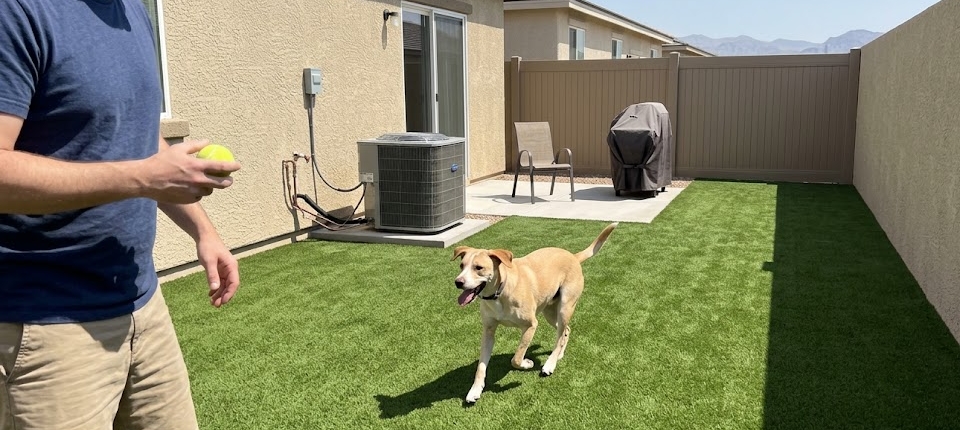
Pet turf needs a slightly different routine than a standard lawn, mostly because urine and odor buildup happen in the same few spots repeatedly.
For solid waste, scoop it up as soon as possible and rinse the area with water. For urine, rinsing right after it happens is the single most effective habit, since it prevents residue from building up in the first place. For a deeper clean or persistent odor, apply an enzyme-based cleaner made for pet turf. These break down the compounds in urine that cause smell, rather than just masking it, and they’re safe for both pets and the turf itself. Let the cleaner sit for 10 to 15 minutes, then rinse thoroughly.
Good drainage makes a real difference here too. Turf with a high drainage rate moves liquid through quickly instead of letting it pool at the surface, which cuts down on odor before it starts. It’s also part of why pet turf should use a polyurethane backing rather than latex, since polyurethane doesn’t trap odor the way latex can over time.
A few common habits can do more harm than good:
Remove debris with a rake or broom, rinse with a hose, treat any stains with a mild detergent solution, rinse again, and brush the fibers back into place once dry.
Rinse every one to two weeks and do a full deep clean monthly. Pet areas or high-traffic sections may need rinsing weekly or even after each use.
It’s not recommended. A standard garden hose provides enough pressure to rinse the turf without risking damage to the fibers or infill.
Rinse the area right away with water, then use an enzyme-based cleaner for a deeper clean or lingering odor. Avoid ammonia-based products, which can encourage pets to remark the same spot.

 How To Choose The Best Fake Grass for Patio: A Complete Guide