How Long Does Artificial Grass Last? Lifespan & Care

Emily Greenfield
August 19, 2022
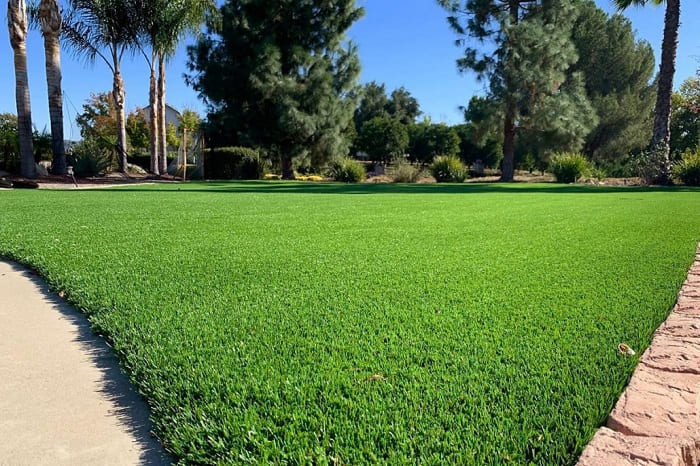
You’ve done the math on water bills, mowing time, and the dead patches that show up every August. Now you’re staring down the actual purchase, and one question keeps coming up before you commit: how long is this stuff actually going to hold up? It’s the right question to ask, because artificial turf is a bigger upfront investment than a bag of grass seed, and you want to know what you’re getting for it.
The short answer is that quality artificial grass lasts a lot longer than most people expect, and the specifics depend on where you’re installing it, how it’s used, and how it’s cared for. In this guide, we’ll walk through realistic lifespan numbers by use case, what actually shortens or extends the life of synthetic turf, and how to keep your lawn looking as good in year fifteen as it did on day one.
With proper installation and basic care, artificial grass typically lasts 20 to 25 years. That’s the number backed by premium turf products built with UV-stabilized fibers and durable backing, and it’s why we back most of our synthetic grass products with a 15-year warranty covering fading, workmanship, and materials.
That range isn’t a marketing figure pulled out of thin air. It reflects how modern synthetic turf is actually built: dense, UV-resistant fibers that resist fading, combined with a backing material designed to hold up under years of sun, foot traffic, and weather. The lower end of that range applies to turf that sees heavy daily use or gets minimal maintenance. The upper end is realistic for a residential lawn that gets occasional brushing and rinsing. Either way, you’re looking at two decades or more before replacement is even a conversation worth having.
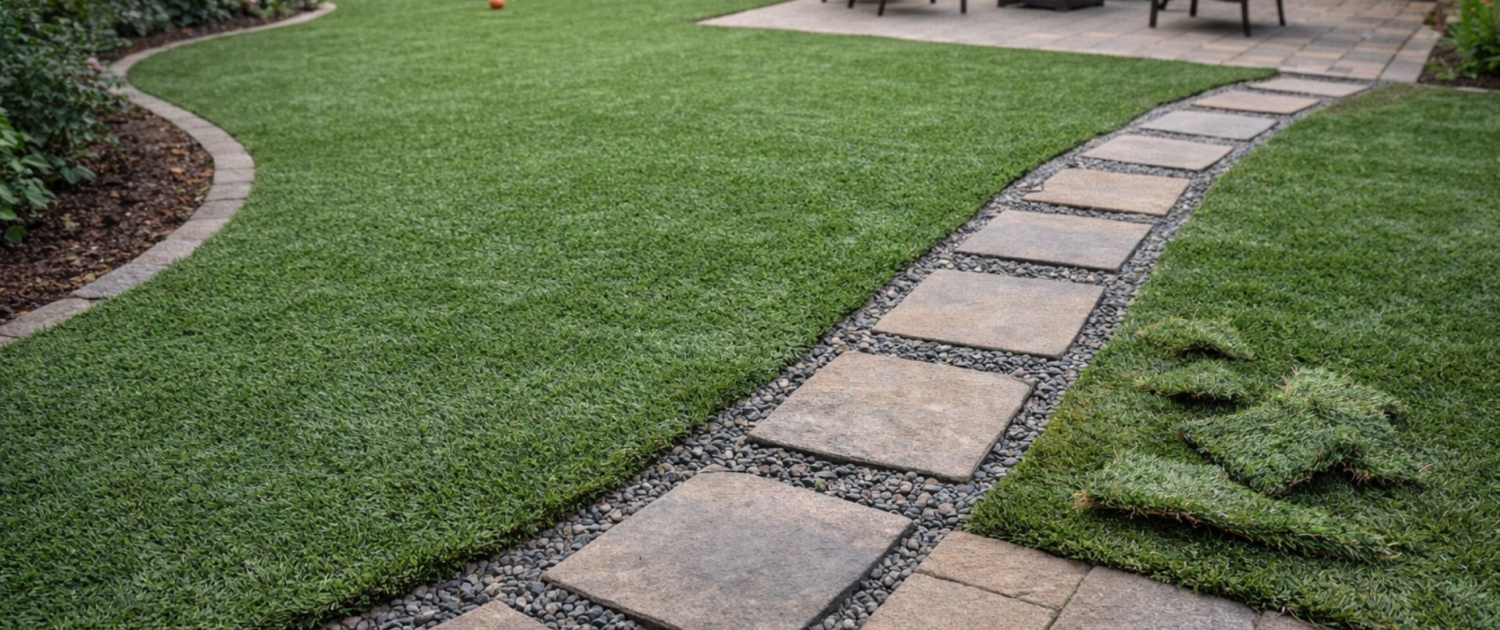
Not all artificial turf gets used the same way, and that matters more than most buying guides let on. A front lawn that mostly gets looked at wears very differently than a backyard that doubles as a dog run.
A standard residential lawn, used for everyday foot traffic and the occasional backyard gathering, sits comfortably in that 20 to 25 year window. Light, consistent use is the easiest scenario for turf to handle, and it’s the most common installation we see across our showrooms.
Dogs are harder on turf than people are. Constant running, digging, and repeated urination in the same spots put more strain on both the fibers and the backing than typical foot traffic does. That’s why pet-friendly synthetic grass should be built on a polyurethane backing rather than latex, since polyurethane won’t trap odor the way latex can over time. With the right product and a pile height between 1.25 and 1.65 inches, pet turf can still deliver 15 to 20 years of solid performance.
Playground and backyard play turf gets a different kind of wear: constant motion, more abrasion, and higher expectations for softness and safety. Playground-grade artificial grass is engineered specifically for that kind of traffic, and with proper base preparation, it typically holds up for 15 to 20 years even under heavy daily use.
High-traffic applications like putting greens and sports surfaces see the most concentrated wear of any use case, since the same small area absorbs repeated impact. These installations generally last 8 to 15 years, which is still a strong return when you factor in the maintenance and reseeding costs of a natural turf equivalent.
If you’re shopping for turf in a hot, sun-heavy market like Las Vegas, Phoenix, or Dallas, this question matters more than almost anything else on this page. UV exposure is the single biggest environmental factor in how long synthetic grass holds its color and structure.
Cheaper turf without UV stabilization will fade and become brittle years ahead of schedule in intense sun. That’s a real problem in markets where lawns get direct sunlight most of the year. Quality synthetic grass, like what we supply out of our Las Vegas showroom, is manufactured with UV-resistant fibers specifically to handle desert and Sun Belt conditions without breaking down early. The tradeoff worth knowing about: artificial grass does get hot to the touch in direct summer sun, so shade structures or cooling infill are worth considering for backyards that get heavy midday use.
Beyond use case and climate, two things determine whether your turf lands on the long end of its lifespan or the short end.
Not all synthetic grass is built the same way, and the difference shows up over time, not on day one. Lower-quality turf with thin fibers or a weak backing will look fine when it’s first installed and then fade, flatten, or fray years earlier than it should. Before you commit to a product, it’s worth ordering free samples so you can actually feel the fiber density and backing quality in person rather than guessing from a photo.
Even the best turf underperforms if it isn’t installed correctly. Poor base preparation, inadequate drainage, or improperly secured seams will shorten a lawn’s lifespan regardless of the product itself. Professional installation protects the investment you’ve already made in quality materials, and it’s worth reviewing our warranty coverage to understand what’s protected if something does go wrong.
Getting the full 20-plus years out of your lawn comes down to a handful of habits, not a complicated maintenance schedule.
Different turf styles have different care requirements, and manufacturers provide specific maintenance guidelines for a reason. Sticking to that schedule is the single biggest thing you can do to protect your investment long term.
Leaves and debris trapped in the fibers make a lawn look worse and can accelerate wear if left in place. A stiff brush every couple of weeks keeps the surface clean and prevents buildup from working its way into the backing.
Pet waste, spills, and general debris should be cleaned up promptly, both for appearance and for safety, especially in yards where kids spend time. Mild detergents and enzyme cleaners can handle bacteria and odor without damaging the fibers, and a properly drained turf system should let you hose the surface down whenever it needs it.
Regular brushing keeps fibers standing upright and prevents matting in high-traffic areas, which is especially important for pet turf and play areas that see daily use.
A small tear or a frayed seam only gets worse if it’s ignored. Addressing minor repairs as soon as you notice them prevents a small, cheap fix from turning into a much bigger one.
Even well-maintained turf eventually reaches the end of its usable life. Watch for fibers that stay flattened after brushing, noticeable fading or color change across large sections, a backing that feels stiff or is starting to crack, and drainage that’s slowed down enough to leave standing water. Any one of these on its own isn’t usually urgent, but two or more together generally mean it’s time to start planning for a replacement.
Most synthetic turf lasts 8 to 25 years depending on the application. Residential lawns typically reach 20 to 25 years, while high-traffic uses like sports turf or putting greens average 8 to 15 years.
Lower-quality turf without UV protection can fade noticeably within a few years, especially in high-sun climates. UV-stabilized fibers resist fading for the full lifespan of the product.
Yes. Heavier, more concentrated foot traffic, like a dog run or a putting green, wears turf faster than light residential use. Choosing turf rated for the right traffic level helps offset this.
For most homeowners, yes. Even at the shorter end of that range, you’re avoiding 15 to 20 years of watering, mowing, and reseeding costs, which typically outweighs the upfront investment well before the turf needs replacing.

 Landscaping 101: Easy Landscaping Ideas for Beginners