How to Install Artificial Turf On Dirt

Emily Greenfield
September 18, 2022


Installing artificial turf on dirt is one of the most common backyard projects homeowners take on, and yes, you can do it yourself with the right prep. Organic grass takes constant work to keep alive through summer heat and drought, and kids or pets running around only speeds up the damage.
Artificial grass solves that problem, and dirt is one of the easiest surfaces to install it over once it’s properly leveled and prepped. This guide walks you through exactly how to install artificial turf on dirt, step by step, so the finished lawn looks flawless and drains the way it should.
The short answer is yes, but it’s essential to keep reading for an explanation. Dirt is an uneven surface, so it’s necessary to flatten and prepare it first. That will ensure optimal drainage and minimize the risk of tears and other damage. If you do the turf preparation task well, your fake lawn will look impressive for years!
Before you start, gather your materials and tools. Having everything on hand before you begin prevents mid-project trips back to the store and keeps the base prep moving while conditions are right.
Materials:
Tools:
Order free samples before you commit to a full roll, it’s the easiest way to check pile height, backing, and color against your yard before you buy.
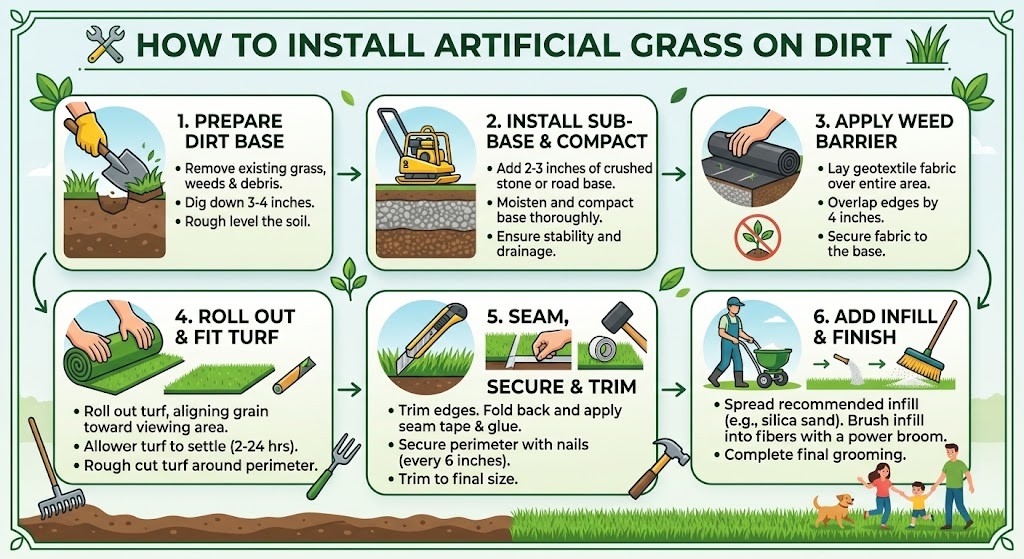
Check out the steps you’ll do during the installation!
The first thing you want to do is measure the area you want to be covered with artificial grass. It ensures you identify the right lawn size to acquire. Additionally, you’ll know the exact surface that requires preparation.
The dimensions are your call, and aesthetics should be the primary consideration. Do you plan fake grass to be the only thing to put above the dirt surface? Perhaps you have a plan for a pathway, fountain, or other fixtures? It’s essential to have a comprehensive landscaping plan. Once that’s ready, you can keep reading our guide on how to install fake grass on dirt.
It might be mostly dirt, but you’ll likely find weeds, patches of grass, or leftover plants scattered across the area. Clear all of it before you start. Leftover vegetation will push up through your turf over time and ruin the flat, even look you’re going for.
If weeds are established or the area has a history of regrowth, treat it with a herbicide a few days before digging so the roots die off completely rather than just the visible growth.
Once the surface is clear, dig down 3 to 4 inches across the entire area. This removes the old topsoil along with any remaining roots, grass, and debris that could work their way back up through your turf later. Pull every root you find rather than just the visible plant — roots left behind will regrow and push through the seams.
This depth also leaves enough room for your base material and turf without raising the finished surface above nearby patios, walkways, or garden beds.
If you are installing turf on dirt, it’s now necessary to prepare the subbase material. You can put artificial lawns directly on the surface. Now that you’ve removed all vegetation, you have native soil. It will probably include clay, which expands and contracts throughout the year.
Native soil can lead to uneven surfaces and soft spots. If you want to avoid that happening, it’s necessary to have a subbase material. Decomposed granite is the most common material because it makes an excellent base for artificial lawns. It keeps the soil together and provides a perfect foundation.
While you’re placing the base material, grade it with a slight slope, about 1 to 2 percent, angled away from your house or any other structure. This keeps water moving off the surface instead of pooling underneath the turf, which is one of the most common causes of odor, mold, and soft spots over time.
Begin by adding about 0.25 inches of decomposed granite to the surface. It will act as a foundation. The next step is putting another inch of this material. You want to add granite an inch at a time. Once you place it on the surface, make it wet and use a sod roller to roll the material. The recommendation is that the granite should be level to your grass deck. It reduces the risk of mishaps when someone steps off the lawn.
Once the decomposed granite is down and level, compact it before laying any turf. Use a hand tamper for smaller areas or a plate compactor for larger ones, working in the same rows you used to spread the material. Lightly wetting the surface first helps the granite bind and settle more evenly under the compactor.
Skipping this step is one of the most common reasons DIY turf installations fail early an uncompacted base shifts over time, and that movement shows up as dips, wrinkles, and soft spots in the turf itself. A properly compacted base stays flat and stable for years.
Before you cut anything, unroll the turf and let it sit in direct sun for an hour or two. This lets the material relax and expand naturally, so you’re cutting it at the size it’ll actually hold once it’s down, not while it’s still tight from the roll.
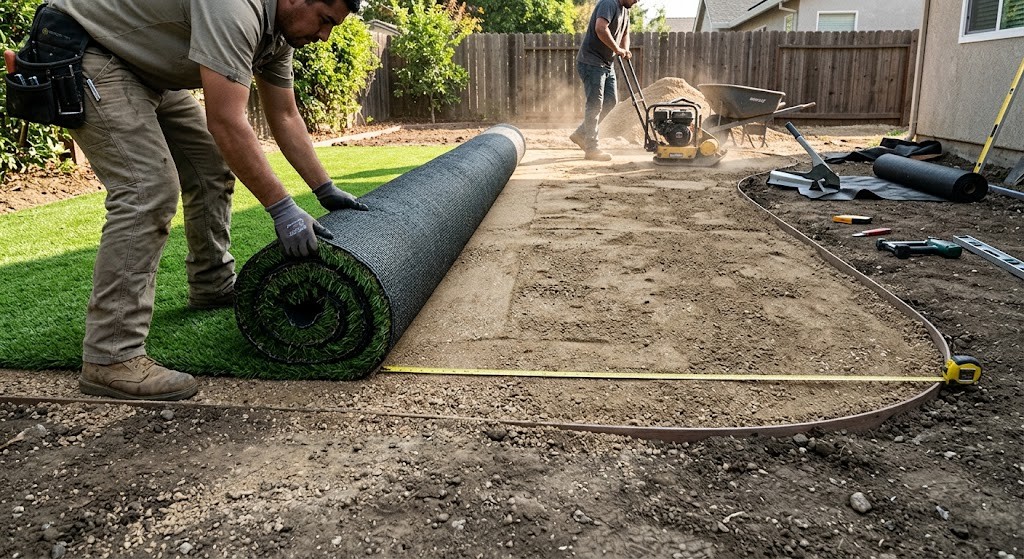
All steps until now were preparation, and now it’s time to learn how to install artificial turf on dirt. Lay the grass and cut it to the desired size. The entire idea is that you don’t want it to go on top of the deck. Overlapping isn’t visually attractive, so cutting the fake turf to the desired dimensions is essential.
You are now ready to unroll your artificial grass. You need to check the edges and make the necessary adjustments. You can use a joining tape to connect multiple grass segments together, and don’t forget the importance of an adhesive.
Now, add infill to weigh down the turf and help the blades stand upright. Silica sand or durafill both work well for general use. If you have dogs or cats, use a zeolite-based infill instead, it actively neutralizes urine odor rather than just absorbing moisture, which makes a real difference over time in a yard that gets regular pet traffic.
The final step is to ensure the infill settles. You’ll need a broom to brush everything properly. It shouldn’t be difficult since you only need to go back and forth.
Brushing isn’t a one-time step. Go back over high-traffic areas every few weeks with a stiff broom, working against the grain to lift the fibers back up. This keeps the lawn looking full and prevents matting in the spots that get walked on most.
Artificial turf installations aren’t complex, and they require minimal effort. You also need little time maintaining fake lawns, making them a wise long-term solution. If that like the perfect option for your yard, don’t hesitate to contact us and get the best-quality synthetic grass in the area!
Plan to dig out 3 to 4 inches of soil. That gives you enough depth for a compacted base layer plus the turf itself, without raising the finished surface above nearby patios, walkways, or garden beds.
Yes. A compacted base of decomposed granite or crushed aggregate keeps the surface stable, improves drainage, and prevents the dips and soft spots that raw dirt develops over time. Skipping this step is the most common reason DIY turf installations fail early.
With proper base preparation and drainage, artificial turf installed on dirt typically lasts 20 to 25 years. Every turf order from Festival Turf is backed by a 15-year warranty covering fading, workmanship, and materials.
You can lay turf directly on dirt, but it isn’t recommended. Without a gravel or decomposed granite base, the ground will shift over time, drainage will suffer, and the turf is far more likely to develop wrinkles, standing water, or weed growth underneath.

 Simple Halloween Ideas For Your Front Yard
