Artificial Grass for Landscaping: Benefits and Uses

Emily Greenfield
April 10, 2023
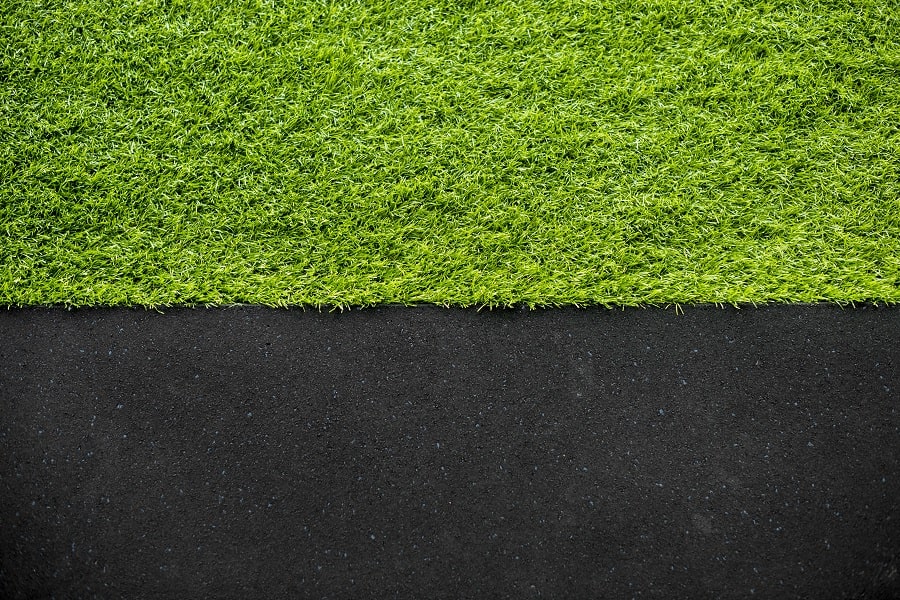
Artificial grass works for more than replacing a lawn. It handles slopes real sod struggles to hold, drains cleanly around pools instead of turning to mud, and stands up in dog runs, rooftop gardens, and tight side yards where watering a live lawn is impractical. If you’re weighing it for a landscaping project, here’s where it actually earns its place, what it costs, and where a live lawn might still be the better call.
Cuts water use. A synthetic lawn needs no irrigation at all, which matters most in drought-restricted markets where a live lawn is one of the biggest line items on a water bill.
Removes the weekly maintenance cycle. No mowing, no fertilizing, no reseeding bare patches. Once it’s down, it stays the same height and color without a recurring schedule.
Handles conditions sod can’t. Slopes, shaded strips with poor grass growth, and high-traffic zones like dog runs and play areas all hold up better under turf than under a living lawn fighting the same conditions.
Lasts for decades, not seasons. A quality product has a lifespan of 20 to 25 years with proper care, longer than most other landscaping materials in the same yard.
Drains instead of pooling. A perforated backing handles pool splash-out, pet urine, and heavy rain without the mud and standing water sod develops in the same spots.
Not every part of a yard has the same demands, and turf performs differently depending on sun exposure, foot traffic, and what the space is actually used for. The right approach is to think through each zone of the property on its own terms rather than treating the whole yard as one decision.
A front lawn is usually the first thing anyone sees, and it’s also the part of the yard most exposed to full sun and foot traffic from deliveries, mail, and kids cutting across the grass. Synthetic turf holds its color through the parts of summer when sod goes patchy, and it does that without a sprinkler schedule to manage. Before installing anything visible from the street, check your HOA’s guidelines on synthetic turf. Rules vary a lot by community, and some have specific requirements on pile height or product type.
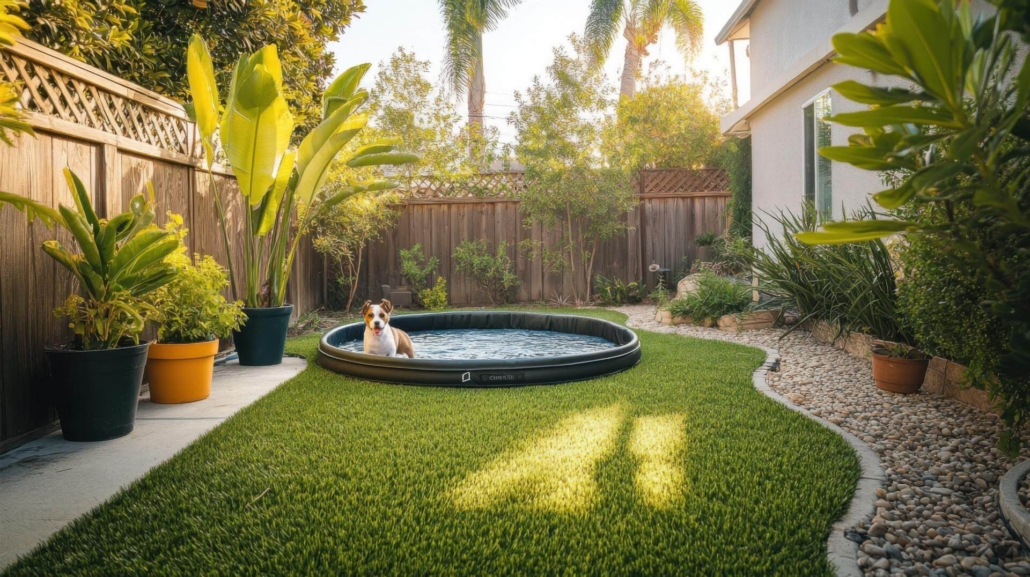
Sloped backyards, areas around a pool deck, and dedicated play zones are where turf tends to outperform sod by the widest margin. A perforated backing drains fast enough to handle pool splash-out and monsoon-style downpours without pooling, and a shock-pad underlayment under playground turf gives kids a cushioned surface that meets safety standards real grass can’t match once it’s worn thin from swing sets and slides.
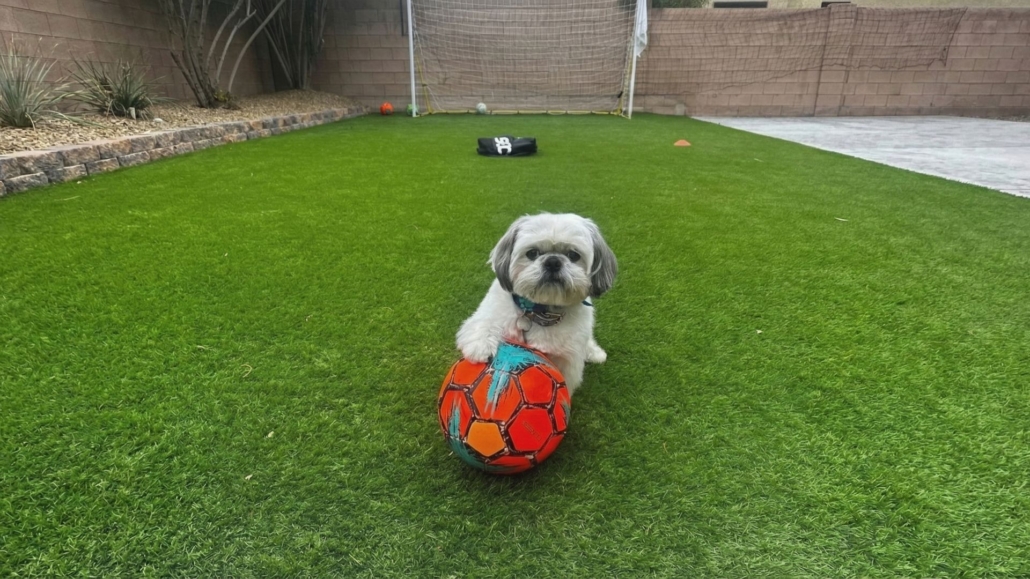
A fenced run of synthetic grass drains urine instead of holding onto it the way soil and thatch do, which is the main reason artificial grass for dogs has become a standard choice for pet owners. It also holds up to digging and heavy paw traffic in a way that leaves natural grass bare and muddy within a season.
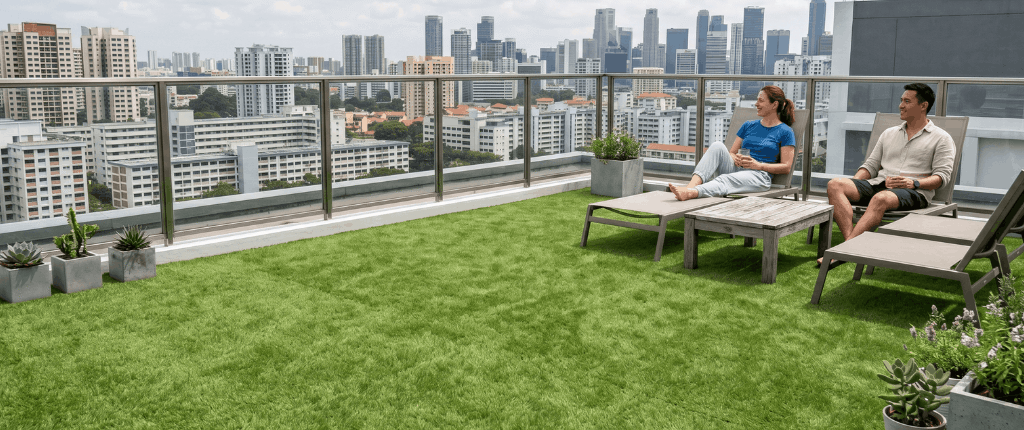
Offices, hotels, and multifamily properties use synthetic grass to keep courtyards and common areas looking finished year-round without an irrigation contract. Rooftop installations are one of the more specialized commercial uses, since a rooftop rarely has the soil depth or drainage a living lawn needs to survive.
Material costs vary by product line, pile height, and square footage, so pricing out artificial grass before committing to a design is worth doing early, not after the rest of the landscaping plan is set. On the other end, a quality product has a lifespan of 20 to 25 years with proper care, which is longer than most hardscaping materials in the same yard will last without repair or replacement.
Artificial grass isn’t the right call everywhere. Deeply shaded yards with poor airflow can trap moisture under turf if drainage isn’t planned correctly, and homeowners who genuinely enjoy lawn care as a hobby may not get the same satisfaction from a surface that never needs mowing. For everyone else, the tradeoff usually comes down to upfront cost versus years of water bills and weekend maintenance.
Yes. Turf performs well on slopes that are difficult to seed or mow safely, as long as the base is properly graded and compacted before installation so water drains the way it’s designed to.
Quality synthetic grass lasts 20 to 25 years with routine care, well beyond what most homeowners get out of repeatedly reseeding or resodding the same area.
Yes. Pet-specific infill helps manage drainage and odor for dog runs, and shock-pad underlayment makes turf a common choice under playground equipment.
Yes. Turf pairs well with garden beds, gravel, and hardscaping, and many landscaping designs mix turf sections with live plants for texture and lower overall water use.
For design-specific inspiration once you know where turf fits your yard, artificial grass landscaping ideas covers layout and style options in more depth.
Ready to see the quality for yourself? Order a free sample and compare it against your yard before you decide. Every Festival Turf product ships with a 15-year warranty.

 Xeriscaping 101: Desert Landscaping Ideas For Your Backyard