Artificial Grass for Rooftops in Dallas: Benefits, Costs & Ideas

Emily Greenfield
June 2, 2026
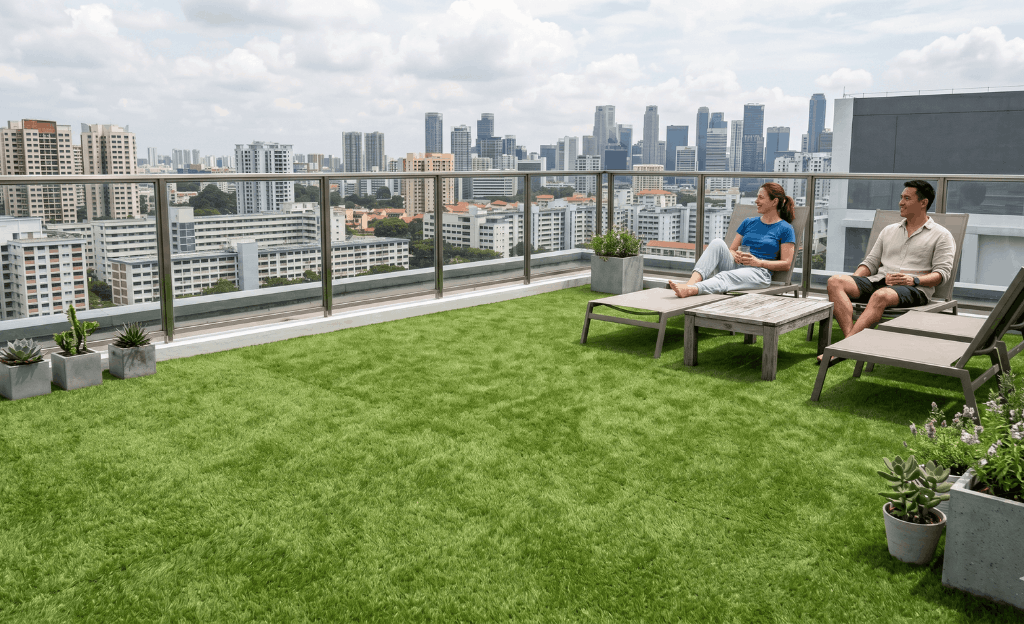
Artificial grass for rooftops in Dallas is transforming unused flat roofs into low-maintenance outdoor living spaces. From Uptown condos to commercial rooftops in Deep Ellum, synthetic turf adds year-round greenery without irrigation, mowing, or heavy soil systems. In Dallas’ intense summer heat, rooftop turf offers a practical way to create cooler, more functional outdoor spaces.
This guide covers the benefits of rooftop artificial turf, the installation process, typical costs, and design ideas for Dallas rooftop spaces. If you are considering artificial turf installation in Dallas, rooftop applications have become one of the fastest-growing trends in the DFW market.
Dallas has the climate, rooftop architecture, and outdoor lifestyle that make rooftop turf a practical upgrade. Across the city, unused flat rooftops often absorb heat while adding little functional value. Artificial grass transforms those spaces into usable outdoor areas with minimal maintenance.
Natural grass is difficult to maintain on rooftops without constant irrigation and soil management. Synthetic turf eliminates those challenges while handling direct sun exposure and changing weather conditions with ease. For condo associations, restaurants, and homeowners with accessible flat roofs, rooftop turf is a cost-effective way to create functional outdoor space year-round.
Artificial grass offers several practical advantages for rooftop spaces, especially in Dallas where heat, sun exposure, and maintenance demands are high. The benefits go beyond aesthetics, improving usability, efficiency, and long-term durability of rooftop areas.
Rooftop turf acts as an insulating layer between the sun and the roof membrane. Bare rooftops in Dallas can exceed 150°F during summer, while artificial grass helps reduce surface temperatures and heat transfer into the building below. Although synthetic turf still absorbs heat, it performs better than exposed roofing materials like tar, gravel, or membrane surfaces.
Weight is one of the biggest concerns with rooftop landscaping. Soil, planters, and natural sod can add significant structural load, while artificial turf is comparatively lightweight. Most rooftop turf systems weigh between 0.5 and 1.5 pounds per square foot with drainage underlayment, making them suitable for many flat rooftops after a professional structural assessment.
Artificial rooftop grass requires very little upkeep. There is no mowing, watering, fertilizing, or reseeding involved. Basic maintenance typically includes occasional brushing, rinsing debris, and clearing drainage areas after storms.
Natural grass often struggles in rooftop environments due to intense sun exposure and limited irrigation. Synthetic turf stays green through hot summers and winter weather, helping rooftops maintain a clean, polished appearance throughout the year.
Rooftop turf installation differs from ground-level projects because the surface is typically concrete or roofing membrane rather than soil. The process focuses on drainage, surface protection, and secure installation.
Most rooftop installations include a structural assessment, drainage underlayment, turf placement and seaming, infill application, and edge securing with rooftop-rated adhesives or fasteners. Smaller rooftop projects in Dallas can often be completed within one to two days by a professional installation crew.
Rooftop turf can be designed in multiple ways to turn unused roof space into a functional outdoor area. From relaxing lounges to pet-friendly zones and entertainment setups, these ideas are tailored to Dallas rooftops where durability and year-round usability matter most.
Combine turf with modular outdoor furniture, string lighting, and a shade sail or pergola for a rooftop lounge that works for entertaining or daily relaxation. The turf provides a clean, soft surface that is comfortable barefoot and easy to keep clean after gatherings.
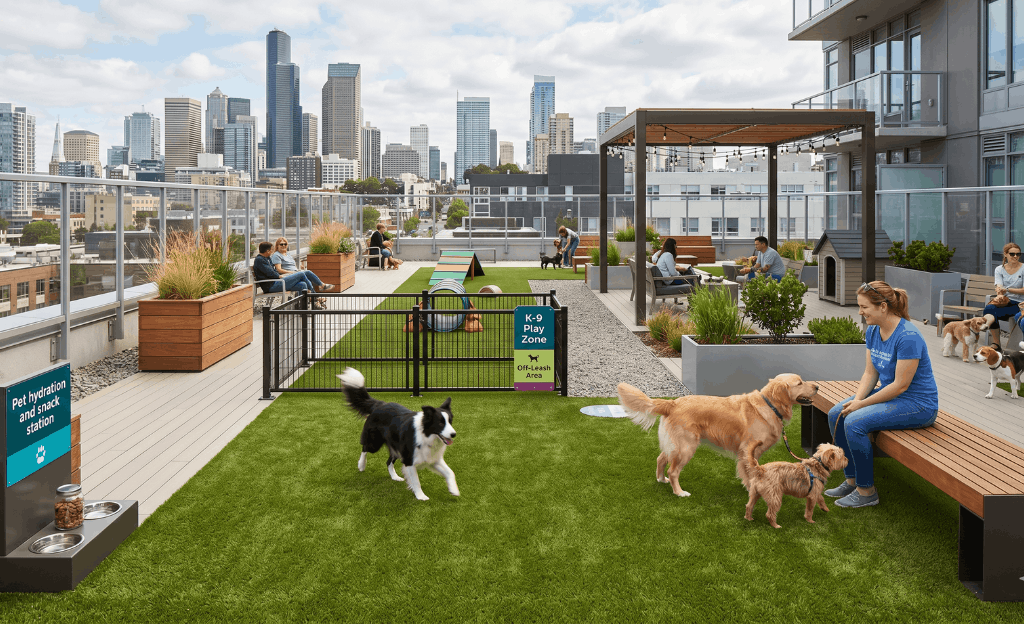
Dallas pet owners in apartments and condos are turning rooftops into dedicated dog areas with artificial turf that drains urine, resists odor, and stands up to heavy paw traffic. Pair it with a small wash station for easy cleanup. If you are considering turf for pets, our guide on pet-friendly artificial grass covers the best product specs for drainage and durability.
Use artificial turf as the base layer and integrate raised planters, potted trees, or vertical garden walls around the perimeter. This gives you the green aesthetic of a rooftop garden without the soil weight or irrigation infrastructure across the full roof surface.
For restaurants, bars, or event venues in Dallas, rooftop turf creates a premium outdoor area for guests. Add a putting green section, a cornhole setup, or a defined seating zone with turf borders for a space that stands out and requires minimal maintenance between events.
Rooftop turf is low maintenance. Occasional brushing helps keep the fibers upright, and a light rinse removes dust and debris. After heavy rain, it’s a good idea to check drainage areas to ensure water is flowing properly. Avoid dragging heavy or sharp objects across the surface to prevent damage.
The most common mistake is skipping a structural assessment before installation. Another issue is using the wrong type of underlayment, which can trap moisture and damage the roof over time. Choosing low-quality turf can also lead to faster fading and wear in Dallas’ strong sun.
Rooftop installations require proper drainage, secure edging, and protection of the roof membrane. A professional installer ensures the system is correctly planned and installed to prevent leaks or long-term damage.
Festival Turf supplies premium synthetic grass for rooftop projects across the Dallas-Fort Worth metro and can connect you with experienced installation professionals. Order free samples to compare turf options for your rooftop, or contact our team for a free estimate on your project.
Rooftop artificial turf installation in Dallas typically costs $8 to $15 per square foot, depending on turf quality, roof access, drainage needs, and project size. A 400-square-foot rooftop usually ranges from $3,200 to $6,000 installed, with premium materials at the higher end.
No. Artificial turf is lightweight, typically 0.5 to 1.5 pounds per square foot with underlayment and infill. Most flat rooftops can support it, but a structural check is recommended before installation.
Yes. Turf helps reduce heat transfer by insulating the roof surface from direct sunlight. While it can still warm up, it performs better than exposed roofing materials like tar or gravel. Shade structures can further improve comfort.
Can I install artificial grass on any roof type?
Most flat and low-slope roofs work well, including concrete and membrane systems like TPO or EPDM. Steep roofs are not suitable. A roof inspection is recommended before installation.
High-quality rooftop turf typically lasts 15 to 20 years with basic maintenance. Lifespan depends on sun exposure, product quality, and installation quality.
Yes. A proper drainage layer is essential to direct water toward existing roof drains and prevent pooling. Without it, moisture can build up and damage the roof over time.

 Pet Turf in San Diego: The Best Options for Year-Round Outdoor Living