7 Artificial Turf Backyard Ideas for Low-Water Landscapes

Emily Greenfield
June 8, 2026

In desert climates, natural grass fights a losing battle. Water bills climb, bare patches spread by midsummer, and the maintenance cycle never stops. Artificial turf helps eliminate all three problems at once. Whether you’re working with a compact Las Vegas yard or a larger suburban lot, these artificial turf backyard ideas give you a practical starting point for a space that stays green and low-maintenance year-round. Mix and match based on how you actually use your yard.
Artificial turf adapts to almost any backyard layout, from small urban lots to large suburban properties. The ideas below cover the most popular applications, each scalable to your space, budget, and lifestyle.
Stone and turf are one of the most practical artificial turf ideas for backyard design. Flat stepping stones, concrete pavers, or decomposed granite borders define walkways while protecting the turf surface from concentrated wear.
Artificial turf garden pathways work especially well winding through raised planting beds, connecting seating areas to garden zones without exposing turf edges to erosion. It reduces irrigation needs and helps maintain a clean look.

There’s no mud to track inside after rain, no bare patches from heavy foot traffic, and a surface that’s softer underfoot than bare dirt or concrete. For shock absorption, choose turf with adequate pile height and quality infill.
One important note: synthetic turf heats up in direct sun during summer months. For any play area with afternoon sun exposure, shade structures or cooling infill are strongly recommended.
A dedicated pet-friendly artificial grass yard solves problems natural lawn never fully handles. The benefits of pet-friendly artificial turf include antimicrobial backing, high drainage rates, and a surface that stays intact without developing dead patches or odor buildup.
Choose turf with polypropylene or polyurethane backing and avoid latex-backed products, which retain odor. Shade structures are recommended for any pet zone in direct afternoon sun.
A backyard putting green is one of the highest-return turf investments for homeowners who golf. Purpose-built turf replicates the speed and roll of a professional surface year-round: no irrigation, no mowing, no seasonal downtime. Homeowners who want to get it right the first time would do well to understand how to build a backyard putting green before breaking ground.
Artificial grass is one of the more practical choices for pool surrounds. With drainage rates exceeding 40 inches per hour per square yard, poolside water clears quickly and standing moisture after a swim isn’t a concern. The surface stays slip-resistant and comfortable underfoot through a full desert summer. Pairing turf with slip-resistant pavers at the pool edge adds a natural safety buffer and a clean, resort-style finish.

A defined turf zone anchored by outdoor seating, a pergola, or a fire feature creates a space that works in January the same as it does in October. Modern backyard turf design often separates lounge areas from lawn zones using concrete edging, decorative rock, or raised planters to establish clean boundaries. It’s a particularly smart approach in smaller yards where every square foot has to pull its weight.
Pavers and turf together are one of the most versatile approaches to low-water backyard landscaping and one of the more popular artificial grass solutions for landscaping in desert climates. Pavers handle wear from dining chairs and foot traffic while turf fills surrounding areas with green. The contrast between materials adds visual depth without any extra water demand, and warm beige or tan paver tones pair naturally with turf’s green.
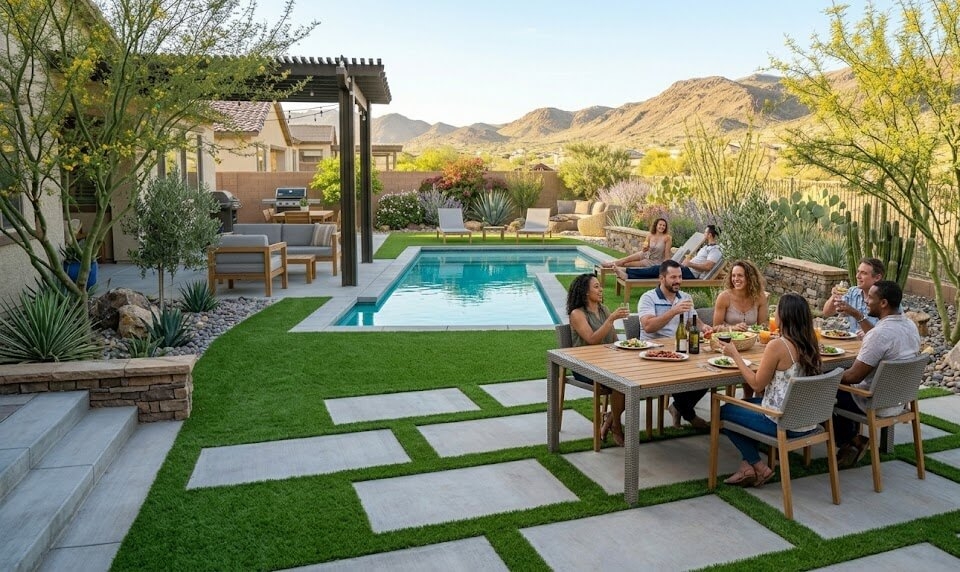
Start by mapping your yard based on use. High-traffic zones need heavier face-weight products. Pet and play zones require infill selection to be part of the planning process. Fill non-turf areas with decomposed granite, gravel, or drought-tolerant plants, and route any remaining irrigation to planter zones only.
As a professional artificial turf provider with showrooms across the Southwest, Festival Turf offers products that qualify for the SNWA Cash-for-Grass rebate and can help match the right product to each zone.
In Las Vegas, choosing a drought-friendly yard design isn’t a trend; it’s a practical move. Eliminating lawn irrigation removes a significant share of residential water use, with no seasonal spike in summer. Beyond water, there’s no mowing, fertilizing, overseeding, or seasonal replanting.
Products are UV-stabilized for desert sun and backed by a 15-year warranty covering fading and material integrity. Synthetic lawn landscaping also works within most Nevada HOA requirements, though it’s always worth reviewing your specific guidelines before installation.
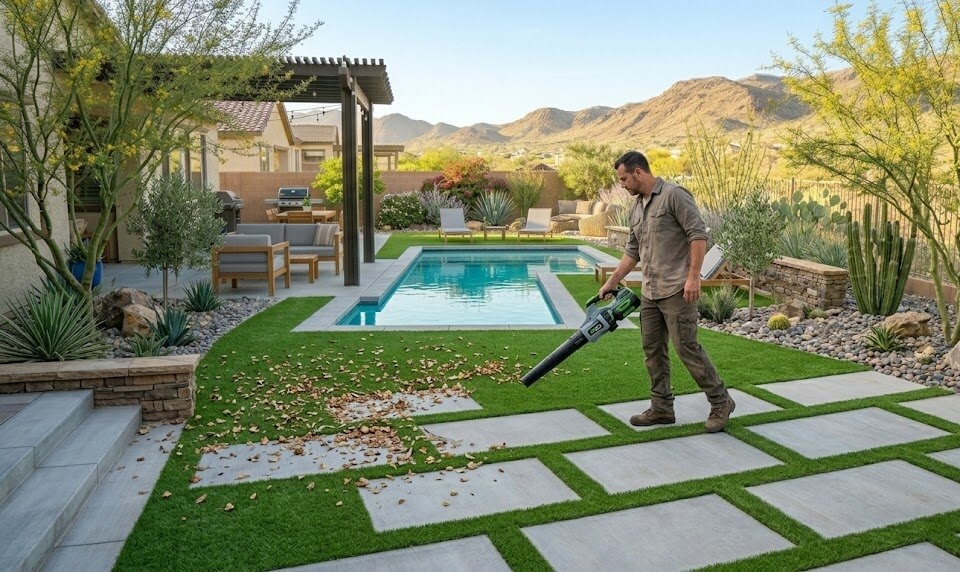
Turf doesn’t require much maintenance, but a few regular habits extend its lifespan considerably:
For questions about infill selection, edging, or project scope, speak with a turf installation expert before getting started.
These are the most common questions homeowners ask when researching backyard ideas with artificial turf.
Yes, particularly in arid climates. Artificial turf eliminates lawn irrigation, needs no mowing or fertilizing, and looks the same in October as it does in April. Residential-grade products are UV-stabilized and available in a range of pile heights and face weights for different applications.
Heat and upfront cost are the two real considerations. Synthetic turf heats up significantly in direct summer sun and gets uncomfortable without shade or cooling infill. Initial installation costs more than seeding natural grass, though water and maintenance savings typically offset the difference over a few years.
Getting the base right matters more than most people expect. It’s the difference between turf that holds up for years and turf that shifts or compresses unevenly. Proper prep includes excavation to roughly 3 inches, compacted gravel or decomposed granite, a sand layer, and a weed barrier membrane. Festival Turf’s installation accessories include weed barrier rolls, securing nails, and seam materials for a clean finish.
Replacing natural grass with turf delivers strong long-term value once water and maintenance savings are factored in. Pairing turf with decomposed granite in non-lawn areas reduces upfront material costs while keeping a cohesive, drought-resistant design. Festival Turf ships free samples to your door so you can compare pile heights and face weights before committing.

 Artificial Grass for Rooftops in Dallas: Benefits, Costs & Ideas