Artificial Turf on Patio: Ideas and DIY Install Tips

Emily Greenfield
October 12, 2026


Artificial turf on a patio works over poured concrete, pavers, stamped concrete, tile, and stone. Most patio installs are a one- to two-day DIY project.
How to install artificial turf on a patio:
Yes. Artificial turf works on almost any solid, stable patio surface. A slab is actually an easier base than soil because there’s no digging, compacting, or weed barrier.
The real challenge is water. Concrete doesn’t absorb rain, hose water, or pet urine, so anything that passes through the turf has to run off the slab. Perforated backing lets water drain through the turf itself. If your patio slopes slightly away from the house, that water runs off the edge on its own. If the slab is flat or has low spots, water sits under the turf and leads to odor, mildew, and damp backing.
| Patio Surface | Best Method | Watch For |
| Poured concrete | Glue, with or without a foam pad | Flat spots that hold water |
| Pavers on sand | Glue to the paver faces | Sunken pavers, weeds in joints |
| Stamped concrete | Foam pad plus glue | Deep texture showing through |
| Tile or flagstone | Foam pad plus glue | Sealed or glossy surfaces that resist glue |
| Cracked or heaving slab | Repair first | Cracks showing through the turf |
| Rooftop or balcony | Drainage mat, no drilling | Waterproof membranes, weight limits |
You don’t have to cover the whole slab. Some of the best artificial turf patio ideas mix turf with the hardscape you already have. If you’re still choosing a product, start with our guide to the best artificial grass for a patio.
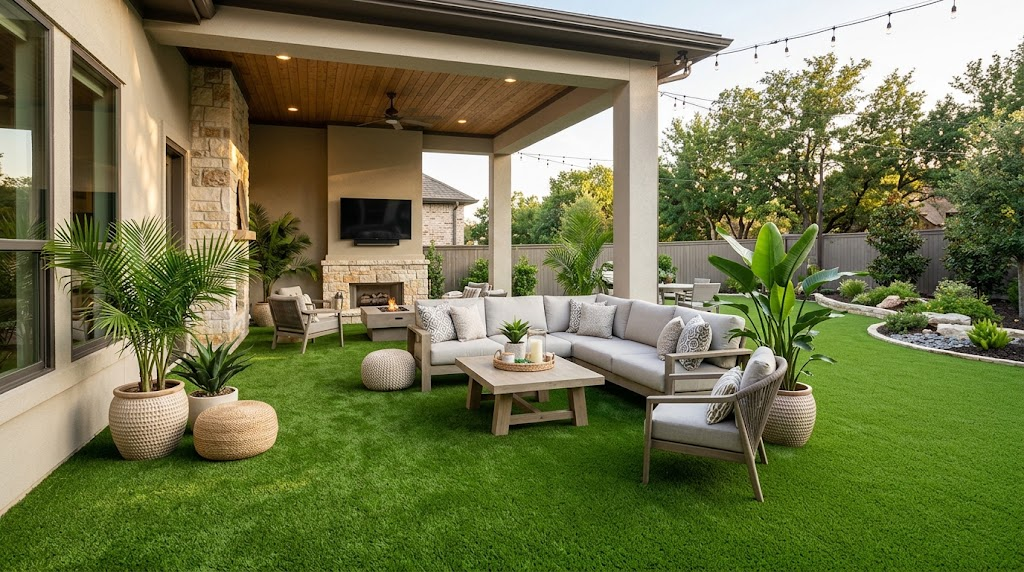
Cover the full slab edge to edge. The turf softens the space, cuts glare from bright concrete, and makes a covered patio feel like an extra room.
This layout works best on covered patios or under a shade sail, since a fully turfed slab in direct sun holds a lot of heat. Run your seams parallel to your main line of sight. Keep the low edge of the slab clear so water can still run off.
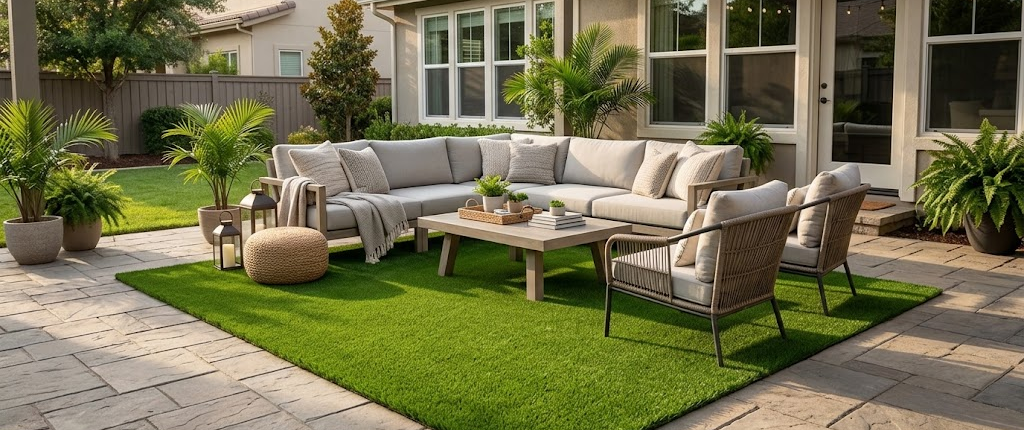
Turf only the lounge zone and leave a concrete border around it. You buy less turf, the border frames your furniture, and the rest of the patio stays easy to sweep.
Size the rug so every chair and sofa leg sits fully on the turf, with about 18 to 24 inches of extra turf past the furniture on each side. Keep grills, smokers, and fire pits on bare concrete. Hot coals can melt synthetic fibers and grease can stain them, and neither can be brushed out.
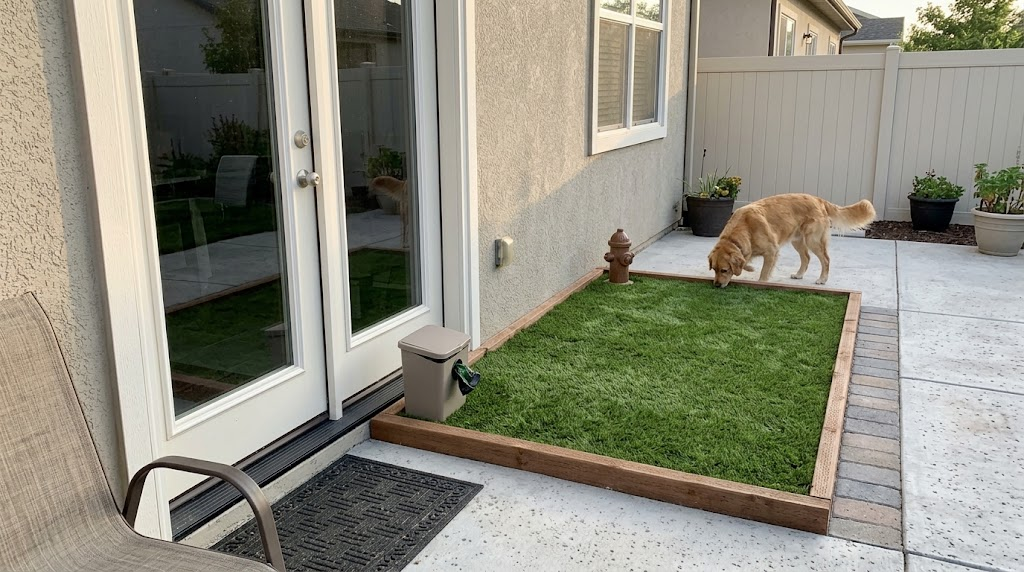
Give your dog a dedicated patch of the patio. Choose a pile height of 1.25 to 1.65 inches with a polyurethane-coated backing. Skip latex-coated backing because it can hold odor.
Pet zones need full drainage, so plan for drainage holes or a drainage mat. Place the zone where you can reach it easily with a hose, since you’ll be rinsing it often.
A flat concrete patio makes a solid base for a short putting surface because it won’t settle or rut over time. Use low-pile putting turf over a foam pad. The pad evens out minor dips in the slab and gives you a truer roll.
A standard cup needs at least 4 inches of depth, which a slab can’t give you. Use shallow or surface-style practice cups instead. A 10 x 12-foot section is enough for one or two cups and plenty of short-putt practice.
This is a DIY guide. Festival Turf supplies the turf and accessories. You can install it yourself or hire a licensed contractor of your choice.
You can find seam glue, seam fabric, and infill on our artificial turf accessories page.
Run a hose on the patio for five minutes and watch where the water goes. If it runs off an edge, you have natural drainage. If it puddles, fix that before any turf goes down.
Most patios are built with a slight slope away from the house, usually around 1/8 to 1/4 inch per foot. That’s enough for water to escape under the turf.
Pressure washes away dirt, moss, oil, and loose paint. Let the slab dry fully, which usually takes 24 to 48 hours. Adhesive won’t bond to a wet or dusty surface.
Fill cracks with concrete patch and grind down any lips or high spots. Every bump you leave will show through the turf. For a closer look at slab prep, see these tips on how to install artificial grass on concrete.
Good artificial grass drainage depends on water having somewhere to go once it passes through the backing. If your slab holds water, you have three options:
| Method | Best For | Pros | Cons |
| Glue down | Permanent patios, high traffic | Strongest hold, no shifting, lowest cost | Firm underfoot, hard to remove |
| Foam pad plus glue | Kids, lounging, putting greens, textured surfaces | Softer feel, hides small flaws, protects backing | Added cost, pad must drain |
| Loose lay | Renters, small balconies, temporary setups | No glue, easy to remove | Edges can shift or curl |
Rule of thumb: If kids or dogs will use the space, add a pad and full drainage. For a pass-through patio, glue alone is fine.
If you’re using a foam pad, tape the pad seams and glue it to the slab in spots or bands, not a full coat, so water can flow underneath. For pet areas, choose a non-absorbent, perforated pad so urine can’t soak in.
Unroll the turf and let it sit in the sun for an hour or two. This relaxes the wrinkles left from the roll.
Point the grain toward your main view, which is usually the house or back door. Every piece must face the same direction.
Cut from the back with a sharp blade, between the stitch rows, so you don’t slice through fibers. Change blades often.
Before joining two pieces, trim the factory edge off each one, usually the first two or three stitch rows. Then butt the edges together so they meet without overlapping. Fold both edges back and center the seam fabric under the joint.
Spread seam glue on the fabric, then press both edges down, keeping the blades out of the glue. Weight the seam until the glue sets, and check the adhesive label for cure time.
Spread adhesive in a 4- to 6-inch band around the perimeter. On larger patios, add a few glue lines across the middle of the turf as well.
Leave small gaps in every glue line, since solid lines act like dams and trap water under the turf. Press the turf down firmly, then trim the final edges cleanly against walls or the slab edge.
Patio turf needs less infill than a lawn install. Spread a thin, even layer of #16 silica sand to add weight and help the blades stand up. For dog areas, use an odor-control infill instead.
Brush against the grain with a stiff broom to work the sand down and lift the blades. Repeat this every few weeks as part of your regular artificial turf maintenance to keep the surface looking full.
Multiply the length by the width, then add 10% for cuts and waste. Break L-shaped or curved patios into rectangles and add those areas together.
Check roll widths before you order. Many rolls come in 15-foot widths, so a patio 15 feet wide or less may not need a seam at all. Confirm available widths with your local showroom.
Example: A 12 x 20-foot patio is 240 square feet. On a 15-foot-wide roll, you’d buy a 21-foot length (315 square feet), trim 3 feet off the side, and cut the ends clean. You’d end up with no seams on the patio. In this case, the roll width sets your waste, so you’ll order more than the 10% minimum.
Before you buy, test the feel. Order a free sample and lay it on your own slab.
Yes. All artificial grass gets hot in direct sun, and the concrete underneath holds heat too. Add shade with a pergola or shade sail, rinse the turf before use on hot days, and consider cooling infill for full-sun patios. See more tips on how to keep artificial grass cool.
Yes. You can glue artificial turf straight onto clean, dry concrete. Add a foam pad if you want a softer feel or need to hide small surface flaws. Make sure water can drain off or through the slab first.
Use the loose lay method. Roll out the turf, tape the seams, and hold the edges down with outdoor turf tape, planters, or heavy furniture. This works best for small areas and rentals. Expect the edges to shift over time.
Yes, with the right setup. Plan for full drainage, choose turf with a polyurethane-coated backing, use a non-absorbent pad if you add one, and rinse the area often. Odor-control infill also helps.
Artificial turf lasts 20 to 25 years on a patio when properly maintained. The biggest factors are UV exposure, foot traffic, and drainage. A full-sun patio with heavy use wears faster than a covered one, and turf that stays damp underneath can break down at the backing. Every Festival Turf product is backed by a 15-year warranty covering fading, workmanship, and materials.
Festival Turf carries the largest synthetic turf inventory in the US, plus the seam glue, seam fabric, and infill you’ll need. Every turf product is backed by our lowest price guarantee and a 15-year warranty. Not sure which blade fits your patio? Order a free sample and test it on your own concrete. Have questions about materials? Contact our team.

