Backyard Ideas for Dogs: 15 Ways to Build a Dog-Friendly Yard

Emily Greenfield
October 8, 2026


The best backyard ideas for dogs cover six basics: a secure fence, a ground cover that holds up to paws, a dedicated potty zone, shade, fresh water, and something to keep your dog busy. Get those right and your yard stays cleaner, your dog stays happier, and you spend less time fixing dug-up patches and muddy floors.
You don’t need a big budget to do it. Many of the ideas below are weekend DIY projects that cost under $50. Others, like swapping a worn lawn for pet-friendly artificial grass, take more upfront work but save you time and water for years.
A dog-friendly backyard is safe, easy to clean, and built around how your dog actually uses the space. Most dogs patrol the fence, pick one or two bathroom spots, and look for a cool place to lie down. Good design works with those habits instead of fighting them.
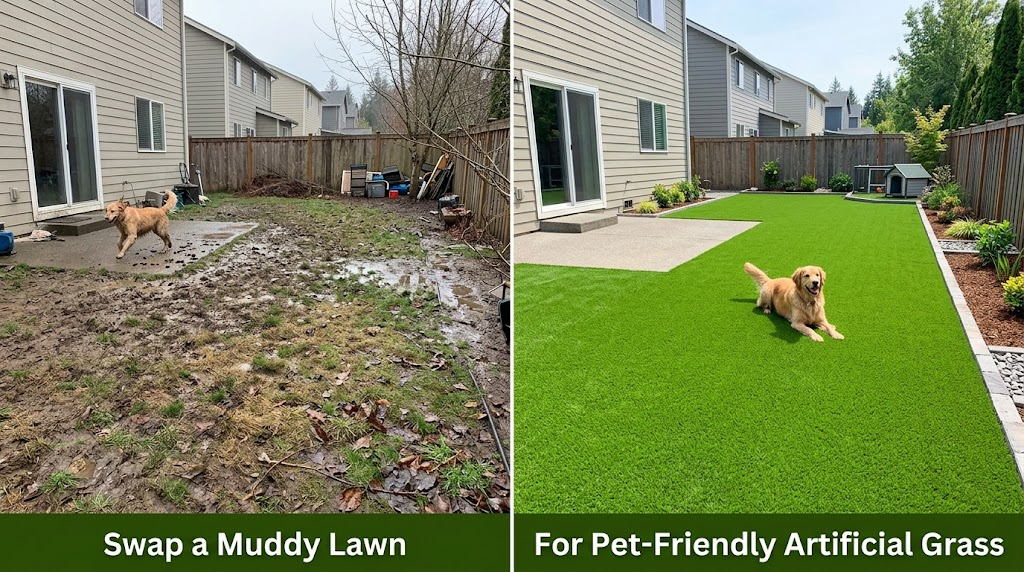
Natural grass and dogs rarely get along for long. Urine burns yellow spots into the lawn, running wears bare paths, and every rain shower means muddy paws on your floors. Artificial grass solves all three problems because there’s nothing to burn, far less wear, and no exposed soil to turn to mud.
The key specs to look for are covered below, and this complete guide to artificial grass for dogs goes into even more detail.

Training your dog to use one spot keeps the rest of the yard cleaner. Pick an area away from your patio and seating, ideally close to a hose bib so rinsing is easy. Mark it with a border of pavers or edging so your dog learns where it starts and stops.
Drainage is the most important part of a potty zone. A turf with a high drainage rate moves urine down and out fast, so odor doesn’t build up. Topping it with ZeoDorizer infill, an all-natural infill that absorbs and neutralizes pet odors, helps even more in hot climates, given that heat makes urine odor stronger.
Rinse the potty zone a few times a week, and use an enzyme cleaner once a month. Regular artificial turf maintenance keeps the whole yard fresh between deep cleans.
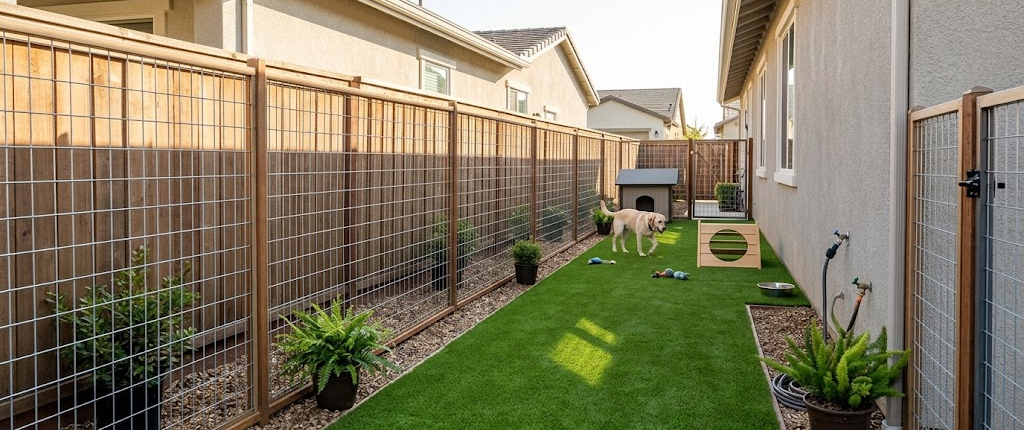
That narrow strip between your house and the fence is often wasted space, but it makes a great dog run. Dogs love long, straight stretches where they can sprint back and forth, and side yards give them exactly that without taking over your main backyard.
Cover the run with turf or pea gravel, add a gate at each end, and make sure the fence is tall enough for your dog. As a general rule, 4 feet works for most small dogs, while large dogs and jumpers usually need 6 feet. In hot, wet, or snowy areas, choosing the right artificial turf for dog runs depends a lot on the climate.
Most dogs run the fence line every day, and you can usually see the worn path they leave. Instead of reseeding it over and over, make it official. A 2- to 3-foot path of pavers, decomposed granite, or turf along the fence gives your dog a patrol route that won’t turn to dirt.
This one idea can fix one of the most worn-looking parts of a dog yard. It also helps keep your dog off planting beds near the fence.
Some dogs are born diggers, and no amount of training fully stops it. Give them a place where digging is allowed. A sandbox or a framed area filled with loose sand or soil works well. Bury a few toys or treats to teach your dog that this is the fun spot.
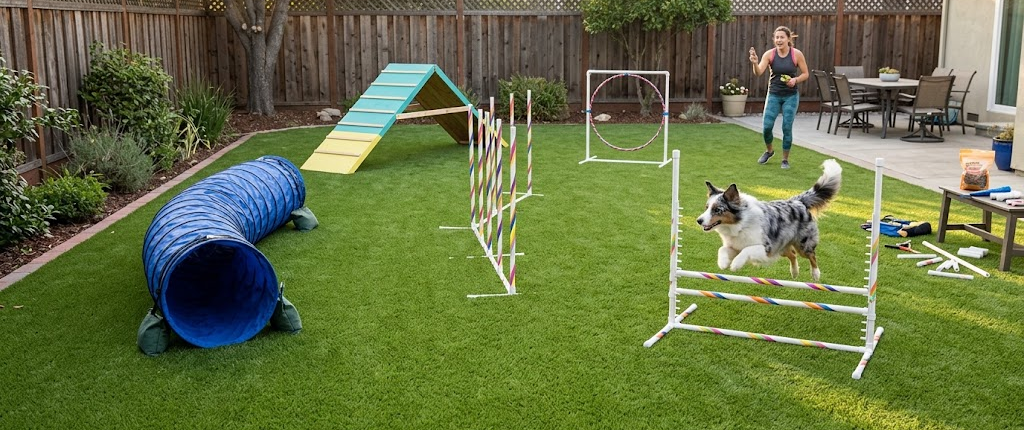
An agility course burns energy fast and builds your bond with your dog. You can make one from pool noodles, PVC pipe, cones, and an old tire secured firmly in place. Weave poles, a low jump bar, and a kids’ play tunnel are easy starters.
Keep jumps low for puppies and older dogs. Young dogs’ joints are still developing, so it’s best to check with your vet before adding higher jumps. Set the course up on a soft surface like turf so landings are easier on joints.
Dogs explore the world through their noses. A sniff garden gives them safe plants, logs, rocks, and different textures to investigate. Dog-safe herbs like rosemary, basil, and thyme add strong scents without the toxicity risk.
Scatter treats through the area for a simple game that tires dogs out mentally. Many sensory garden layout ideas also work well when adapted for dogs.
Water play is one of the cheapest ways to keep a dog cool and entertained. A hard plastic kiddie pool holds up better than an inflatable one, since claws are far less likely to puncture it. For dogs that like to chase water, a sprinkler or a dog splash pad works well.
Place the pool on turf or pavers, not bare dirt, so you don’t create a mud pit. Empty and rinse it often to keep the water clean.
Many dogs bark at the fence because they hear things they can’t see. A small window or a clear pet dome installed in the fence lets them look out safely. Curious dogs often settle down once they can see what’s going on.
Put the window at your dog’s eye level. If your dog is reactive to passersby, this one may not be the right fit.

Shade is a must for every dog-friendly backyard. Dogs overheat faster than people, and every outdoor surface heats up in direct sun. That includes artificial grass, which can get hot on summer afternoons.
Use shade sails, a pergola, a covered patio, or trees to keep the main play areas cool. Rinsing turf with a hose before playtime helps too. For more ways to beat the heat, see our tips on how to keep artificial grass cool.
A raised mesh cot lets air flow under your dog, which keeps them cooler than lying on the ground. It also keeps them off hot concrete and wet grass. Place it in the shade with a view of the yard, since most dogs like to keep watch.
Use a large, heavy water bowl that won’t tip over, and keep it in the shade so the water stays cool. A stainless steel bowl is easier to clean than plastic. For bigger yards, a dog water fountain that connects to a hose bib keeps fresh water flowing all day.
A rinse station stops dirty paws before they reach your floors. Set up a hose with a spray nozzle near the back door, and add a tub or a paver pad underneath. A towel hook and a bin for paw wipes finish the setup.
Walk your fence line and look for gaps, loose boards, and low spots. For dogs that dig out, bury chicken wire or hardware cloth along the base, or lay an L-shaped apron of wire along the ground on the inside of the fence. Large rocks along the base also work.
Gate latches matter as much as the fence. Choose a latch your dog can’t nose open, and add a spring hinge so the gate closes on its own.
You don’t have to give up your garden to have a dog-friendly backyard. The key is choosing plants carefully. Rosemary, basil, thyme, sunflowers, snapdragons, and petunias are generally considered safe for dogs.
Avoid sago palm, oleander, azaleas, foxglove, and lily of the valley, which are toxic to dogs. Skip cocoa mulch too, because it contains the same compound that makes chocolate dangerous. Check the ASPCA’s toxic plant list before you plant anything new.
The best outdoor dog area ideas depend on how much space you have, so here’s how to adapt them for small and large yards.
In a small yard, every square foot has to do more than one job. Turf is a smart choice here because it handles play, lounging, and bathroom breaks in one space. Keep the potty zone in a back corner and use vertical space for shade, like a wall-mounted shade sail or a retractable awning.
A raised cot and a water bowl are often all the furniture you need. Instead of a full agility course, try a few weave poles, a flirt pole, or a ball launcher for exercise.
With more room, you can zone the yard. Give your dog a run or play area, a potty zone, and a shaded rest spot, then keep your patio and garden separate with low fencing or hedges. Large yards are also great for full agility courses, digging pits, and sniff gardens.
Not every upgrade needs a big spend. Here’s how the main ideas compare on cost and effort.
| Idea | Cost | DIY Effort |
| Kiddie pool or sprinkler | $ | Easy |
| Treat scatter and sniff games | $ | Easy |
| Digging pit | $ | Easy |
| DIY agility course from PVC and pool noodles | $ | Easy |
| Dig barrier along the fence | $$ | Moderate |
| Fence line path | $$ | Moderate |
| Shade sail | $$ | Moderate |
| Turf potty zone | $$ | Moderate |
| Side yard dog run | $$ | Moderate |
| Full artificial grass yard | $$$ | Advanced DIY or contractor |
Cost guide: $ = under $100, $$ = $100 to $1,000, $$$ = $1,000 and up.
To save the most money, start with turf in the high-wear zones only, like the potty area and the fence line. This gives you the biggest cleanup benefit for the least material, and you can expand to the rest of the yard later.
Festival Turf supplies artificial grass and accessories for DIY projects. You can install it yourself or hire a licensed contractor of your choice. For DIY installs, these steps on how to install artificial turf on dirt walk through base prep and layout.
| Ground Cover | Pros for Dogs | Cons for Dogs |
| Artificial grass | No mud, no urine spots, soft on paws, drains fast | Gets hot in direct sun, needs regular rinsing |
| Natural grass | Soft and cool | Urine spots, mud, bare patches, high water use |
| Pea gravel | Inexpensive, drains well | Gets hot, stones get stuck in paws, some dogs eat it |
| Wood chip mulch | Inexpensive, soft | Splinters, holds odor, needs replacing; never use cocoa mulch |
| Decomposed granite | Natural look, good for paths | Dusty when dry, muddy when wet, sticks to paws unless stabilized |
| Pavers or concrete | Easy to clean, durable | Hard on joints, gets very hot |
For most dog owners, the best setup is a mix: artificial grass for play and potty areas, pavers for paths, and shade over both.
Not all turf is built for pets. The right choice comes down to three specs:
Hydro Luxe is a strong fit for dog yards. It has a 1.65-inch pile height, SuperFlow backing built for drainage, and a drainage rate of more than 100 inches per hour. That fast drainage is what keeps potty zones fresh.
The best way to choose is to feel it in person. Order a free sample and let your dog test it before you buy.
For most dog owners, artificial grass is the best all-around ground cover for dogs. It doesn’t get muddy, doesn’t develop urine spots, and drains well. Pair it with pavers for paths and shade for hot afternoons.
Start with low-cost ideas like a kiddie pool, a digging pit, a DIY agility course, and a water station. Then add turf only in high-wear areas like the potty zone and the fence line.
Use artificial grass so one surface can handle play, lounging, and bathroom breaks. Put the potty zone in a back corner, add shade, and keep furniture to a raised cot and a water bowl.
Yes, if you choose a pet-friendly turf. Look for a 1.25- to 1.65-inch pile, a polyurethane-coated backing rather than latex, and good drainage. Add shade, since all artificial grass gets hot in direct sun.
Bury chicken wire or hardware cloth along the base of the fence, or lay an L-shaped wire apron on the ground along the inside. Giving your dog a dedicated digging pit also helps.
Rosemary, basil, sunflowers, snapdragons, and petunias are generally considered safe. Avoid sago palm, oleander, azaleas, foxglove, lily of the valley, and cocoa mulch.
If muddy paws and yellow spots are your biggest headache, artificial grass is the upgrade that makes the biggest difference. Festival Turf carries the largest synthetic turf inventory in the US, and every turf product comes with a 15-year warranty. With basic care, it lasts 20 to 25 years.
Order a free sample and let your dog give it a try. Have questions? Contact our team.

 Artificial Turf on Patio: Ideas and DIY Install Tips