Why Phoenix Sports Facilities Are Switching to Artificial Turf

Emily Greenfield
August 7, 2026

Soccer fields in Phoenix face a problem that natural grass was never built to solve: relentless heat, heavy year-round play, and a water supply that keeps getting more expensive. Schools, municipalities, and private sports complexes running soccer fields in Phoenix AZ are increasingly turning to artificial turf as the long-term fix, not a stopgap. This guide covers why the shift is happening, what it costs, and what facility managers should expect from installation through years of heavy use.
Natural grass fields in Phoenix take a beating that few other climates produce. Summer surface temperatures push grass into dormancy, heavy game schedules wear down turf faster than it can recover, and irrigation costs climb every year right alongside the water bill. For facilities running multiple teams, tournaments, and practices on the same field, natural grass simply can’t keep up without constant reseeding and rest periods that eat into usable playing time.
Artificial turf removes that bottleneck. It doesn’t go dormant in extreme heat, it doesn’t need rest between games, and it holds up to a level of use that would destroy a natural field within a season.
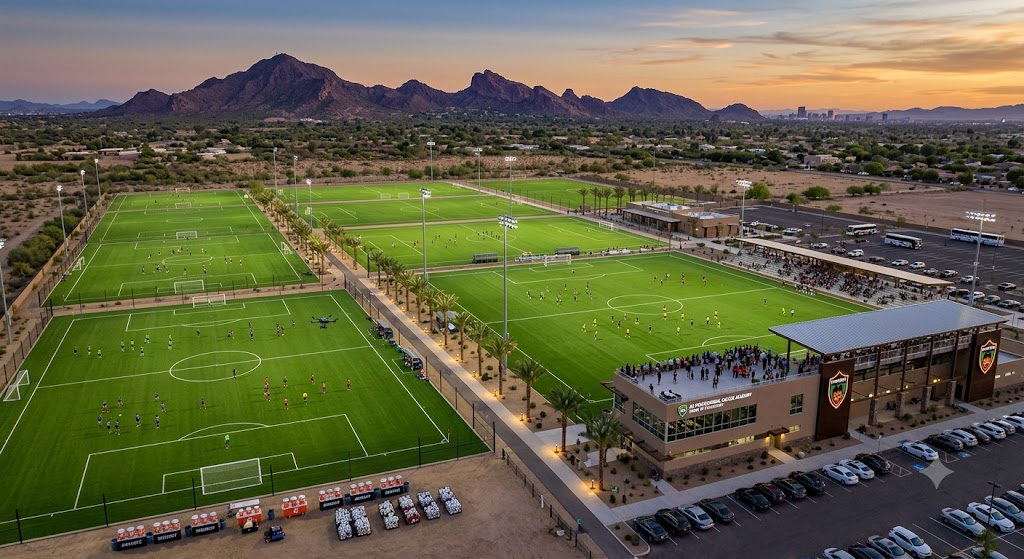
The advantages of switching go well beyond avoiding a dead summer field. Facility managers running soccer fields in Phoenix AZ typically see the payoff across four areas: how many hours a year the field can actually be used, what it costs to maintain, how much water it saves, and how well it stands up to constant heavy play. Together, these factors are why artificial turf has moved from a nice-to-have to the default choice for high-demand facilities.
A synthetic field stays playable in every season, including the stretch of summer when natural grass in Phoenix goes dormant or dies back entirely. That means no blackout months and no scheduling around field recovery time.
Artificial turf doesn’t need mowing, reseeding, fertilizing, or the labor hours that go into keeping a natural field playable. Maintenance shifts to occasional grooming, debris removal, and infill upkeep, which is a fraction of what a natural grass crew requires.
Removing a natural grass field’s irrigation needs is one of the biggest cost levers available to a Phoenix facility. Sports fields are large, and irrigation at that scale adds up fast, especially with Arizona’s ongoing water restrictions and rising utility rates. Synthetic turf needs occasional rinsing at most.
Sports turf systems are built to take repeated cleat contact, sliding, and constant foot traffic across the same zones game after game. Where natural grass shows bald patches and ruts within weeks of heavy use, quality synthetic turf holds its shape and playability for years, even under a full schedule of practices, games, and tournaments.
| Factor | Natural Grass | Artificial Turf |
| Usable hours per year | Limited by heat dormancy and recovery time | Playable year-round, day or night |
| Water needs | High, daily irrigation in summer | Minimal, occasional rinsing only |
| Maintenance | Mowing, reseeding, fertilizing, aerating | Grooming and infill upkeep |
| Durability under heavy use | Wears down within a season of constant play | Built for repeated heavy traffic over years |
| Weather downtime | Rainouts, dormancy, reseeding periods | Little to no weather-related downtime |
Installing a sports-grade synthetic field starts with removing the existing surface and grading the site for proper drainage. A compacted base layer goes down next, typically several inches deep, since it carries the weight and impact load of the entire field. From there, the turf is rolled out, seamed, and secured, followed by infill application to provide cushioning, stability, and consistent ball roll. Line markings and any logos are added during this stage. A full-size field installation typically takes several weeks depending on size and site conditions.
Even though synthetic turf cuts maintenance dramatically compared to natural grass, it isn’t zero-maintenance. Regular grooming keeps infill evenly distributed and fibers standing upright, which protects both playability and appearance. Periodic debris removal, occasional deep cleaning, and infill top-offs are all part of the artificial grass maintenance routine that keeps the surface performing consistently for players.
Sports-grade synthetic turf installation typically runs in the range of $8 to $20 per square foot installed, depending on turf quality, base preparation, drainage requirements, and infill type. For a full-size field, that generally puts total project costs in the range of several hundred thousand dollars to over a million, depending on the scope of the build and whether it’s a new installation or a resurfacing project.
While the upfront investment is higher than seeding a natural field, the reduction in water use, labor, and downtime typically pays that difference back over the field’s usable lifespan. Costs vary by project, so it’s worth requesting a direct quote based on the facility’s specifications.
Phoenix heat is one of the biggest reasons facilities are rethinking natural grass entirely. Extreme summer temperatures push grass into stress and dormancy right when demand for field time is often highest. Synthetic turf doesn’t go dormant, but it isn’t immune to the heat either. Surface temperatures can still climb well above natural grass on a hot afternoon, which means infill choice, shade structures, and cooling technology all matter for player comfort and safety during peak summer months. Facilities planning a new field should factor heat mitigation into the design from the start rather than trying to fix it after installation.
For schools, municipalities, and commercial sports operators, the appeal comes down to reliability. A synthetic field delivers consistent playing conditions regardless of weather, season, or game volume, which matters when a facility is booking tournaments, rentals, or back-to-back practices. It also removes the unpredictability of a natural field’s recovery schedule, which can force cancellations or force play onto an already worn surface.
Facilities across Phoenix are increasingly specifying synthetic turf for exactly this reason: it performs the same in July as it does in January, under the same heavy use. Festival Turf builds artificial grass for sports fields designed to hold up to exactly this kind of demand, and facility managers weighing the switch are welcome to visit our Phoenix showroom to see the turf options in person.
Yes, a growing number of schools, municipalities, and private sports facilities across the Phoenix area have switched to synthetic turf for soccer fields, largely due to extreme summer heat, heavy usage schedules, and rising water costs tied to natural grass upkeep.
Yes, modern sports turf systems are engineered specifically for athletic use, with infill and backing designed to provide cushioning, stability, and consistent footing that meets the demands of competitive play.
A well-installed, quality synthetic sports field can last well over a decade under heavy use, though actual lifespan depends on turf quality, game volume, and maintenance consistency.
Surface temperatures on any artificial turf can rise significantly in direct summer sun, similar to other hard surfaces. Infill selection, shade structures, and cooling treatments can all help manage surface temperature for player comfort and safety.
For high-use facilities, yes, in most cases. While the upfront installation cost is higher than seeding natural grass, the ongoing savings on water, labor, and field downtime typically make synthetic turf the lower total cost option over its usable lifespan.

 Artificial Turf for Dog Runs: The Best Setup by Climate (Desert, Pacific Northwest,...