Artificial Turf for Dog Runs: The Best Setup by Climate (Desert, Pacific Northwest, Texas)

Emily Greenfield
August 3, 2026
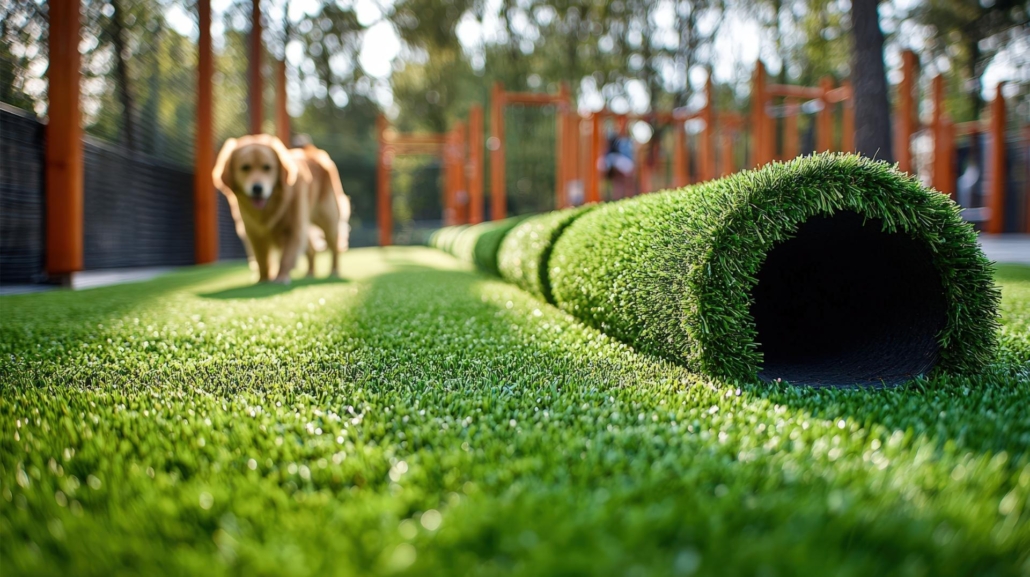
Artificial turf for dog runs solves the mud, mess, and dead grass problem every dog owner knows too well. But the right setup does not look the same everywhere. A dog run built for Las Vegas heat needs a different drainage plan than one built for Seattle rain or Dallas clay. What follows covers the best artificial turf setup for desert climates, the Pacific Northwest, and Texas, plus the features that matter no matter where your dog runs.
Natural grass and dogs do not mix well long term. Urine kills grass in patches, digging tears up roots, and daily foot traffic wears bare paths into the yard. Artificial turf skips all of that. It drains urine instead of holding onto it, resists digging damage, and stays green and even no matter how many laps your dog runs.
If you’re still weighing whether turf is right for your yard, our Artificial Grass for Dogs Buyer’s Guide walks through the full range of pet turf features in more detail.
Desert dog runs face one main problem: surface heat. Turf in direct summer sun can reach 120 to 150 degrees on peak days, hot enough to burn paws if the wrong product is used. The fix starts with UV-stabilized fiber to prevent fading and a cooling infill like zeolite, which can lower surface temperature by up to 30 degrees through moisture retention and evaporation.
Pile height matters too: keep it between 1.25 and 1.65 inches for pet areas, since shorter fibers dry faster and trap less bacteria in high heat. Drainage matters just as much. Dry desert air causes urine to evaporate quickly rather than rinse away on its own, which leaves concentrated residue on the fibers if the system can’t clear it fast. Choose turf with a drainage rate of at least 40 inches per hour per square yard, and rinse the area regularly rather than relying on rain to do it for you.
In the Pacific Northwest, drainage is not a secondary detail. It is the central engineering challenge. Areas that see 38 or more inches of rain a year need a fully permeable backing and a compacted base of clean, angular gravel that moves water through the system instead of letting it pool.
Avoid nylon fiber, which absorbs more moisture than polyethylene and slows drying time. Pair the turf with an antimicrobial or zeolite-based infill to control the mold and mildew risk that comes with shaded, damp conditions, and pay extra attention to low-sun areas near fences or walls where airflow is limited.
Texas dog runs deal with two challenges most other regions do not face together: expansive clay soil and fire ants. Clay holds moisture and shifts seasonally, so the soil needs to be fully excavated and replaced with a properly compacted aggregate base, not just covered over. Fire ant pre-treatment before installation is a standard step in most Texas markets, since ants can nest in the base material if the ground is not treated first.
Combine that with a dog run drainage turf system built for 2–4-inch-per-hour storm rates and UV-stable fiber for the summer heat. Festival Turf supplies pet turf products in Dallas and San Antonio built around exactly these conditions.
No matter which climate you’re installing in, a few core specs separate turf that holds up for years from turf that fails early. Whether you’re comparing options for a desert backyard or a rainy one, these are the features worth checking before you buy artificial turf for dog runs, since they apply across every region even as the exact numbers shift by climate.
Look for a drainage rate of at least 40 inches per hour per square yard, backed by a properly graded and compacted base. This matters in every climate, but the base material and depth should shift depending on local rainfall and soil type.
Zeolite-based infill is the most effective option for ammonia odor control. It absorbs and neutralizes urine odor at the molecular level instead of just masking it, and it holds up for years without breaking down.
Dog runs take more abuse than a standard lawn. Look for a dense face weight and polyethylene fiber, which resists matting and holds up better than nylon under repeated digging, running, and turning.
UV-stabilized fiber prevents fading and breakdown from sun exposure. In hot climates, pair it with a cooling infill so surface temperature stays safe for paws during peak summer hours.
Never install artificial turf for dog runs directly over existing grass or bare soil. Full excavation down to stable ground is the only way to build a base that will not settle or trap moisture. Base depth should be adjusted for your local soil and rainfall, going deeper in high-rain regions. In fire ant territory, the base should be treated for pests before the turf goes down. Secure the turf edges firmly as well, so digging dogs cannot work underneath it.
Rinse the area weekly to flush out urine before it concentrates, and remove solid waste right away rather than letting it sit. Power broom the fibers every few months to keep them upright and keep infill distributed evenly. If a specific spot develops a lingering smell, a diluted vinegar solution handles it without damaging the turf.
The most common failure point is skipping proper base prep to save money upfront. A few mistakes account for most of the problems we see:
Base depth, infill choice, and fiber type all shift depending on where you live. A setup that works perfectly in Las Vegas will underperform in Seattle, and a Texas installation needs pest treatment steps that other regions skip entirely. Matching the setup to your climate from day one is what determines whether the turf lasts 15 years or needs costly repairs within the first few.
Festival Turf supplies pet turf products built for exactly these climate differences, from UV-stabilized desert-ready fiber to high-drainage systems suited for heavy rain. Every product comes with a 15-year warranty and free samples shipped straight to your door, so you can test the feel and drainage before committing. Contact us to find the right setup for your climate and your dog.
Yes. Quality pet turf uses non-toxic, lead-free materials with polyurethane backing instead of latex, so it will not retain odor or irritate paws.
Remove solid waste immediately and rinse the area with water. For urine, a weekly rinse combined with zeolite infill handles most odor without extra products.
It can if drainage or infill choice is wrong for the climate. A properly drained system with zeolite infill and a weekly rinse routine keeps odor from building up.
UV-stabilized polyethylene fiber paired with a cooling infill like zeolite is the best option. It lowers surface temperature and prevents paw burns on peak summer days.
Dog turf typically lasts 15–20 years with proper installation and basic maintenance. Climate-matched base prep and infill choice are the biggest factors in hitting that range.

 Low Maintenance Artificial Grass: What “Low Maintenance” Actually...