Can Weeds Grow Through Artificial Grass?

Emily Greenfield
August 10, 2026
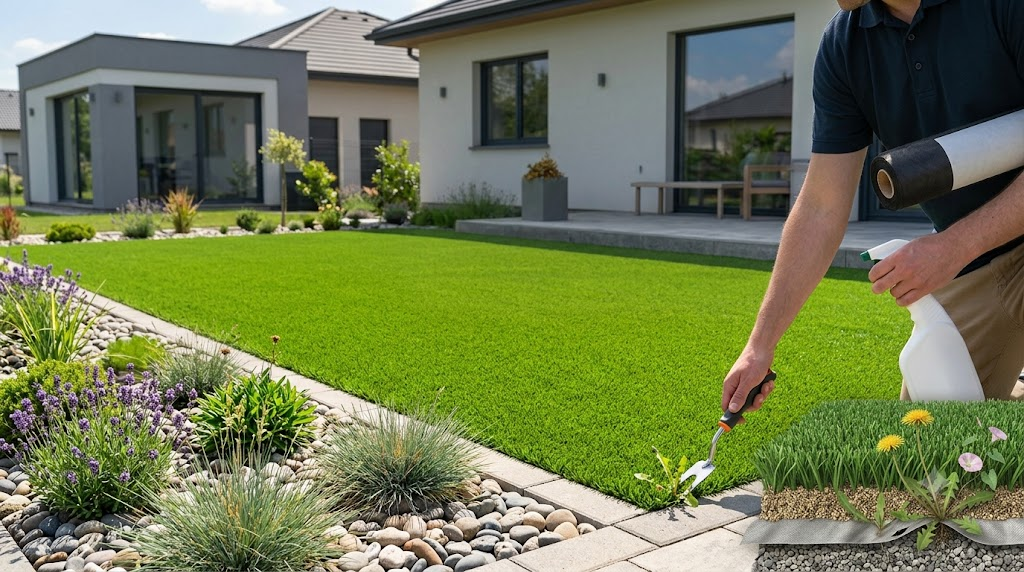
You spent good money on a new lawn so you wouldn’t have to deal with weeds again. Then one morning you spot a sprout pushing up near the edge of your turf, and you start wondering if something went wrong with the install. Here’s the short answer: weeds can’t grow through properly installed artificial grass backing. What you’re seeing almost always enters around the edges, through a drainage hole, or from a seed that landed on top and took root in the infill.
That distinction matters, because it changes how you prevent and treat the problem. Let’s break down where weeds actually come from and what stops them for good.
Quality artificial grass has a dense, tightly woven backing that blocks sunlight and root penetration from below. Without light, weed seeds under the turf simply can’t germinate. Festival Turf’s products use a polyurethane backing rather than latex, which holds up over time and won’t break down the way cheaper backings can. When that backing stays intact and the turf is installed over a properly compacted base, weeds have nowhere to root.
If you do see a weed, it’s coming from one of a few predictable spots. Understanding these helps you know exactly what to fix.
Where turf meets a patio, fence line, or garden bed, gaps can open up over time. Seeds and soil collect in these gaps, and weeds take hold right at the perimeter rather than under the lawn itself.
Turf is designed to drain, but those same holes can trap organic material like dust, leaves, and pet waste. Given enough buildup and a little moisture, a stray seed can germinate right in that debris.
Dandelions and similar weeds spread by wind. Seeds land on your lawn, settle into the infill between the blades, and sprout from the top down. This has nothing to do with your installation and can’t be fully prevented, though good maintenance keeps it rare.
A weed barrier membrane is placed between the compacted base and the turf during installation. It blocks weeds from growing up through the soil while still letting water pass through for proper drainage. For yards with a history of heavy weed growth or nearby vegetation, this extra layer makes a real difference. If you’re planning your own install or working with a contractor, a weed barrier and edging accessories kit gives you the same materials our installation teams use.
A weed barrier only works if the edges of your turf are secured tightly against hardscape, fencing, or garden borders. Loose edges are the single most common place weeds show up, even on lawns with a barrier installed correctly underneath. Securing edges with proper nails, adhesive, or edging material closes off the gap where seeds and soil would otherwise collect. It’s a small detail during installation that saves a lot of maintenance later.
Even a well-installed lawn benefits from a little upkeep. A few simple habits keep weeds from ever getting a foothold:
Whether you’re installing a new lawn or reinforcing an older one, the right materials make the difference between an occasional stray weed and a real problem. Browse our weed barrier and edging accessories built for long-term protection, or order a free sample to see the backing quality for yourself before you buy.
It’s recommended for most installations, especially in yards with a lot of nearby vegetation or a history of weed growth. It isn’t strictly required if your base is properly compacted and edges are secured tightly, but it adds a reliable extra layer of protection.
Pull weeds by hand while roots are still shallow, which is usually easy since they can’t establish deep root systems in turf infill. For larger or recurring growth, a turf-safe weed killer applied directly to the weed works well without damaging the grass.
Generally, yes. Most standard weed killers won’t harm synthetic turf fibers or backing, but it’s still worth checking the label before you spray, since formulations vary. Apply it directly to the weed rather than broadly across the lawn, and follow the product’s guidance on pet and child safety.
Not typically. Weeds that grow around edges or in the infill don’t damage the turf fibers or backing. Left unchecked for a long time, they can look unsightly and make the lawn harder to maintain, but they won’t compromise the material itself.

 Why Phoenix Sports Facilities Are Switching to Artificial Turf