Low Maintenance Artificial Grass: What “Low Maintenance” Actually Means

Emily Greenfield
July 27, 2026
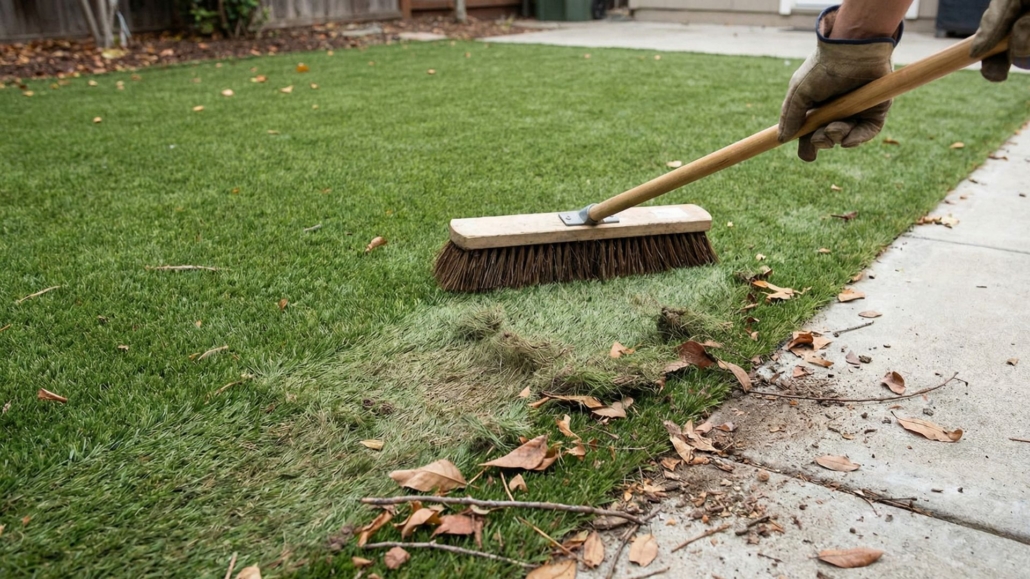

You know the feeling. It’s Saturday morning, the coffee’s still hot, and instead of relaxing, you’re already hauling the mower out of the garage. Then it’s the sprinkler timer to check, the brown patches to reseed, and that fertilizer schedule you fell behind on weeks ago.
Low maintenance artificial grass changes that entire routine: no mowing, no watering, no weekend yard work eating into your free time. But “low maintenance” doesn’t mean zero effort. Here’s exactly what upkeep looks like with artificial turf, why it’s still dramatically less work than a natural lawn, and how to choose a product that actually delivers on that promise.
Yes, artificial grass is genuinely low maintenance compared to a natural lawn. You eliminate the entire cycle of mowing, watering, fertilizing, and reseeding that comes with real grass.
Think about everything a natural lawn demands. You need a mower and edger to keep it presentable, plus a sprinkler system to keep it alive, which often means an upfront installation cost on top of a rising water bill. Fertilizer and weed treatments run on a seasonal schedule, and bare patches need reseeding every spring. That’s a long list of recurring tasks and recurring expenses.
Artificial grass strips almost all of that away. There’s no growth to manage, so there’s nothing to mow. A sprinkler system becomes unnecessary too, which matters even more in drought-prone markets like Las Vegas, Phoenix, and Southern California where water restrictions are common. You’re not buying fertilizer, weed killer, or grass seed year after year.
That’s the core of what “low maintenance” means here. Not doing nothing, but doing far less: swapping the recurring, time-consuming tasks natural grass requires for a much shorter list of simple upkeep habits.
| Task | Natural Grass | Artificial Grass |
| Mowing | Weekly during growing season | Never |
| Watering | Several times a week | Occasional rinse only |
| Fertilizing | Seasonal application | Never |
| Weed control | Ongoing treatment | Minimal, occasional spot check |
| Reseeding | Annual or as needed | Never |
| Equipment needed | Mower, edger, sprinkler system | Broom, hose |
| Typical yearly cost | Water, fuel, fertilizer, equipment upkeep | Occasional infill top off |
The pattern holds across every category. Natural grass requires a recurring investment of time, water, and money. Artificial grass asks for a short list of occasional tasks and nothing more.
Artificial grass is low maintenance, not maintenance free. A little occasional care keeps it looking and performing its best for years.
Here’s what that actually involves:
Compare that short list to the weekly demands of a natural lawn and the difference is obvious. If your turf’s been down for a while and needs a deeper refresh, our artificial turf maintenance guide walks through cleaning schedules, stain removal, and seasonal care in more detail.
Even a low-maintenance lawn benefits from a quick seasonal check, none of it taking more than a few minutes.
Spring is the time to check drainage after winter rain or snowmelt, and to give the whole yard a brush after months of lighter use. Summer calls for a quick rinse more often, since dust and pollen build up faster in dry heat, plus a check that infill hasn’t shifted in high-traffic zones. Fall means regular debris removal as leaves start to fall, so they don’t sit and trap moisture underneath the turf. Winter is the lightest season for upkeep in most Sun Belt markets, though a quick brush after any snow or heavy rain keeps blades standing upright come spring.
That’s it: a quick seasonal routine instead of a weekly obligation.
A few misconceptions come up often enough that they’re worth addressing directly:
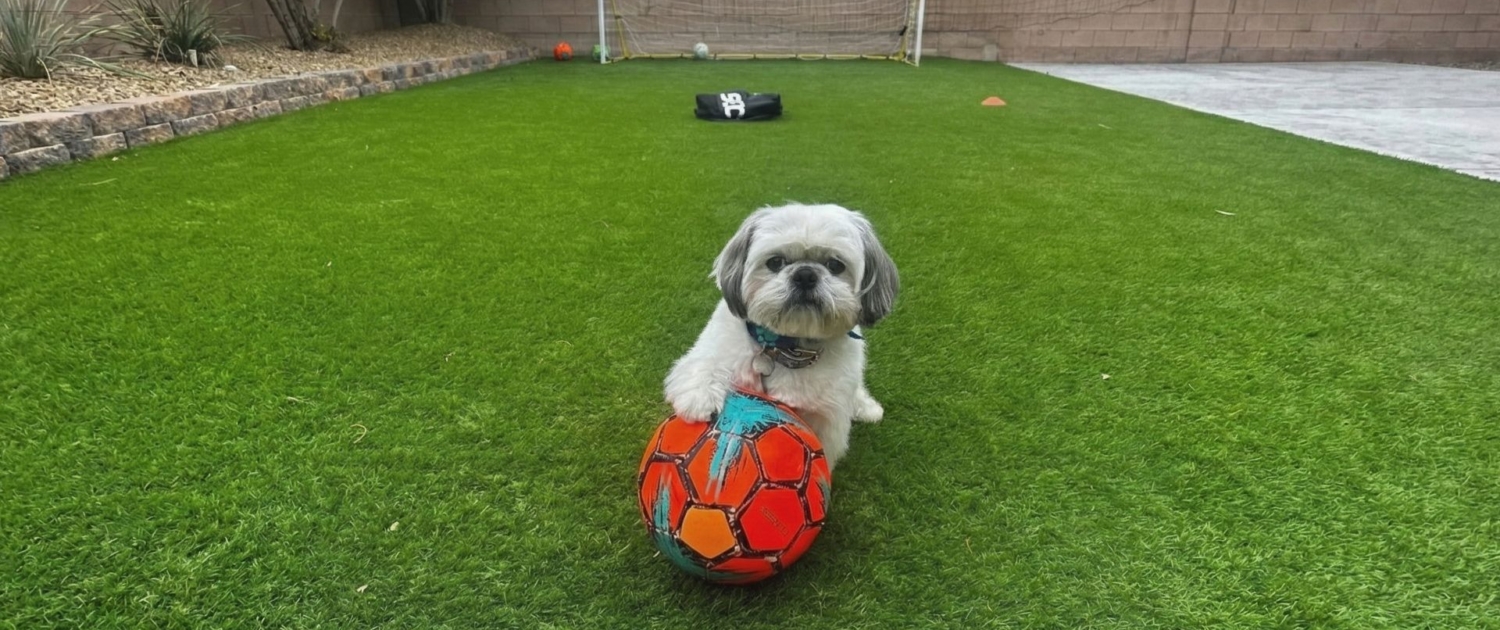
Pet owners often ask if artificial grass is really low maintenance once a dog is added to the equation. The answer is yes, as long as the turf is built for it.
The backing material makes a bigger difference than most people expect. Latex backing tends to trap pet odor over time, no matter how often you rinse it. That’s why Festival Turf uses polyurethane backing instead, which drains faster and doesn’t hold onto odor the way latex does.
For pet owners, the routine is simple. Rinse the area where your dog goes most often to flush out urine before it has a chance to sit, then pick up solid waste promptly, just as you would with a natural lawn. That’s really the extent of it. You won’t deal with muddy paw prints, dead patches where your dog runs the same path every day, or reseeding after a rough winter.
For a pet-friendly option, look for a shorter pile height in the 1.25 to 1.65 inch range, which tends to hold up better under heavy paw traffic while still feeling comfortable underfoot.
Not every artificial grass product delivers the same low maintenance experience. A few specs determine how much upkeep you’ll actually deal with once it’s installed.
Drainage rate matters more than most buyers realize. A properly perforated backing drains at 40 or more inches per hour per square yard, which means water and pet waste clear quickly instead of pooling on the surface. Poor drainage leads to odor, mold, and more frequent cleaning.
Infill type affects both feel and upkeep. CamoFill infill helps blades stay upright longer between brushings and supports better drainage, which reduces how often you need to top it off or deep clean.
Backing material is the single biggest factor in long-term maintenance. Polyurethane backing resists odor and drains faster than latex, which is why it’s the better choice for pet owners and high-traffic yards alike.
Getting these details right at the point of purchase is what separates a lawn that stays low maintenance for 20 years from one that becomes a chore within a few seasons.
Product quality plays a direct role in how much upkeep you’ll actually deal with down the road.
Festival Turf’s artificial grass products, including our Pro 70 and LUXE 80 lines, are built with polyurethane backing rather than latex, which means better drainage and no lingering odor issues. Every product is backed by a 15-year warranty covering fading, workmanship, and materials, so you’re not left guessing how it will hold up over time.
You also don’t have to take our word for it. We ship free samples straight to your door, so you can feel the texture, check the pile height, and see how it looks in your own lighting before you commit to anything. It’s the easiest way to compare low maintenance turf options without any pressure.
Ready to see it for yourself? Order your free sample today and get a feel for what truly low maintenance grass is like.
No. Artificial grass is low maintenance, not maintenance free. It eliminates mowing, watering, and fertilizing, but still benefits from occasional brushing, rinsing, and debris removal to keep it looking its best.
A light rinse and debris removal every couple of weeks is typically enough for most yards. A more thorough brushing once a month and a deeper clean once or twice a year covers the rest, with more frequent attention needed for pet owners or high traffic areas.
Artificial grass doesn’t need regular watering to stay green, which is one of its biggest advantages in drought-prone regions. You’ll still use water occasionally for rinsing off dust, debris, or pet waste.
Rarely, when it’s installed correctly. A solid base and properly sealed seams prevent most weed growth. Any that does appear around the edges is easy to spot treat.
With proper care, quality artificial grass can last 20 to 25 years. Choosing a well-built product with strong backing and a solid warranty, like Festival Turf’s 15 year coverage, protects that investment over the long run.
If you’re ready to trade weekend yard work for a lawn that takes care of itself, contact Festival Turf or request your free samples to get started.

 Artificial Turf for Dog Runs: The Best Setup by Climate (Desert, Pacific Northwest,...