Is Artificial Turf Allowed Under Riverside County HOA Rules?

Emily Greenfield
October 25, 2026
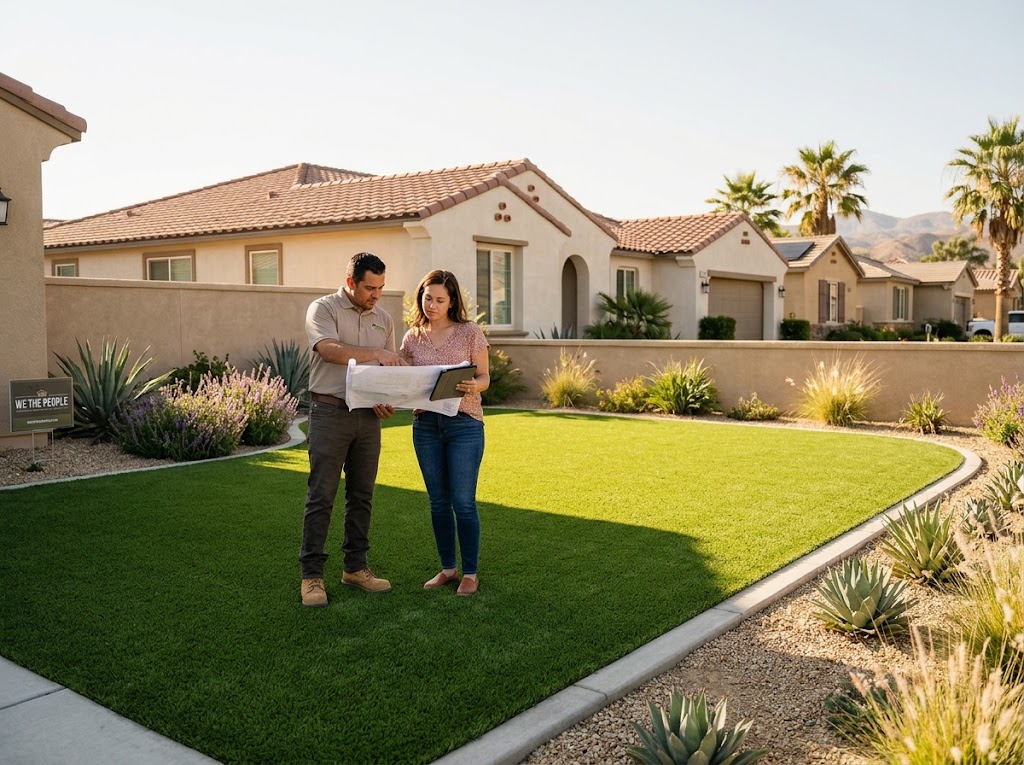
Yes. If you live in a Riverside County HOA, your association cannot ban artificial turf. California Civil Code Section 4735 makes any HOA rule that prohibits artificial turf, or sets conditions that effectively prohibit it, void and unenforceable. Your HOA can still require approval and set reasonable design standards, so how you choose your turf and prepare your application matters.
Here is what the law says, what your board can and cannot control, and how to get your synthetic lawn approved the first time. This applies whether you live in Temecula, Corona, Menifee, Murrieta, or the Coachella Valley.
California protects your right to use artificial turf through the Davis-Stirling Act. This is the state law that governs HOAs and other common interest developments. The key section is Civil Code 4735.
In 2015, lawmakers passed AB 349 as an urgency bill and amended Section 4735. Since then, a provision in your HOA’s governing documents, architectural guidelines, or landscaping policies is void if it prohibits “artificial turf or any other synthetic surface that resembles grass.” It is also void if it includes conditions that have the effect of prohibiting turf.
That covers your CC&Rs, your bylaws, and any architectural guidelines your board adopts. Because it is state law, it applies to every HOA in Riverside County. That includes master-planned communities in Eastvale and Temecula and gated developments in Palm Desert and La Quinta.
No. The artificial turf protection in Section 4735(a)(2) applies at all times, whether or not there is a drought emergency.
The drought language in Section 4735 covers a separate issue. Your HOA cannot fine you for reducing or stopping lawn watering during a state or local drought emergency. The same section also protects water-efficient landscaping you installed during a declared emergency. Your HOA cannot force you to remove it once the emergency ends.
Section 4735 protects low water-using plants too. Your HOA cannot ban them as a group or as a replacement for an existing lawn. Many Riverside County homeowners use both. They put synthetic grass in the play or pet area and native plants along the borders.
Your HOA can still apply landscaping rules, as long as those rules respect the turf protection. Section 4735(b) allows your association to apply the landscaping rules in its governing documents, as long as those rules do not conflict with state law. In practice, that leaves room for reasonable design and quality standards on the type of artificial turf a homeowner installs.
Here is where the line usually falls:
| Rules your HOA can usually set | Rules that are likely void |
| Requiring architectural approval before installation | A flat ban on artificial turf |
| Minimum quality specs (realistic blade shape, multi-tone color, thatch layer) | Specs so strict that no product on the market can meet them |
| Requiring perforated or permeable backing for drainage | Limiting turf to a token area that makes it useless |
| Edging, border, and transition standards | Approval rules with no deadline that stall every application |
| Front yard appearance standards that keep yards consistent with the community | Requiring you to remove turf you installed during a drought emergency |
A rule can be void even if it does not technically ban turf. If it makes turf impossible to install, it may fall under the “effect of prohibiting” language. When in doubt, ask your board to explain in writing how the rule complies with Civil Code 4735.
Yes. The protection covers the yard or lot you own. If you live in a condo or townhome where the HOA owns and maintains the front landscaping, you cannot replace that lawn on your own. Your board decides what happens to common areas.
Civil Code Section 4765 sets the rules your HOA must follow when it reviews your landscaping application. Your association must use a fair, reasonable, and expeditious process, and it must make decisions in good faith.
Follow these steps to keep your project moving:
Do not install until you receive approval. State law protects your right to turf, but skipping the review process can still lead to violation notices and avoidable disputes.
Most HOA denials are not about turf itself. They are about turf that looks cheap, drains poorly, or clashes with the neighborhood. Choosing the right product makes approval much easier:
Bring a few samples to your committee meeting. You can order free turf samples shipped to your door and include them with your application.
In most of Riverside County, no. Most local turf rebates run through the Metropolitan Water District’s SoCal Water$mart program, which does not allow synthetic turf as the replacement surface. Riverside Public Utilities, for example, offers turf replacement rebates for lawns converted to climate-appropriate landscaping, not artificial grass.
The Coachella Valley is the main exception. Coachella Valley Water District has accepted artificial turf in its turf conversion program, with a square footage cap. Rules differ between water providers in the valley, so confirm with your own agency.
Two rules apply almost everywhere:
Even without a rebate, a synthetic lawn removes lawn irrigation from your water use. For local product and showroom details, see artificial grass in San Bernardino and Riverside.
If you serve on an HOA board, a deadline is coming. Under AB 1572, starting January 1, 2029, HOA common areas can no longer use potable water to irrigate nonfunctional turf. Nonfunctional turf means decorative lawns that are not used for recreation, such as medians, entry monuments, slopes, and strips near buildings.
Single-family yards are not covered by the ban, and functional turf like parks and play areas can still be watered. Still, many associations across Riverside County will need to convert decorative common area lawns in the next few years.
Artificial turf is one practical option for these spaces. It needs no irrigation and looks the same year-round. Boards planning larger conversions can explore our commercial artificial grass options for shared and high-traffic spaces.
Not if the only reason is that it is artificial turf. A rule banning synthetic turf is void under Civil Code 4735. Your HOA may still enforce reasonable standards, such as requiring repairs if the turf is damaged or does not match your approved plans.
Yes. Your HOA is allowed to require architectural approval. It must review your application fairly, respond in writing, and explain any denial.
Your HOA can set reasonable quality and appearance standards. It cannot use standards that make installing turf impossible in practice.
Yes, for the property you own. Areas the association owns or maintains, such as shared front lawns, are under the HOA’s control. Some condos and townhomes also have patios or small yards that you use but the association technically owns, so check your CC&Rs to see who controls those areas.
Usually not. SoCal Water$mart programs exclude synthetic turf. Coachella Valley Water District has been an exception, so check your provider’s current terms.
California law is on your side, and the right product makes approval easier. Pick a realistic, well-draining synthetic turf, bring samples to your architectural committee, and get written approval before work begins.
Festival Turf’s Ontario showroom serves homeowners and contractors across Riverside County, from Eastvale and Jurupa Valley to Temecula and Menifee. Every turf product is backed by a 15-year warranty and is built to last 20 to 25 years with proper care.
Ready to compare options? Order a free sample to share with your HOA.
 How Artificial Turf Holds Up at Festivals Like EDC and F1 Las Vegas

