Best Artificial Grass for Las Vegas Heat: What to Look for Before You Buy

Emily Greenfield
September 8, 2026

Las Vegas is one of the hottest urban environments in North America, with summer surface temperatures often exceeding 150°F on pavement and other hard surfaces. These extreme conditions can also affect artificial grass, especially products that are not designed for intense heat and UV exposure.
Choosing the right turf is important for maintaining its appearance, durability, and performance over time. This guide explains the key features of heat-resistant artificial grass and what to look for when selecting a product for the Las Vegas climate.
Standard artificial grass is engineered for temperate climates where summer highs hover around 80°F. Las Vegas regularly hits 115°F in peak summer, and the surrounding hardscape, concrete driveways, stucco walls, and stone patios amplify radiant heat further. That sustained thermal stress degrades low-grade polyethylene fibers, breaks down adhesives in the backing, and causes infill to compact in ways that destroy drainage over time.
Heat also affects how turf feels underfoot. A product without proper cooling features becomes uncomfortable enough that your lawn stops being usable for exactly the months you want to be outside. Choosing turf rated for desert conditions is not a premium upgrade; it is a baseline requirement in this city.
Not all artificial grass is built to handle the extreme conditions found in desert climates. High temperatures, intense UV exposure, and occasional heavy rain can affect both performance and lifespan. When comparing products, pay close attention to the features below to ensure your artificial grass remains durable, attractive, and comfortable for years to come.
UV stabilization is the single most important specification to verify before buying. Prolonged UV exposure without adequate stabilizers causes color fade and fiber brittleness within two to three years in high-sun climates. Look for turf that explicitly carries a UV-resistance rating and comes with a manufacturer warranty covering color retention for at least eight years. A product that doesn’t mention UV stabilization almost certainly doesn’t have enough of it.
The blade material determines how turf handles both heat and foot traffic. Polyethylene fibers are the gold standard for residential and pet applications because they stay softer and more flexible under thermal stress. Polypropylene is cheaper but becomes brittle in sustained heat, making it a poor fit for Las Vegas conditions. Some premium products layer nylon into the fiber structure for added resilience in very high-traffic zones.
For most Las Vegas residential installations, polyethylene offers the best balance of comfort, appearance, and heat resistance.
Infill holds blades upright and affects surface temperature significantly. Traditional crumb rubber infill absorbs heat aggressively and can raise surface temps by 20 to 30 degrees compared to the air temperature. Alternatives like silica sand, cork, or thermoplastic rubber retain far less heat and are the smarter choice for desert installations. Some specialty infills include acrylic coatings specifically designed to reflect solar energy.
Desert climates experience intense, short-duration rainstorms that dump large volumes of water quickly. A turf system with a poor drainage design will pool water, creating a humid environment that accelerates backing degradation.
Prioritize products with perforated backing that allows at least 30 inches of drainage per hour. That drainage capacity handles both monsoon rain events and the regular rinsing turf needs to stay clean in a dusty environment.
In Las Vegas, pile height and density aren’t just aesthetic choices — they directly affect how hot your turf gets and how long it lasts.
The turf industry has responded to demand from hot-climate markets with several innovations worth knowing about. HeatBlock technology, offered by multiple manufacturers, coats individual fibers with a reflective compound that reduces surface temperature by up to 15°F compared to uncoated equivalents. Evaporative cooling systems, which use moisture-retaining infill layers that activate when wetted, take a different approach by mimicking how natural grass cools itself through transpiration.
Some installers also recommend strategic shade integration, placing turf under pergolas, shade sails, or mature tree canopies to limit direct sun exposure during peak heat hours. This doesn’t eliminate the need for heat-resistant turf specifications, but it does extend comfort hours meaningfully.
The best turf for Las Vegas isn’t the one that looks greenest in the showroom – it’s the one engineered to survive what the showroom never simulates.
Avoiding these pitfalls before you buy can save you significant time, money, and frustration down the line.
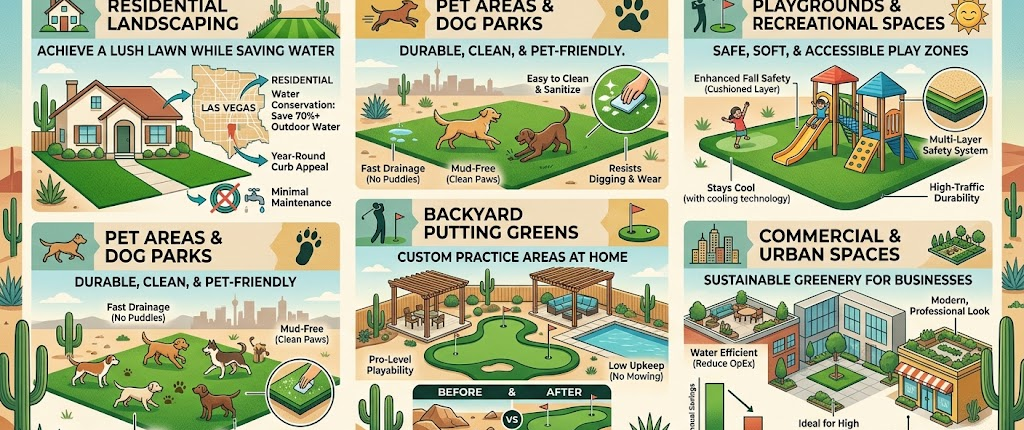
Artificial grass is a practical solution for Las Vegas homeowners and businesses alike, where extreme heat, limited rainfall, and water conservation mandates make natural grass increasingly difficult to justify. The Las Vegas artificial grass installation options available today are engineered specifically for the Mojave climate, and the savings add up fast.
The EPA WaterSense program estimates that replacing natural grass can save 55 gallons per square foot annually, a figure that carries real weight in a region where the Nevada Division of Water Resources actively tracks conservation targets for the Colorado River basin.
Homeowners often choose artificial grass to maintain a green, attractive landscape year-round without the ongoing costs of watering, mowing, and fertilizing. Heat-resistant turf with UV protection helps preserve its appearance even during the hottest summer months.
Artificial grass is well suited for pet-friendly spaces thanks to its durability and easy maintenance. Products with efficient drainage systems help manage pet waste and simplify cleaning, while antimicrobial infills can help reduce odors and improve hygiene.
Around pools, artificial grass provides a clean, mud-free surface that remains attractive throughout the year. Shorter pile heights and high-quality drainage systems help prevent water accumulation and create a comfortable space for relaxation and recreation.
Businesses, schools, and other commercial properties use artificial grass to maintain professional-looking outdoor spaces with minimal upkeep. Commercial artificial grass for schools and corporate campuses requires even higher durability standards, with turf systems designed for heavy foot traffic while helping reduce water consumption and maintenance costs.
Choosing a turf product designed specifically for desert conditions ensures the best performance, whether you’re upgrading a residential lawn, creating a pet-friendly yard, enhancing a pool area, or improving a commercial landscape.
Artificial grass in Las Vegas requires less maintenance than natural grass, but not zero maintenance. A few simple habits go a long way.
The performance gap between professionally installed turf and a DIY project is wider in desert climates than anywhere else. Desert soil compaction, drainage grading, and base material selection all require expertise that generic installation guides don’t account for. A poorly graded base creates standing water zones that defeat even the best-draining turf backing.
Professional installers in Las Vegas also understand local code requirements and HOA specifications, which vary significantly across the valley. They account for thermal expansion in the turf seaming process, leaving appropriate gaps that prevent buckling when surface temperatures peak in July and August.
If you’re ready to move forward, get in touch with a turf specialist to assess your site before committing to a product. Explore the full range of artificial grass products engineered for desert performance to find the specification that matches your project before installation day.

 Does Artificial Grass Get Hot in Summer in Denver?