Firepit on Grass: Is Artificial Grass Flammable and How to Stay Safe?

Emily Greenfield
July 9, 2025
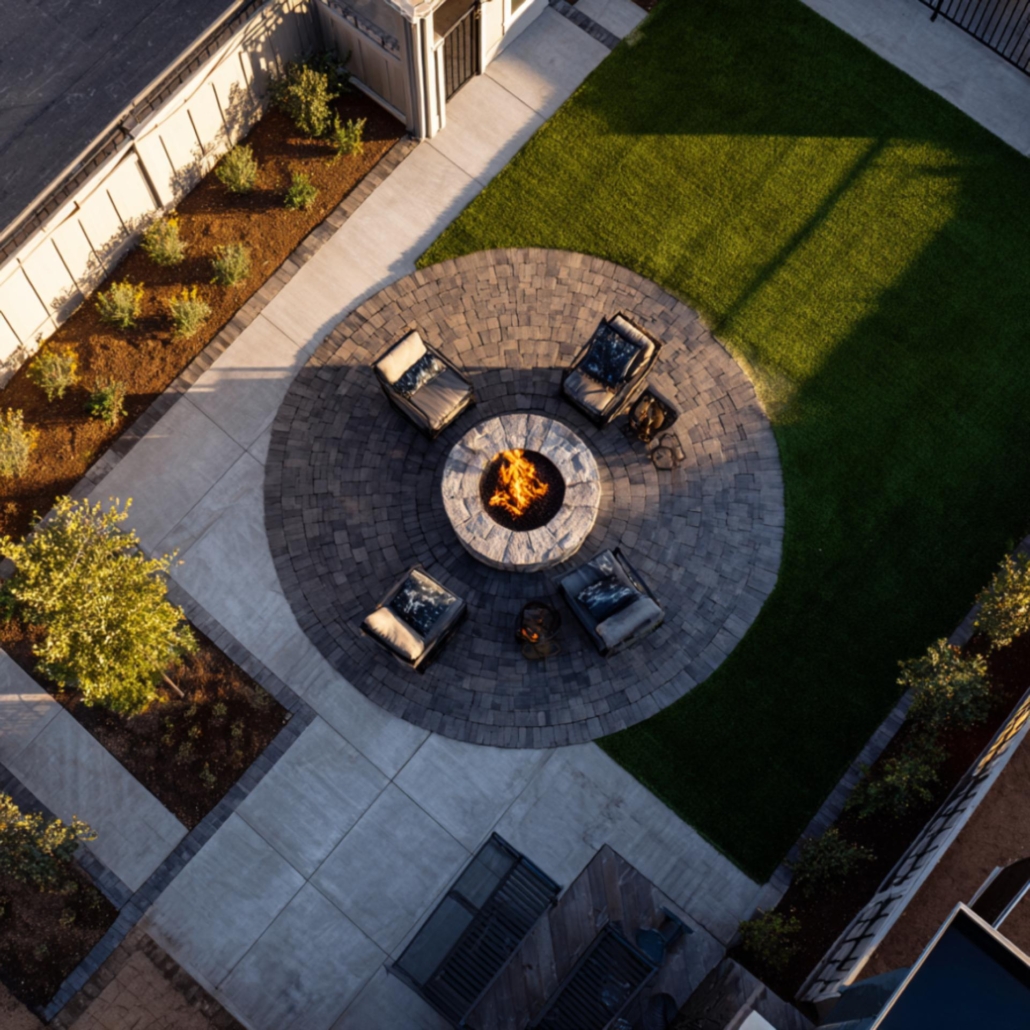

You can put a fire pit on grass, but not directly. There’s an undeniable magic to a backyard fire pit, the gravitational center for good conversation and questionable S’more-making techniques. But when your outdoor space is a flawless, emerald-green lawn, natural or artificial, setting a fire pit straight onto it is asking for a scorched, melted mess.
The fix is simple: put a heatproof barrier between the fire and the lawn. Here’s exactly what to put under a fire pit on grass, and how to do it safely if your lawn is artificial turf.
The right barrier depends on whether you want a permanent setup or something you can move.
Pavers or a paver pad: The most common permanent solution. A layer of stone or concrete pavers creates a stable, non-combustible surface that fully separates the fire pit from the lawn underneath.
Poured concrete or a concrete pad: The most durable option if you’re not planning to move the fire pit. It handles heat indefinitely and won’t shift over time.
Gravel or crushed stone: A lower-cost option that still provides a non-combustible base, especially good for a temporary or seasonal fire pit setup.
A heat-resistant fire pit mat: Best for portable fire pits or renters who can’t install a permanent pad. These mats are designed to sit under the fire pit and block radiant heat from reaching the surface below.
Whichever option you choose, the barrier needs to extend beyond the base of the fire pit itself, not just sit directly underneath it, since radiant heat and stray embers can travel further than you’d expect.
The dream of a glowing firepit on grass dies fast on a classic lawn. Placing a fire pit directly on natural grass is a fantastic way to kill it. The intense heat scorches the blades and sterilizes the soil underneath, leaving a permanent, ugly brown patch. Worse, if the grass is dry, stray embers can easily ignite it.

The answer here is a hard no, with a strategic yes attached. You absolutely cannot place a fire pit directly onto your artificial turf. The heat will destroy the synthetic fibers instantly. However, you can safely have a fire pit within your artificial grass landscape. The key is creating a designated, heatproof stage for your fire feature that isolates it completely from the turf itself.
Before you even buy a fire pit, play detective. Fire safety is governed by local ordinances and, often, HOA rules. Most cities and counties have strict regulations dictating how far a fire pit must be from any structure, like your house or a fence. While some guidelines suggest a minimum of 10 feet, fire safety experts often recommend a safer distance of at least 20 to 25 feet to prevent heat damage or fire from stray sparks. Always check with your local fire department for the specific codes in your area, which is a frequent concern for homeowners considering artificial grass in San Diego and other arid climates. Don’t assume; verify.

Here’s the critical distinction: modern, high-quality artificial grass is designed to be fire-retardant, not flammable. So, is artificial grass flammable like a piece of paper? No. It won’t ignite and spread flames because manufacturers treat the materials to resist fire, often achieving a Class 1 fire rating.
However, direct contact with a hot ember or intense radiant heat will cause the synthetic fibers to melt. Damage can occur at temperatures as low as 175-200°F, especially from the radiant heat of a fire pit or focused reflections. A hot coal will cause the plastic fibers to fuse together, creating permanent aesthetic damage. Even the most durable artificial grass for landscaping will suffer this fate. The answer to “is artificial grass flammable?” is no, but the risk of ugly, melted scars is very real.

Not all turf performs the same way near heat. Fire resistance comes down to three things: the fiber, the infill, and the backing.
Fiber material: Most artificial grass is made from polyethylene, polypropylene, or nylon. Polyethylene is the most common and gives that soft, realistic feel, but it has a lower melting point than nylon. Polypropylene is more affordable but ignites faster and burns more aggressively. Nylon holds up best under heat, which is why it shows up more often in high-traffic or specialty applications.
Infill choice: Infill sits between the blades to add cushioning and help the fibers stand upright. Sand-based infill is non-combustible and adds a real layer of protection. Crumb rubber infill, on the other hand, can burn and release fumes if it ignites. Festival Turf’s CamoFill infill is designed with this in mind, giving you a cushioned feel without the fire risk that comes with recycled rubber blends.
Backing material: The backing holds everything together, and it matters more than most homeowners realize. Festival Turf uses a polyurethane backing rather than latex. Latex backing tends to retain heat and odor over time, while polyurethane holds up better under both UV exposure and heat stress, which is one of the reasons it’s also the better choice for pet owners.
None of this makes turf fireproof. It just means the difference between a small melted spot you can patch and a much larger repair often comes down to what the turf is actually made of.
Placing a fire pit on grass without any protection is courting disaster, whether the grass is real or not. The dangers are distinct but equally problematic.

You can have that perfect backyard fire pit experience without the risk. It’s all about creating layers of safety and thinking like a firefighter.

If you live in Las Vegas, San Diego, the Inland Empire, or anywhere else with real wildfire risk, this question matters beyond just your backyard fire pit. Dry natural grass is fuel. A single spark from a cigarette, a stray ember, or even a lawnmower blade hitting a rock can ignite a patch of dead lawn and let it spread fast.
Artificial turf doesn’t carry flame the same way. It won’t dry out into kindling every summer, and because it doesn’t fuel a spreading fire, more fire-conscious municipalities are factoring synthetic turf into defensible space planning, the buffer zones designed to slow a fire’s approach to a structure.
That doesn’t mean turf is fireproof, and it’s not a substitute for following your local fire department’s defensible space guidelines. But if you’re weighing landscaping choices in a fire-prone area, a properly installed, fire-retardant turf system is a lower-risk option than a natural lawn that browns out every dry season.
Your responsibility doesn’t end when the last marshmallow is toasted.
Not directly. Whether the lawn is natural or artificial, you need a non-combustible barrier like pavers, concrete, or a fire-resistant mat between the fire pit and the grass to prevent scorching or melting.
Pavers, poured concrete, gravel, or a heat-resistant fire pit mat all work. Concrete and pavers are best for a permanent setup, while a fire mat is the better choice for a portable fire pit you move around the yard.
No, not without a barrier. Direct heat from a fire pit will melt synthetic fibers permanently. You can still enjoy a fire pit in a yard with artificial turf as long as it sits on a separate non-combustible surface like pavers or concrete, fully isolated from the turf.
Most synthetic turf fibers begin to soften or melt between 175 and 200 degrees Fahrenheit. Radiant heat from a fire pit or a grill can reach this range even without direct contact.
No. Melting or scorching from direct heat or flame contact is considered external damage and typically isn’t covered under a standard materials and workmanship warranty. Preventing contact in the first place is the only real protection.
A non-combustible base like poured concrete, natural stone pavers, or compacted gravel. Keep the fire pit fully off the turf, not just next to it, and leave a few feet of clearance from the turf’s edge.
Nylon handles heat better than polyethylene or polypropylene, but no synthetic fiber is heat-proof. Regardless of material, a fire pit should never sit directly on turf.
Having a fire pit on grass is possible. It requires smart planning and a healthy respect for what happens when intense heat meets modern materials. By creating a dedicated, fireproof zone and following basic safety rules, you can enjoy the magic of a backyard fire without ever having to worry about a melted, messy aftermath.

 Why Pet‑Friendly Artificial Grass Is a Smart Choice for Your Home and Pet...