Artificial Grass for Allergy Sufferers in Dallas, TX: A Complete Guide

Emily Greenfield
May 13, 2026
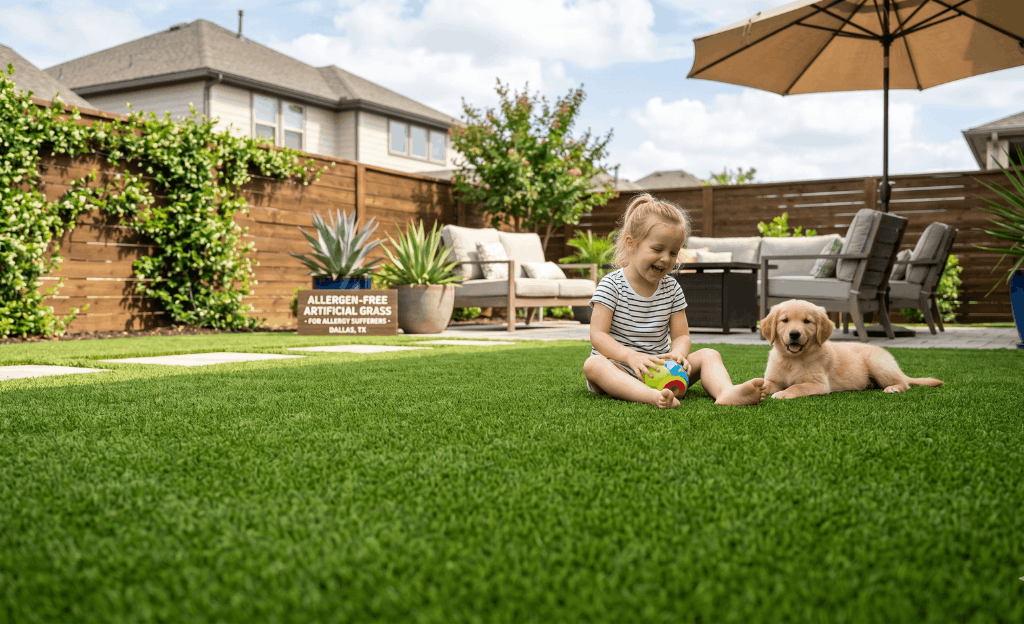
Artificial grass for allergy sufferers is quickly becoming a preferred choice for Dallas, TX homeowners who struggle with seasonal allergies. North Texas consistently ranks among the worst regions in the U.S. for pollen exposure, with triggers like Bermuda grass, ragweed, and oak pollen affecting residents from early spring through late fall.
Unlike natural lawns, synthetic turf does not produce pollen, require mowing, or rely on fertilizers that can worsen allergy symptoms. This makes it an increasingly effective option for low pollen landscaping in Dallas and other allergy-prone households across the region.
Dallas is located in one of the most allergy-prone regions in the United States. North Texas’s warm, humid climate supports long growing seasons, but it also creates ideal conditions for airborne allergens to thrive.
Residential lawns in the Dallas Fort Worth area are commonly made up of Bermuda grass, a highly prolific pollen producer that peaks from late spring through early fall. Seasonal allergens are further intensified by oak and cedar pollen in spring, ragweed in late summer and fall, and persistent mold spores encouraged by humidity.
Routine lawn care can also worsen exposure. Mowing a natural lawn releases a mix of grass pollen, dust, and mold directly into the air at ground level. In addition, fertilizers and herbicides may contribute to respiratory irritation for sensitive individuals.
Switching to synthetic turf doesn’t eliminate every allergen in your environment, but it removes several of the most controllable ones. For Dallas homeowners who spend time outdoors, that reduction can translate into a meaningful difference during peak allergy season.
Synthetic grass produces no pollen. That alone can significantly reduce the allergen load in your yard. You cannot control what neighboring trees or lawns release, but removing your own grass pollen source cuts direct exposure during the hours you spend outside at home. For households dealing with synthetic grass allergies, concerns about the materials themselves, modern turf products are manufactured from non-toxic, hypoallergenic fibers that do not trigger the same responses as natural grass pollen.
Artificial turf helps keep outdoor spaces cleaner by reducing the buildup of organic material that typically traps allergens in natural lawns. Without soil disruption, grass clippings, or decaying matter, there’s less opportunity for mold and fine debris to develop.
It also doesn’t hold moisture in the same way as soil and thatch, which helps limit damp areas where mold can grow, especially in shaded or humid parts of Dallas yards. While dust and pollen can still settle on the surface, allergy-friendly artificial grass is easy to rinse, helping keep allergen buildup under control.
Mowing a natural lawn is one of the worst activities for allergy sufferers. The spinning blade throws pollen, mold, and fine particulates into a cloud that lingers at head height for 30 minutes or more. With synthetic turf, mowing is permanently off the list. No engine exhaust, no airborne grass clippings, no post-mow allergy attacks.
Artificial grass provides a consistent surface throughout the year, unlike natural lawns that change with seasons and release pollen during growth cycles and mowing.
In Dallas, where pollen levels spike in spring and fall, natural grass can contribute to repeated exposure through regrowth and maintenance. Switching to a pollen-free lawn in Dallas removes that cycle entirely since synthetic turf doesn’t grow or require cutting.
While it doesn’t block outside allergens, it significantly reduces seasonal spikes coming from your own yard, creating a more stable environment for allergy-sensitive households.
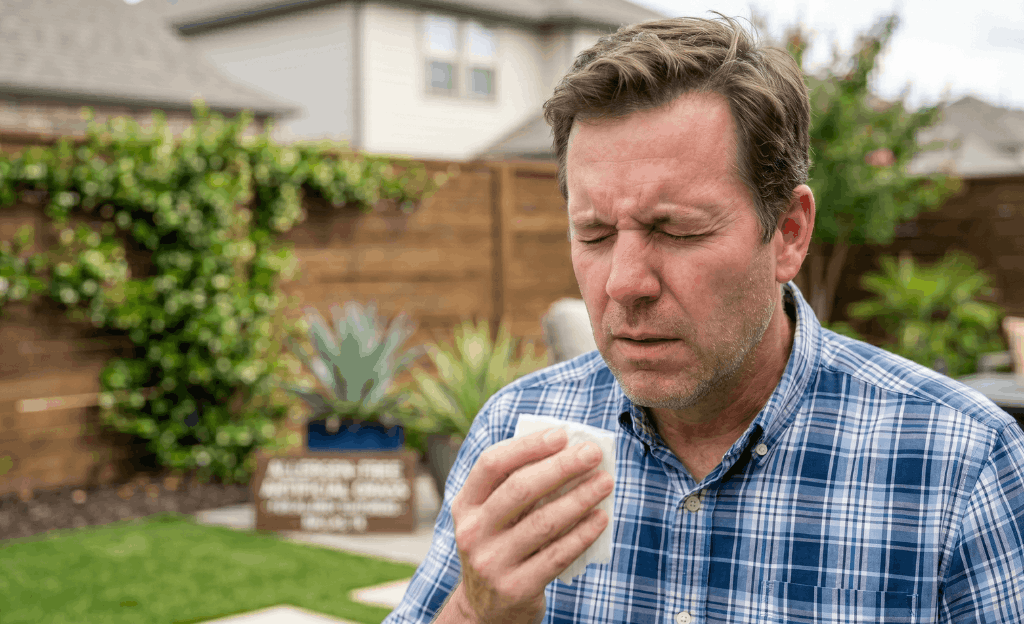
Yes. Modern artificial grass is manufactured from non-toxic, hypoallergenic materials. The polyethylene fibers used in premium turf products are the same type of plastic found in food-grade containers.
Festival Turf products use polypropylene and polyurethane backing instead of latex, specifically because latex-backed turf can cause reactions in sensitive individuals. If you or a family member has severe allergies or asthma, look for turf with a non-latex backing and lead-free, heavy-metal-free certifications.
It is worth noting that artificial grass does not eliminate all outdoor allergens. Tree pollen and airborne mold from other sources will still land on any surface. But by removing the largest allergen producer in your yard, you reduce overall exposure.
Keeping your synthetic lawn allergy-friendly takes minimal effort compared to a natural yard, but a few habits make a real difference:
Allergy-sensitive households in Dallas are using synthetic turf in more places than just the front and back yards. Consider these high-impact applications:
If you’re dealing with allergies, this comparison shows how artificial grass in Dallas and natural grass differ in terms of pollen, mold, and chemical exposure.
| Factor | Natural Grass | Artificial Grass |
| Pollen Production | High output, especially from Bermuda grass during peak seasons. | No pollen production. |
| Mold Risk | Retains moisture in soil and thatch, encouraging growth. | Fast drainage reduces moisture and limits mold. |
| Chemical Exposure | Requires fertilizers and pesticides that can irritate airways. | No chemical treatments required. |
| Maintenance Triggers | Mowing and blowing release dust and allergens into the air. | Minimal upkeep; rinsing and brushing without airborne irritants. |
| Allergy Impact | Frequent exposure to allergens throughout the year. | Significantly reduced outdoor allergen exposure. |
Overall, artificial grass performs better for allergy management in Dallas due to its zero pollen production, reduced mold risk, and lack of chemical treatments. Natural grass, while common, consistently exposes homeowners to seasonal allergens throughout much of the year.
In a region where pollen levels remain high for much of the year, artificial grass can make outdoor spaces noticeably more comfortable to use.
If you’re considering making the switch, seeing the product in person can help you understand the difference in texture, drainage, and appearance. Festival Turf offers a wide selection of synthetic grass options, along with a 15-year warranty and a lowest price guarantee. You can visit the Dallas showroom or reach out to the team for personalized recommendations based on your yard.
No. Artificial grass eliminates grass pollen and mowing-related allergens, but it cannot block tree pollen, ragweed, or mold spores carried by wind from other sources. It significantly reduces your overall exposure by removing the largest allergen source in your yard.
Yes. Dallas lawns are dominated by Bermuda grass, which is a major pollen producer from late spring through early fall. Replacing it with synthetic turf eliminates that pollen source entirely while also removing the need to mow, fertilize, or treat the lawn with chemicals.
Dust and airborne particles can settle on any outdoor surface, including artificial turf. A weekly rinse with a garden hose during pollen season keeps dust accumulation low and maintains an allergy-friendly surface.
Yes. Premium artificial grass products are made from non-toxic, hypoallergenic polyethylene fibers. They contain no latex, lead, or heavy metals. The surface is softer and cleaner than natural grass, making it a safer play area for children with allergies or asthma.
Rinse the surface with a hose weekly during peak allergy season. Brush the fibers with a stiff broom every few weeks to prevent debris buildup. Remove leaves and organic matter quickly to avoid mold. For pet areas, use an enzyme-based cleaner to maintain hygiene.

 10 Benefits of Artificial Turf: Water Savings, Low Maintenance & More