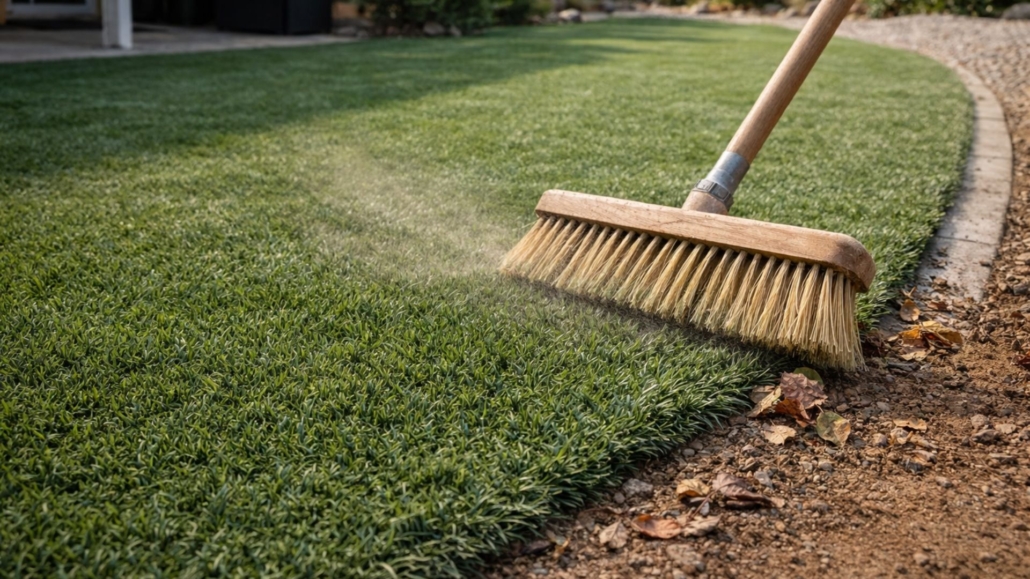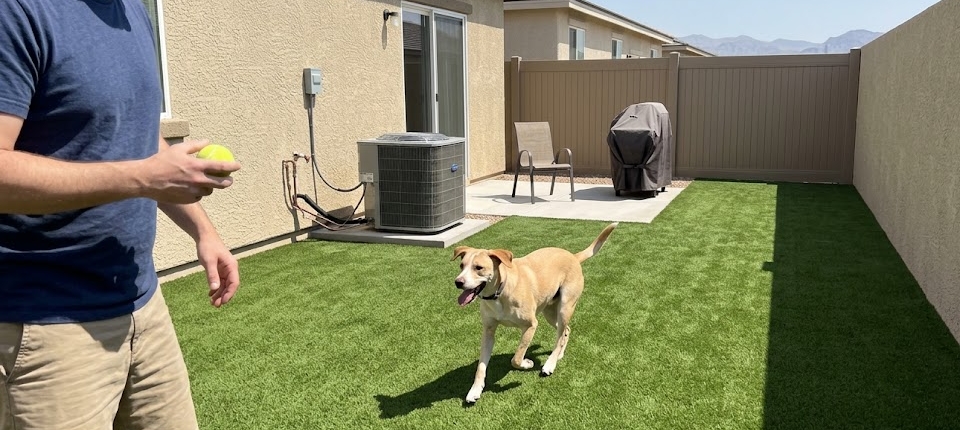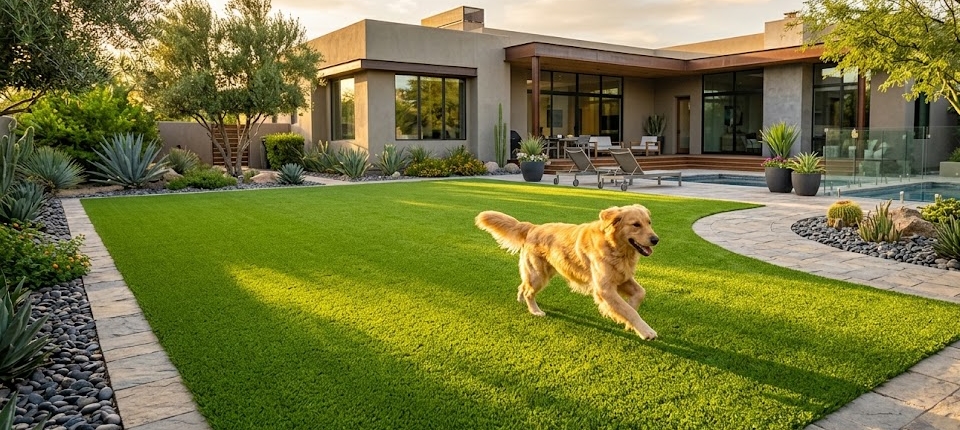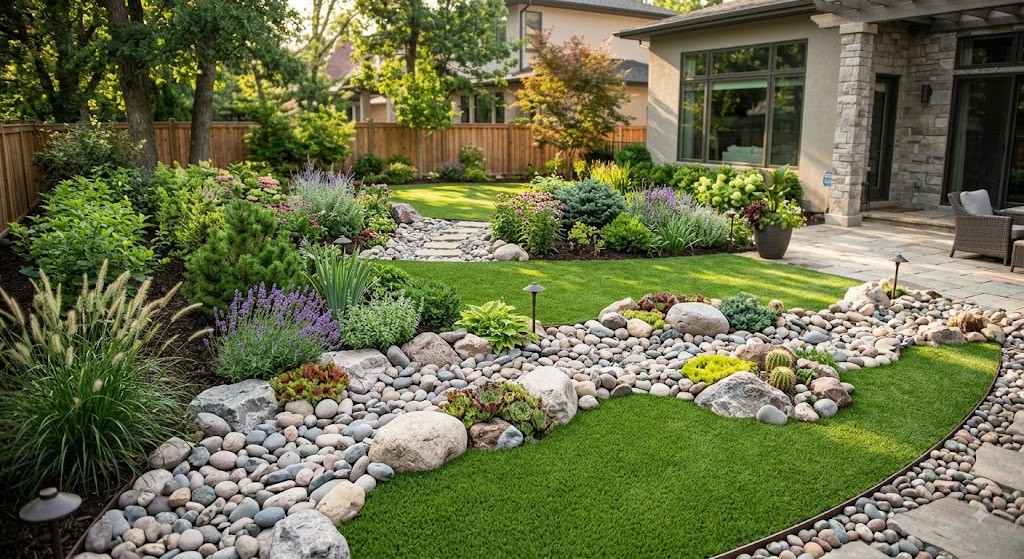
What is the Best Base for Artificial Turf?

The best base for artificial turf is Class II road base, also called crushed miscellaneous base or CMB, compacted 3 to 4 inches deep. It drains well, compacts into a stable surface, and costs less than most alternatives. Decomposed granite is the next best option, especially in drier climates or pet areas where drainage matters most.

Even the best synthetic grass on the market will shift, sink, or drain poorly if the ground underneath isn’t right. Here’s what actually goes into a proper base, how deep to dig, and how to avoid the mistakes that ruin most DIY installs.

Why the Base Matters More Than the Turf Itself

You can buy the best artificial grass available and still end up with a bad lawn if the foundation underneath is wrong. The base is doing four jobs at once.

Drainage: Water needs somewhere to go. A compacted base lets it pass through instead of pooling on top.

Stability: A solid base keeps the turf from shifting, sinking, or developing low spots where people walk most.

Leveling: This is what gives you a flat, even surface instead of a lumpy one.

Weed control: A properly built base, paired with a weed barrier, cuts down on growth pushing up from the soil below. Keep in mind a weed barrier only blocks growth from underneath. Weeds can still take root from seeds or debris that land on top of the turf, so occasional surface cleaning still matters.

Best Base Materials for Artificial Turf
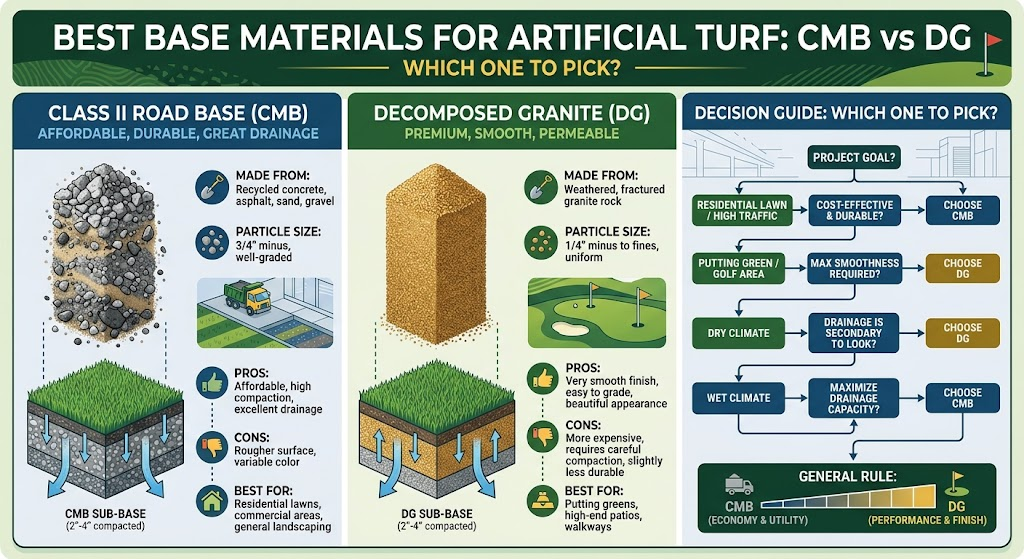
best base materials for artificial grass, infographic

Class II Road Base (CMB)

This is a mix of crushed rock, gravel, and fine particles that compacts into a dense, stable surface. It’s the same material used under actual roads, which tells you something about how well it holds up. It drains well, it’s budget-friendly, and it’s the standard choice for most residential artificial grass installs.

Decomposed Granite (DG)

DG compacts into a smooth, permeable surface with excellent drainage. It costs more than CMB, but it’s worth the upgrade for pet areas since it drains liquid fast and resists holding odor. It’s also a strong choice in dry, arid climates where soil is already sandy or loose.

CMB or DG: Which One to Pick

Go with CMB for most yards, walkways, and general backyard use. It’s the better all-purpose option for stability, drainage, and value.

Choose DG if you have dogs, live somewhere hot and dry, or want the cleanest possible drainage performance. For sports areas or anywhere with heavy foot traffic, use CMB and add a shock pad underneath for cushioning.

Your existing soil matters too. Heavy clay, poor natural drainage, or major grade changes on the property may call for extra prep before either material goes down.

How Deep Should the Base Be?

Depth depends on how the area gets used.

  • Residential lawns and walkways need 3 to 4 inches of compacted base.
  • Pet areas need 3 to 4 inches, with DG preferred for drainage and odor control.
  • Putting greens need 4 to 6 inches minimum, sometimes more with a specialized base system.
  • High-traffic or sports areas need 4 to 6 inches, compacted in layers, sometimes with a shock pad added.

One thing that trips people up: these numbers are the finished, compacted depth, not the raw excavation depth. Base material settles as it compacts, so you need to account for that settling when you dig, not just measure the hole and fill it once. If your soil is heavy clay or drains poorly to begin with, go a little deeper than these minimums. It’s cheaper to add an extra inch of base now than to fix a soggy lawn later.

What Goes Under Artificial Turf

A correctly built base has four parts.

Subgrade. This is your native soil, excavated, cleared of debris, and graded properly before anything else goes down. It should be firm and free of soft spots.

Weed barrier fabric. A permeable landscape fabric goes down next, like 3×50 weed barrier for smaller yards or the 6×300 roll for bigger jobs. It blocks weed growth from below while still letting water pass through. This step gets skipped constantly on DIY jobs and it’s a common reason weeds show up through turf a year later.

Aggregate base. This is your CMB or DG, spread and compacted in the depth ranges above. Aim for roughly 70 percent solid material to 30 percent fine particles for the best compaction.

Leveling layer and infill. A fine leveling material may be used for final adjustments before the turf goes down. Once the turf is rolled out and secured, infill gets brushed into the fibers. Silica sand is standard for residential lawns. CamoFill is a step up for added cushioning, and Zeodorizer is worth adding in pet areas since it’s built specifically for odor control.

Step-by-Step: Preparing the Base
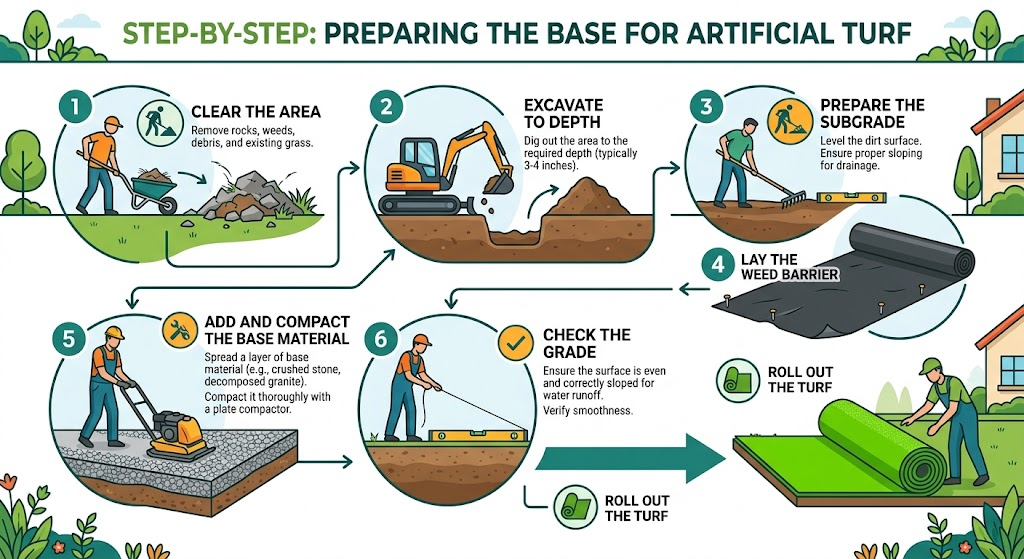
Preparing base for artificial turf, step by step infographic

Clear the area: Remove existing grass, roots, rocks, and debris down to bare soil.

Excavate to depth: Dig out enough to account for compacted settling, generally 3 to 4 inches for standard use, deeper for pet areas, putting greens, or sports fields.

Prepare the subgrade: Compact the exposed soil and fix any soft or unstable spots. Build in a slight grade for drainage rather than leaving it perfectly flat.

Lay the weed barrier: Roll out landscape fabric across the area, overlapping seams by a few inches.

Add and compact the base material: Spread your CMB or DG in layers, running a plate compactor over each one before adding the next. For deeper installs, build it up in stages rather than dumping the full depth at once.

Check the grade. Use a level, string line, or screed board to catch high and low spots before moving on.

Roll out the turf. Once the base is compacted and level, your synthetic grass is ready to go down, whether that’s installing turf on dirt or over an existing hardscape.

This is step 2 of Festival Turf’s full install sequence. See the complete DIY installation guide for what comes before and after base prep.

If you want to see how a properly finished install looks and feels before committing to a full order, request free samples shipped straight to your door.

Tools You’ll Need

Base prep doesn’t take specialized equipment, just the right basics and a willingness to do some digging.

  • Shovel and rake
  • Wheelbarrow
  • Plate compactor, for compacting each layer
  • Level, string line, and screed board
  • Landscape fabric
  • Hand tamper, for small areas
  • Nails, for securing edges, like 40d5 nails or 5.5″ EG nails
  • Work gloves and sturdy footwear

Of everything on this list, the plate compactor matters most. Skimping here or renting a weak one is the fastest way to end up with a base that looks fine on install day and sinks within a season.

Common Base Mistakes That Ruin Artificial Turf

Skipping proper excavation. Installing turf directly over existing grass or an uneven surface leads to settling and an uneven finished lawn.

Using too little base material. A shallow base won’t hold up, especially in high-traffic spots.

Failing to compact each layer. Spreading aggregate and calling it done isn’t enough. Every layer needs its own pass with the compactor.

Ignoring drainage. Your base should have a slight grade, roughly 1 to 2 percent, so water has somewhere to go instead of pooling in the middle of the yard.

Leaving high and low spots unchecked. Small imperfections in the base get much more noticeable once the turf goes down.

Treating the base as an afterthought. The turf is the part everyone sees, but the base is what determines how long the whole system holds up. Time spent here saves money later.

DIY or Hire a Pro?

Small, flat, easy-access areas are reasonable DIY projects if you have a plate compactor and are comfortable with excavation and compaction work.

Professional installation is usually the better call for larger or more complicated jobs, especially with poor drainage, heavy clay soil, significant slopes, or difficult equipment access. A professional can evaluate the site, determine the right depth, and make sure everything is properly graded and compacted.

Festival Turf supplies the artificial grass and base materials. We don’t handle installation directly, but we can help you pick the right product for your project and point you toward trusted local installers.

FAQ

What is the best base for artificial turf?

Class II road base, also called CMB, is the best all-around base for artificial turf. It compacts well, drains properly, and costs less than most alternatives. Decomposed granite is a strong second choice, especially for pet areas or dry climates.

How deep should the base be for artificial turf?

Most residential installs need 3 to 4 inches of compacted base. Putting greens and high-traffic or sports areas need 4 to 6 inches for a firmer, more durable surface. These numbers refer to the finished, compacted depth, not the raw excavation depth.

Is CMB or DG better for artificial turf?

CMB is the better all-purpose option for most residential projects. DG is worth the extra cost when drainage is the top priority, particularly for pet areas or dry climates with loose, sandy soil.

Do I need a weed barrier under artificial turf?

Yes, a permeable landscape fabric between your soil and base material blocks weed growth from below while still letting water drain through. It won’t stop weeds from seeds or debris that land on top of the turf, so occasional surface cleaning still helps.

Can I install artificial turf without a base?

No turf installed directly on soil or existing grass will develop uneven spots, drain poorly, and wear out much faster. The base is what keeps your turf flat, stable, and properly drained for years.

What is infill and do I need it?

Infill is the material brushed into the turf fibers after installation. It helps blades stand upright, adds cushioning, and keeps the turf weighted down. Silica sand works for most residential lawns, while CamoFill or Zeodorizer add extra cushioning or odor control for pet areas.

The Foundation Decides Everything Else

A good base is what separates artificial turf that looks great for fifteen years from turf that needs to be redone in two. Use Class II road base or decomposed granite, dig to the right depth for your use case, don’t skip the weed barrier, and compact every layer separately.

Every Festival Turf product comes backed by a 15-year warranty, so once your base is done right, your turf is built to last. Not sure which product fits your project? Order free samples and feel the difference before you buy.
Artificial Grass Repair: How to Fix Common Turf Damage

Artificial grass repair is possible for most common damage, including tears, burns, loose seams, and flattened fibers, without needing a full turf replacement. Artificial turf holds up better than a natural lawn, but it’s not indestructible. Sun exposure, heavy foot traffic, pets, and the occasional accident can all leave marks over time. The good news is that most of that damage is fixable in an afternoon with the right materials.

This guide walks through how to spot the type of damage you’re dealing with, the DIY repair steps for each one, and when it makes more sense to replace a section instead of patching it.

Understanding Types of Damage

Similar to any outdoor area, artificial turf is not indestructible, and it’s imperative to understand how long does artificial grass last. The passage of time, regular usage, exposure to sunlight, and occasional accidents can gradually cause damage.

Nevertheless, before accepting the need to completely replace the entire lawn, it is advisable to remain calm and composed! We’re here to help you see the options available to you and understand how to repair fake grass!

Common causes of damage

Let’s delve deeper and understand the different types of damage that can impact your artificial paradise and how to address them effectively.

Three primary categories can be identified for the typical causes of damage:

  • Wear and tear: The unstoppable progression of time is undoubtedly a big factor! Daily usage from walking, pets playing, and exposure to various weather conditions result in gradual deterioration.
  • UV exposure: With time, extended exposure to the sun can result in the fading and fragility of the fibers, impacting the overall appearance of your verdant sanctuary.
  • Accidental damage: Unintentional spills, burns resulting from grills or fireworks, and tears caused by sharp objects can lead to localized harm.
  • Loose or lifted seams: Seams that weren’t fully secured during installation can separate over time, especially where pets dig or foot traffic is heaviest. Left alone, a lifted seam widens and becomes harder to repair cleanly.

Different types of damage

Having a thorough understanding of the problem at hand is essential to achieving a successful restoration.

Let’s examine in detail the various forms of damage typically encountered and their corresponding remedies:

  • Rips and tears: Damage in the form of rips and tears is prone to happen primarily along seams or areas that experience frequent use. Smaller tears can often be rectified by utilizing a specialized adhesive. To address more significant tears, it may be necessary to substitute the affected area with a matching patch to fix the artificial grass. It is crucial to guarantee that the fibers of the replacement patch align in parallel with those of the existing grass to achieve a smooth and seamless appearance.
  • Burn marks: Although infrequent, accidents can occur. In certain cases, minor burns can be cautiously removed by delicately cutting them with sharp scissors. Larger burns necessitate the expertise of professionals to ensure a seamless restoration and mitigate any potential subsequent harm.
  • Compacted fibers: Over a period of time, particularly in frequently traversed sections, the fibers may compact, resulting in diminished drainage capabilities and resilience. To rectify this issue, employ a firm brush to reorient the fibers against their natural direction, thereby restoring their upright position. Restore artificial grass with proper drainage and achieve a natural look by replenishing the infill material, which consists of sand or recycled rubber granules that fill the gaps between the fibers.
  • Seam separation: Check along seam lines for gaps or lifting edges. Reapply seaming tape and turf adhesive underneath the loose section, then press firmly and weight it down for 24 hours while it cures. If the seam has pulled apart more than a few inches, it’s worth replacing the tape rather than patching over the old adhesive.

repair fake grass

DIY Artificial Grass Repair Techniques

Although some degree of minor deterioration is unavoidable, the positive aspect is that there is no need to resign yourself to extensive repairs or replacements for the majority of artificial grass damage.

If you have a penchant for DIY projects and the damage appears to be within your means, you can endeavor to restore your verdant sanctuary with a DIY artificial grass repair!

Before cutting anything, vacuum out the infill around the damaged area and check which direction the fibers run. Cutting a patch with fibers facing the wrong way is the most common reason DIY repairs look mismatched. Match the new piece’s direction to the surrounding turf before securing it.

  • Small tears can often be repaired by using specialized adhesives, which are applied conservatively along the tear and then carefully pressing the fibers together.
  • When dealing with more extensive tears, it may be necessary to substitute the affected area. Utilize a sharp tool to cautiously remove a rectangular portion surrounding the tear, ensuring that the edges are straight. Subsequently, cut a corresponding piece of replacement turf that matches in size and seamlessly position it alongside the original grass. Secure the patch in place using either turf pins or specialized seam tape designed specifically to fix artificial grass.
  • Burn marks can be addressed by carefully trimming them with sharp scissors. However, when dealing with larger burns, it is necessary to seek assistance from professionals to guarantee a seamless restoration process and avoid causing additional harm to the underlying material.
  • To resolve the issue of compacted fibers, employ a firm brush to gently brush the fibers in an upward motion opposite to their natural orientation. This technique will aid in rejuvenating their resilience and promoting drainage. Furthermore, it is important to replenish the infill material to uphold a natural appearance and provide adequate support for the fibers.

Artificial grass repair

Tools and Materials for Repairing Artificial Grass

Before initiating any artificial turf repair work, it is imperative to assemble the requisite tools and materials. Listed below are the essential items that will serve as your reliable allies in combating the damage:

  • A precisely designed utility knife is ideal for accurate cutting and trimming purposes.
  • When selecting turf seaming tape or adhesive for artificial grass, it is important to opt for a product that is explicitly engineered for adhering to synthetic turf.
  • Scissors are designed to snip minor rips and apply patches.
  • Hammers and turf pins (for more substantial rips) are utilized to firmly fasten replacement patches in place.
  • A rigid bristle brush rejuvenates flattened fibers and eliminates dirt and debris.
  • When selecting replacement turf for larger patches, it is crucial to choose a variety that closely corresponds to the existing grass type and pile height.
  • To preserve proper drainage and provide support to the fibers, it is crucial to replenish any depleted infill material.

Still, it is essential to consistently refer to the manufacturer’s guidelines about your particular artificial grass product. These instructions may include supplementary suggestions for tools and materials that are specifically suited for your type of grass.

Repair-vs-Replace Guideline

As a rule of thumb, if damage covers more than 15-20% of the surface, or shows up in multiple scattered spots, patching starts to create a visible checkerboard effect. At that point, replacing the affected section, or the full install, gives a cleaner result than repeated patches.

When the Damage Goes Beyond a DIY Fix

Significant tears, widespread fading, or burns that reach the backing material are harder to patch cleanly on your own. In these cases, a proper repair usually means replacing a section of turf rather than mending it.

Festival Turf carries matching replacement rolls and patch materials so you can source the exact pile height and color for a seamless repair. If you’re working with a landscaper or installer of your choosing, having the right replacement product on hand makes their job faster and the result more consistent. For repairs beyond a simple patch, contact us and we’ll help you find the right replacement turf and materials for the job.

fix artificial grass

Prevention Strategies

Proactive measures are consistently the most effective means of protection. Here are several suggestions to extend the lifespan of your synthetic turf and maintain its optimal appearance:

  • To prevent the fibers from tangling and to ensure proper drainage, it is recommended to routinely brush the artificial grass fibers using a firm brush, moving in various directions.
  • Occasionally wash the artificial turf with a garden hose to eliminate fragments such as leaves and prevent accumulation, particularly following periods of heavy rainfall.
  • To avoid creating indentations, it is advisable to place furniture protectors beneath heavy items, such as patio furniture.
  • To prevent staining, it is essential to promptly address spills by absorbing liquids using a clean cloth and avoiding the use of abrasive substances.
  • In regions with vibrant climates, it is advisable to contemplate the inclusion of shade possibilities such as awnings or umbrellas in areas that are significantly exposed to strong sunlight. This will aid in mitigating UV damage and the occurrence of fading.

Frequently Asked Questions

Can damaged artificial grass be repaired, or does it need full replacement?

Most damage, including small tears, burns, and compacted fibers, can be repaired without replacing the entire lawn. Full replacement is usually only necessary when damage is widespread or the backing material itself is compromised.

How do you fix a tear in artificial grass?

Small tears can be repaired with turf adhesive applied along the edges. Larger tears typically need a matching patch cut to size and secured with turf pins or seam tape.

How long does artificial grass last before it needs repair?

With regular brushing, rinsing, and shade management in high-UV areas, quality artificial grass holds up well for 20-25 years, with most repairs limited to isolated wear rather than full replacement.

Sustaining the vitality of your environmental aspirations!

Understanding the right DIY techniques and following manufacturer guidance will keep your artificial grass looking sharp for years. For repairs that call for replacement turf or patch materials, Festival Turf’s products come backed by a 15-year warranty, so you’re covered well beyond routine wear and tear. Not sure which product matches what you already have installed? Order a free sample to match pile height and color before you buy.

Artificial Turf and Weeds: How to Eliminate Them

Artificial turf and weeds seem like they shouldn’t mix, but weeds can still show up even on a well-installed lawn. The good news is they almost always start on the surface, not underneath. Windblown seeds land in the infill layer, take root in trapped dirt or organic debris, and sprout the same way a weed would push through a crack in concrete. The fix is straightforward: pull them by hand while they’re small, spot treat stubborn growth, and keep the infill clean so new seeds have nowhere to settle.

Weeds don’t just look bad against a clean lawn. Left alone, their roots can work into the infill and create uneven patches, and a buildup of weeds can block drainage holes, leading to standing water and, over time, mold or mildew under the artificial grass. A little consistency early keeps small growth from becoming a bigger repair problem.

Why Weeds Show Up in Artificial Turf

Most weed problems trace back to one of four things. Gaps or seams from an imperfect installation give seeds a place to settle against the soil below. Poor drainage lets water pool between sections, creating the damp conditions weeds need to germinate. Loose or contaminated infill, especially plain sand, acts like a seed bed rather than a barrier. And skipped maintenance lets organic debris pile up on the surface, which slowly turns into the same kind of shallow soil a weed can root in.

None of these are permanent problems. They’re maintenance issues, and each one has a direct fix.

Common Types of Weeds Found in Artificial Grass

The most frequent visitors are dandelions, bindweed, clover, crabgrass, and chickweed. Identifying which one you’re dealing with matters because removal methods vary. Dandelions and bindweed have deep taproots that need to come out fully or they’ll return. Clover and chickweed spread low and wide but pull out easily by hand. Crabgrass is the most stubborn of the group and often needs a spot treatment rather than hand-pulling alone.

Can Weeds Actually Grow Through Artificial Turf?

Not from underneath, in most properly installed lawns. The backing and base layers are dense enough to block upward growth. What people usually see is surface growth in the infill, not roots pushing through the turf itself. For the full breakdown of how this works and when it becomes an issue, see can weeds grow through artificial grass.

How to Remove Weeds From Artificial Grass

Manual removal works best for a light scattering of weeds. Wear gloves, grip each weed as close to the base as possible, and pull slowly so the root comes with it rather than snapping off at the surface.

Eco-friendly treatments are a good middle option. A mix of one part white vinegar to two parts water, with a bit of salt, kills most surface weeds within a few applications. Apple cider vinegar diluted 1:1 with water works the same way. Boiling water is effective too, though it has to be poured carefully since the heat can damage the turf fibers if it splashes beyond the weed itself.

Chemical herbicides are the option for anything vinegar and hand-pulling can’t keep up with. Choose a product labeled safe for synthetic turf, follow the manufacturer’s instructions exactly, and avoid oversaturating the infill, since runoff can affect nearby landscaping.

Not sure which method fits your situation? Here’s a quick comparison before you get started.

Method Best For How Long It Takes
Manual removal A few scattered weeds Immediate
Vinegar or eco-friendly spray Light to moderate growth, pet- and kid-friendly yards Several applications over a few weeks
Boiling water Isolated weeds, no chemicals on hand Immediate, with care near turf fibers
Chemical herbicide Persistent or widespread weeds Days, depending on product

Weed Barriers and Infill: Stopping Weeds Before They Start

Prevention does more work than removal. A weed barrier fabric installed beneath the turf blocks sunlight from reaching the soil, which stops most seeds from germinating in the first place. It’s a one-time step during installation, not something you can add after the fact without pulling the turf back up.

Infill choice matters just as much. Plain sand infill holds organic debris and moisture, which makes it easier for weed seeds to settle and sprout. Infill also isn’t permanent. Renewing it every two to three years clears out the buildup that would otherwise turn into a seed bed, and it keeps the blades standing upright at the same time, which helps your lawn hold its lifespan over the long run.

Regular Maintenance Keeps Weeds From Coming Back

Artificial turf and weeds

Check your lawn periodically, since weeds can start in even the smallest cracks. Pull anything you spot right away, before it has a chance to establish deeper roots. Brushing the turf regularly clears out the debris and organic matter that would otherwise settle into a growing medium. And keeping the area around your lawn trimmed, especially any overhanging trees or unmanaged plants nearby, cuts down on the seeds landing on your turf in the first place. Pairing this with a routine cleaning schedule is the most reliable way to keep weeds from ever becoming a real problem.

FAQ

Do weeds damage artificial grass permanently?

Not if they’re caught early. Small weeds pulled by hand rarely cause lasting damage. Left for months, their roots can distort the infill and create uneven patches that are harder to fix.

Is vinegar safe to use on artificial turf?

Yes, diluted vinegar is one of the most common eco-friendly weed treatments used on synthetic grass. Avoid saturating the surrounding infill repeatedly, since heavy, frequent use can affect infill composition over time.

How often should I renew my artificial grass infill to prevent weeds?

Every two to three years for most residential lawns. High-traffic areas or lawns near trees may need it sooner.

Can I use a weed barrier after my turf is already installed?

Not without pulling the turf back up. Weed barriers are installed during the base preparation stage, which is why getting the installation right the first time matters.

Get Weed-Resistant Turf Backed by a 15-Year Warranty

The best long-term fix for weeds starts with the turf itself. Festival Turf’s synthetic grass is built with dense backing and consistent quality that makes weed problems rare from the outset, and every product we supply comes with a 15-year warranty. If you’re comparing options for a new lawn, order a free sample to see the quality firsthand, or contact us with any questions about which product fits your yard.

Indoor Artificial Grass: Is it Possible?

Indoor artificial grass is a practical option for homes and offices, and it’s become one of the fastest-growing ways to bring greenery into a space without any of the upkeep real grass demands.

It’s not just for the exterior anymore. Homeowners and businesses alike are installing it in living rooms, offices, playrooms, and retail spaces, and with the right setup it holds up just as well indoors as it does outside.

Why Indoor Artificial Grass Works

Indoor artificial grass gives you the look and feel of a real lawn without the water, mowing, or upkeep. Recent advances in turf technology have made it more realistic and more durable than older versions, which is a big part of why it’s become a real decor choice rather than a novelty.

It also holds up well. Quality artificial grass resists fading, tearing, and wear from regular foot traffic, so it stays looking good in high-use spaces like playrooms, offices, and indoor sports areas. And because it doesn’t need water, fertilizer, or lawn equipment, it’s a genuinely lower-impact choice for anyone looking to cut down on maintenance and water use.

Beyond the practical side, it’s soft underfoot and brings real visual warmth to a space, whether that’s a living room, a retail floor, or a corner office. It works in almost any indoor setting where you want a natural touch without the maintenance that comes with it.

indoor synthetic turf

Why Choose to Install Artificial Grass Indoors?

Beyond the practical benefits, indoor turf changes how a space feels. Walking across it barefoot has a different quality than any hard flooring or carpet, and the green tone brings a calming, natural element into rooms that otherwise skew neutral or sterile, like offices or showrooms.

That’s part of why it’s become popular in commercial spaces specifically. A retail floor or waiting area with a turf accent reads as more inviting than the same space with standard flooring, without requiring any ongoing upkeep to maintain that impression.

Applications of Indoor Artificial Grass

Indoor artificial grass is versatile and suitable for both residential and commercial spaces. Here’s how it can be used:

Residential Spaces

In homes, artificial grass can create distinctive and appealing features. Envision a green accent wall or a cozy nook with grass flooring. It’s also great for indoor putting greens or exercise areas, offering endless creative possibilities.

Commercial Spaces

It’s also making a mark in commercial areas. Hotels, restaurants, and bars use it to create unique and inviting ambiance. It’s perfect for enhancing outdoor seating, rooftop gardens, or entire indoor landscapes, making it an attractive choice for businesses aiming to stand out.

Indoor Putting Greens

A putting green is one of the most popular indoor uses for artificial grass, whether it’s a small corner of a home office or a dedicated room. It gives golfers a way to practice year-round regardless of weather, and it holds up to repeated foot traffic far better than any natural alternative would indoors.

Pet Areas

Indoor pet turf gives dogs and cats a dedicated spot to relieve themselves without tearing up carpet or hardwood, which is especially useful in apartments, high-rise units, or homes without easy yard access. Pair it with a zeolite-based infill to keep odor under control between cleanings.

Kids’ Play Areas

Turf creates a soft, safe play surface for children indoors, whether it’s a playroom, a basement, or a dedicated corner of a living space. It’s easier to keep clean than carpet and doesn’t hold onto allergens the way natural fibers can.

Office and Retail Spaces

Businesses use indoor turf as an accent wall, a showroom feature, or flooring in lounges and breakout areas to add a natural element without any ongoing upkeep. It’s a low-maintenance way to make a space feel distinct, and it holds up to consistent daily foot traffic in commercial settings.

Benefits of Indoor Artificial Grass

Choosing indoor synthetic turf over traditional flooring comes with numerous benefits:

  • Aesthetics and Natural Feel:

It instantly adds a natural touch and freshness to any space, making the environment more visually appealing. Modern artificial grass feels realistic and soft, enhancing the overall experience.

  • Low maintenance compared to traditional flooring

Unlike natural grass, artificial turf maintenance is not required constantly. Synthetic turf stays green and vibrant all year round with just occasional dusting and cleaning, freeing you from labor-intensive maintenance.

  • Versatile in Design and Customization

It comes in various shades of green, allowing you to select the perfect match for your interior. You can cut it into different shapes and patterns for unique installations, whether you want a small rug or wall-to-wall coverage.


Challenges of Using Artificial Grass Indoors

While indoor fake grass sounds like a dream, it does come with its own set of challenges. For starters, the initial cost might be a bit of a surprise; it’s usually more than just buying a regular carpet.

Indoor installation also uses different methods than an outdoor lawn. Since there’s no gravel base to work with, getting a clean result depends on a level starting surface and the right adhesive or panel system for the space, so it’s worth planning that out before you order turf.

Also, you’ve got to think about the room’s ventilation because artificial grass doesn’t breathe like natural turf, so you’ll want to keep the air fresh. And, if you’re a fan of that fresh grass scent or the feel of real blades underfoot, artificial grass might take some getting used to. It’s all about weighing these little bumps against the lush, green, maintenance-free space you’ll get to enjoy.

What Does an Indoor Artificial Grass Installation Involve?

Indoor installations work differently than outdoor ones. Instead of a gravel base, indoor turf is typically laid directly over tile, concrete, or hardwood using adhesive or interlocking base panels, since there’s no need for the drainage layer an outdoor lawn requires.

Start by making sure the surface is clean, dry, and completely level. Any bumps or debris underneath will show through the turf once it’s down. From there, the artificial grass is rolled out, trimmed to fit the space, and secured with adhesive along the edges and seams. Depending on the application, infill can be added to help the blades stand upright and give the surface a more natural feel underfoot.

Order a free sample before you buy so you can test the pile height and backing against your space, especially if you’re installing over a hard surface where the feel underfoot matters more than it does outdoors.

FAQs

Does indoor artificial grass need drainage or infill?

Indoor artificial grass generally doesn’t need drainage the way outdoor turf does, since it isn’t exposed to rain or irrigation. Infill is still recommended in most cases. It weighs the turf down, keeps the blades standing upright, and gives the surface a more natural feel underfoot, especially in high-traffic areas like play spaces or offices.

Is artificial grass safe to use indoors for pets?

Yes artificial grass is a safe, durable surface for pets indoors, and it holds up well to regular paw traffic. For pet areas, a zeolite-based infill is worth using since it helps control odor between cleanings, which matters more indoors than it does outside.

How do you clean artificial grass indoors?

Regular cleaning is simple. Vacuum or sweep to remove dust and debris, and blot spills as soon as they happen. For pet messes, rinse the area and use a mild detergent solution rather than harsh chemicals or bleach, which can damage the turf fibers over time.

Can artificial turf be installed on tile or concrete indoors?

Yes, indoor turf is commonly installed directly over tile, concrete, or hardwood using adhesive or interlocking base panels, rather than the gravel base used for outdoor installations. This makes it a practical option for offices, retail spaces, and rooms where digging out a subbase isn’t possible.

Low-Maintenance Landscaping: Why Synthetic Grass is the Ultimate Solution

Low-maintenance landscaping with artificial grass is one of the simplest upgrades you can make to a yard. No mowing schedule, no watering, no patchy spots from shade or foot traffic. Just a lawn that looks freshly cut every day of the year.

Think about the last time you watched a soccer or football match and noticed how flawless the field looked. That’s the same consistency artificial grass brings to a home landscape. It stays green, even, and full regardless of season, weather, or how much use it gets from kids or pets.

Switching from natural grass to synthetic turf is a bigger shift than most homeowners expect. It’s not just less yard work, it changes how much time and money goes into maintaining your outdoor space overall. This guide covers why artificial grass has become one of the most effective low-maintenance landscaping solutions available, and what to expect if you’re considering the switch.

The Rise of Low-Maintenance Landscaping Trends

When you tune into your favorite soccer match and notice that ever-vibrant field, it’s hard not to feel a twinge of jealousy for synthetic grass.

And much like that iconic green we so often admire on TV, low-maintenance landscaping is now becoming the talk of the town in neighborhoods everywhere. Think about it. It’s like the shift from black and white TV to color. Suddenly, everything’s brighter, better, and so much easier. No more borders to trim or lawn space to mow, no more ground cover or shrubs to deal with.

So next time you’re sitting on your porch, sipping on a cold beverage, and you glance at your perfect lawn, remember the synthetic grass secret. You’ve got a yard that’s the envy of the neighborhood, with the luxury of time on your side. No more wrestling with mowers, no more monitoring soil health, no more replacing succulents that didn’t thrive in your climate, or playing guessing games with fertilizers. It’s just you, enjoying the outdoors, on a lawn always ready for the spotlight.

landscaping with low maintenance

The Challenges of Traditional Landscaping

Landscaping has long been a cherished aspect of home ownership, offering a sense of pride and a boost in curb appeal. However, the charm of traditional landscaping comes with its own set of challenges. No more needing to clear the area of weeds or scatter mulch. No more controlling the growth and spread of shrubs and ground cover plants.

Much like a beloved yet finicky old car, natural grass requires consistent care and attention. Let’s delve into the nitty-gritty of these challenges that every green thumb confronts.

  1. Frequent Watering: Keeping natural grass fresh and green is an endeavor. It’s like having a pet that constantly wants water. Rain or shine, it beckons for hydration.
  2. The Mowing Saga: Picture this. Saturday morning, instead of a lie-in, you’re battling with a lawnmower, cursing every time the blades get stuck. It’s a ritual many would gladly skip.
  3. Fertilizers and Growth Boosters: Natural grass demands attention. Like a movie star in need of constant pampering. Unlike most plants, synthetic grass expects nothing – it can keep its lustrous look without any soil nutrients.
  4. Battling Pests and Diseases: A natural lawn is often the party venue for pests. It’s like a nightclub for bugs, and not the kind of party you’d want to attend.

Benefits of Synthetic Grass for Low-Maintenance Landscaping

Have you ever dreamed of a garden where the grass is always greener? Well, with synthetic grass, it’s not just a dream from an old Beatles song, it’s a reality. For those diving into the world of low-maintenance landscaping, synthetic grass looks like it’s been plucked straight from the turf of a high-end soccer field. But it’s not just about looks; there are plenty of benefits to boot!

  • Low water requirements

Imagine turning off your irrigation system and watching your water bill drop. That’s the beauty of synthetic grass. Unlike its natural counterpart which gulps water, synthetic grass just sits there, looking lush without a sip. Your grass will be green, your wallet will be green, and so will the environment.

  • Minimal Maintenance

For those who love the aesthetic of a lawn but not the elbow grease, it’s time to meet your match. Remember that annoying chore of mowing? With landscaping with low maintenance like synthetic grass, that becomes a thing of the past. And hey, you won’t be missing that chore on your Saturday mornings.

  • No fertilizers or pesticides

Natural lawns can be a bit like high-maintenance celebrities, always needing this or that to look their best. But synthetic grass? It’s like that cool, easy-going actor who doesn’t need all the drama. No need for chemical-laden fertilizers or pesticides. This alternative grass lets you breathe easy, knowing your yard isn’t contributing to chemical runoff.

  • Year-round appeal

Natural grass has its seasons. Sometimes it’s lush, sometimes it’s brown, and sometimes it’s somewhere in-between, trying to find its identity. Synthetic grass, on the other hand, has consistency on lock. No matter the season, rain or shine, this alternative grass remains a vision of verdant perfection. Imagine impressing your guests year-round with a flawless yard landscaping design.

  • Durability and longevity

When life throws a curveball (or a wild football party), synthetic grass stands strong. While natural grass can show wear and tear, synthetic grass, with its durable design, keeps bouncing back. Talk about resilience! Whether it’s a backyard BBQ or a full backyard of kids playing, it remains unflappable. The same durability is why synthetic turf shows up on playgrounds, gyms, and school grounds, not just home lawns.

Environmental Considerations

There’s a lot of talk about reducing carbon footprints and living a greener life. Synthetic grass is your garden’s ticket to this green revolution. By slashing water use, ditching chemicals, and reducing the machinery involved in lawn care, your backyard becomes an eco-hero. And every time you look out over your perfect landscape design, you can do so with a sense of pride.

When it comes to artificial turf maintenance, think of it like dusting off your favorite vinyl record. A little care here and there, ensuring it’s clean, and occasionally giving it a brush to fluff it up. And here’s the best part: if by chance there’s damage? Swap it out, and your lawn’s back to its prime. If only natural grass had such an easy reset button!

low-maintenance landscape design

Comparing the Costs of Synthetic Grass with Natural Grass

Stepping into the world of synthetic turf feels like getting a first-class ticket on a luxury cruise. Sure, there’s an upfront cost. But like buying an all-you-can-eat buffet ticket, you reap the benefits as you go. A complete installation of synthetic grass will set you back around $5 to $20 per square foot, covering everything from initial preparations to the finishing touches.

Natural grass, though it has its rustic charm, is like maintaining a vintage car. The initial setup might cost between $1 to $2 per square foot. But then consider the frequent watering, the regular tune-ups (fertilizers), and the occasional repairs (dealing with pests and diseases). The costs stack up, and fast!

Choosing landscaping with low maintenance via synthetic grass is akin to opting for a self-driving car. You get to enjoy the journey without the constant stress of driving. The yard remains vibrant, without the worry of over or under-watering, no pests feasting, and no sudden patches of brown ruining the view.

Ready for a change? A greener, more effortless garden awaits. Contact the best artificial grass provider and enjoy low-maintenance landscape year round.

FAQs

Is synthetic grass actually low maintenance?

Yes. Synthetic grass eliminates mowing, watering, and fertilizing entirely. Occasional brushing and rinsing is all it needs to stay looking full and clean.

How long does synthetic grass last?

Quality synthetic grass lasts 20 to 25 years with proper care. Festival Turf backs every product with a 15-year warranty covering fading, workmanship, and materials.

Does synthetic grass need water or fertilizer?

No. Synthetic grass never needs watering or fertilizing, which is what makes it a true low-maintenance landscaping solution and helps cut down on your water bill.

Is synthetic grass safe for pets and kids in a low-maintenance yard?

Yes. Synthetic grass has no pesticides or fertilizers, drains quickly, and holds up under heavy foot traffic, making it a safe, low-upkeep surface for pets and kids alike.

How much does synthetic grass cost compared to natural grass?

Synthetic grass typically runs $5 to $20 per square foot installed, higher upfront than natural grass. Over time it costs less, since it removes the ongoing expense of water, mowing, and lawn care.

A Greener Tomorrow, Today!

Synthetic grass has emerged as a shining beacon of innovation. It’s not just about beautifying spaces, but also about offering homeowners simplicity, sustainability, and serenity. Don’t get us wrong; natural plantings have their charm. But the maintenance-free, always green, and lush appeal of synthetic grass is hard to ignore.

With the countless advantages it brings, transitioning to synthetic turf is an investment in a vibrant, low-maintenance future. As you embark on your gardening journey, remember: sometimes the grass is indeed greener on the other side, especially if it’s synthetic!

How to Clean Artificial Grass: Step-by-Step Guide

Artificial grass takes a fraction of the maintenance real grass does, but “low maintenance” doesn’t mean “no maintenance.” A quick rinse and the occasional deep clean is really all it takes to keep synthetic turf looking as good as the day it was installed, whether you’re dealing with everyday dust, pet messes, or a spill from last weekend’s barbecue.

This guide covers exactly how to clean artificial grass step by step, how often to do it, what to use for pet stains and odor, and which products and tools to avoid so you don’t damage the turf while trying to clean it.

How Often Should You Clean Artificial Grass?

As a general rule, rinse artificial grass with a hose every one to two weeks and do a more thorough deep clean once a month. If you have pets, live in a dusty or high-pollen area, or the lawn gets heavy daily use, rinse more often, closer to once a week, and spot-clean pet areas as needed rather than waiting for a scheduled cleaning.

Tools You’ll Need

You don’t need much to keep synthetic turf clean, but the right tools matter:

  • A stiff-bristled broom or flexible lawn rake (never metal — metal bristles or tines can tear the fibers)
  • A garden hose with a spray nozzle
  • A mild detergent or turf-specific cleaner
  • An enzyme-based cleaner if you have pets
  • A soft-bristled brush for spot cleaning

How to Clean Artificial Grass Step by Step

how to clean artificial grass

Cleaning artificial grass properly comes down to six simple steps, done in order, so nothing gets missed and nothing has to be redone.

Step 1: Remove Debris

Start by clearing leaves, twigs, and larger debris with a stiff broom or flexible rake. Getting the bigger stuff out of the way first makes the rest of the cleaning process faster and keeps debris from working its way deeper into the turf backing.

Step 2: Rinse the Grass

Hose down the entire area with plain water. This clears dust, pollen, and smaller debris, and it’s usually enough on its own for routine, weekly upkeep. Stick to a standard garden hose rather than a pressure washer. Pressure washers can dislodge infill and put unnecessary stress on the fibers over time.

Step 3: Treat Stains and Spills

For food spills, drink stains, or general grime, mix a mild detergent with water and apply it directly to the affected area with a spray bottle or watering can. Let it sit for a few minutes, then work it in gently with a soft brush. Avoid scrubbing hard in one direction, since that can flatten the fibers.

Step 4: Rinse Thoroughly

Rinse the entire treated area with clean water to remove all detergent residue. Leftover soap can attract dirt and leave a filmy residue on the fibers, so don’t skip this step even if the turf looks clean.

Step 5: Brush the Fibers

Once the turf is dry, brush against the grain with a stiff-bristled broom to lift any flattened areas back into place. This is especially important in high-traffic zones like walkways or areas near seating.

Step 6: Let It Air Dry

Artificial grass drains quickly and dries fast in open air. There’s no need for towels or additional equipment just let the sun and airflow finish the job.

How to Clean Pet Waste and Urine Odor Off Artificial Grass

how to clean urine odor from artificial grass

Pet turf needs a slightly different routine than a standard lawn, mostly because urine and odor buildup happen in the same few spots repeatedly.

For solid waste, scoop it up as soon as possible and rinse the area with water. For urine, rinsing right after it happens is the single most effective habit, since it prevents residue from building up in the first place. For a deeper clean or persistent odor, apply an enzyme-based cleaner made for pet turf. These break down the compounds in urine that cause smell, rather than just masking it, and they’re safe for both pets and the turf itself. Let the cleaner sit for 10 to 15 minutes, then rinse thoroughly.

Good drainage makes a real difference here too. Turf with a high drainage rate moves liquid through quickly instead of letting it pool at the surface, which cuts down on odor before it starts. It’s also part of why pet turf should use a polyurethane backing rather than latex, since polyurethane doesn’t trap odor the way latex can over time.

What to Avoid When Cleaning Artificial Grass

A few common habits can do more harm than good:

  • Bleach and ammonia-based cleaners. These can damage the fibers, and with pets, ammonia can actually mimic the smell of urine and encourage them to keep marking the same spot.
  • Metal rakes or wire brushes. These can tear or fray the fibers. Stick to plastic or nylon bristles.
  • Pressure washers. Too much force can dislodge infill and loosen seams over time.
  • Skipping the final rinse. Leftover soap residue attracts more dirt than it removes.

Frequently Asked Questions

How do you clean fake grass?

Remove debris with a rake or broom, rinse with a hose, treat any stains with a mild detergent solution, rinse again, and brush the fibers back into place once dry.

How often should artificial grass be cleaned?

Rinse every one to two weeks and do a full deep clean monthly. Pet areas or high-traffic sections may need rinsing weekly or even after each use.

Can you use a pressure washer on artificial grass?

It’s not recommended. A standard garden hose provides enough pressure to rinse the turf without risking damage to the fibers or infill.

What’s the best way to clean pet urine off artificial turf?

Rinse the area right away with water, then use an enzyme-based cleaner for a deeper clean or lingering odor. Avoid ammonia-based products, which can encourage pets to remark the same spot.

How To Choose The Best Fake Grass for Patio: A Complete Guide

The best artificial grass for a patio is a polyethylene or nylon turf with a dense, short pile that drains well and resists UV fading, since patios see heavy foot traffic and direct sun exposure most yards don’t. Getting this choice right comes down to understanding the material types, how they hold up over time, and what they cost.

This guide walks through everything you need to know to pick the right turf for your patio, from material and durability to drainage and price.

Modern patio design example showing what is hardscaping

Understanding Artificial Grass for Patios

Your patio is where you gather for barbecues, sunbathing, or catching up with friends, so the turf underfoot needs to hold up to real use, not just look good in photos. Choosing the right artificial grass for your patio means understanding how the material performs day to day, not just picking the greenest option on the shelf.

Synthetic turf has become a popular patio upgrade for good reason. If you’re new to it, here are the essentials worth knowing before you buy.

  • It’s not just about looks. Synthetic turf is virtually maintenance free, meaning no mowing, watering, or fertilizing. That saves time and money over the life of the product.
  • Variety matters. Turf comes in a range of shades, textures, and pile heights. A soft, cushioned option works well for kids’ play areas, while a shorter, more manicured look suits a sleek patio design. Touching and comparing samples before you decide makes a real difference.
  • Safety comes first. High-quality turf is non-toxic and free of harmful chemicals, and it doesn’t harbor pests or allergens, making it a safe choice for households with pets, kids, or allergy concerns.
  • It holds up to weather. Quality turf is UV resistant, so it won’t fade under direct sun, and its drainage system prevents muddy puddles after rain.
  • It’s a lower-impact choice. No watering, no pesticides, no fertilizer, and no gas-powered mower running every week. That adds up to a smaller environmental footprint over time.
  • Installation still matters. A well-prepared base ensures proper drainage, longevity, and a better feel underfoot. If you’re not comfortable handling that yourself, hire a licensed local installer experienced with base prep and drainage. Getting this step right protects your investment.

The Advantages of Artificial Grass for Your Patio

  1. Low maintenance. No constant watering, mowing, or fertilizing. It’s a set it and forget it solution, even if you’re away for weeks at a time.
  2. Year-round color. No yellow patches in summer or muddy spots in winter. Your patio stays consistently green regardless of season.
  3. Cost-effective long term. The upfront cost is higher than seeding a lawn, but you save on water bills, lawn equipment, and chemical treatments over time. Festival Turf backs its products with a 15-year warranty, so that investment holds its value.
  4. Safe and non-toxic. Most artificial grass for landscaping is made from non-toxic materials, so kids and pets can use the space without worry.
  5. Versatile. Works on a small balcony or a sprawling backyard, around pools, on rooftops, or indoors if you want a creative accent space.

Types of Turf for Patios

Not all synthetic grass performs the same way, so knowing the material options helps you match the product to how you’ll actually use your patio.

Polyethylene

The most common choice for patios. It’s soft, durable, and closely resembles natural grass, making it a strong all-around option for most households.

Polypropylene

A budget-friendly option. It’s less durable than polyethylene but lightweight and well suited to smaller patio areas where heavy wear isn’t a concern.

Nylon

The strongest of the three materials. If your patio sees heavy foot traffic or active kids and pets, nylon holds its shape even under high heat and repeated use.

What to Look For When Choosing Patio Turf

Resilient, springy fibers

Good patio turf should feel comfortable to sit or walk on, not stiff or flat. Look for a product with real bounce back in the fibers rather than one that feels like a thin mat over concrete.

Durability and lifespan

Durability is what separates a turf you’ll enjoy for decades from one you’ll be replacing in a few years. With the right choice, you’re looking at a 20 to 25 year lifespan, and Festival Turf backs its artificial grass with a 15-year warranty. That’s a lawn you set up once and stop thinking about.

Drainage for spills and pet accidents

Patios see drink spills, rain, and the occasional pet accident. Good turf drains all of it quickly rather than letting it pool or sit.

How Much Does Artificial Grass for a Patio Cost?

Artificial grass for patios typically costs between $5.50 and $19.75 per square foot, depending on the type of turf, pile height, and backing quality. Polyethylene and polypropylene sit at the lower end of that range while still offering a good feel and realistic look, making them a solid starting point on a budget.

Total project cost also depends on your square footage, yard shape (curved areas cost more to fit), and who handles installation. Many homeowners install patio turf themselves as a DIY project, while others bring in a licensed local installer.

The payoff comes over time. With a 20 to 25 year lifespan and a 15-year warranty, you stop paying for water, mowing, and reseeding year after year.

Frequently Asked Questions

What is the best material for artificial grass on a patio?

Polyethylene is the best all-around choice for patios. It feels soft underfoot, resists UV fading, and looks close to natural grass. Nylon holds up better under heavy foot traffic but costs more, while polypropylene works best as a budget option for smaller, lower-traffic areas.

How long does artificial grass last on a patio?

Artificial grass typically lasts 20 to 25 years with proper care. Festival Turf backs its products with a 15-year warranty covering fading, workmanship, and materials.

Is artificial grass safe for pets and kids on a patio?

Yes. High-quality artificial grass is non-toxic, free of harmful chemicals, and doesn’t harbor pests or allergens, making it a safe surface for pets and kids.

Does artificial grass get hot on a patio?

It can get warmer than natural grass in direct summer sun, especially on patios with little shade. A shade structure or cooling infill keeps the surface comfortable during hot months.

How much does artificial grass for a patio cost?

Between $5.50 and $19.75 per square foot, depending on turf type, pile height, and backing quality. Total project cost also depends on square footage and yard shape.

Can I install artificial grass on my patio myself?

Yes. Many homeowners install patio turf as a DIY project, and Festival Turf’s DIY videos walk through the process. Proper base preparation and drainage matter most, so if you’re not comfortable handling those steps, a licensed local installer can help.

Where can I try artificial grass before buying it for my patio?

Festival Turf ships free samples directly to your door, so you can compare color, texture, and thickness before you order.

Turning Over a New Leaf

Transforming your patio with artificial grass is a smart, low-maintenance upgrade that holds up for decades. With a 20 to 25 year lifespan and Festival Turf’s 15-year warranty, you get lasting value without the upkeep natural grass demands.

Ready to see and feel it for yourself? Contact Turf provider and find the right artificial grass for your patio.

Cheap Backyard Makeover Ideas with Artificial Grass

The cheapest backyard makeover ideas start with artificial grass, since it replaces the most expensive part of any yard renovation, a healthy established lawn, for a fraction of the cost of sod, irrigation, and years of upkeep.

From there, a rock garden, a DIY patio, or a simple pathway between pavers can transform the space for a few hundred dollars in materials. You don’t need a landscaping crew or a big budget to pull it off.

This guide walks through 14 backyard makeover ideas, all built around artificial grass as the foundation. Each one requires minimal tools, minimal upkeep, and none of the ongoing water or mowing costs that eat into a budget makeover over time.

Why Artificial Grass Works for a Yard Makeover on a Budget

Artificial grass offers several advantages as the centerpiece of any low-cost yard project. The benefits include:

Minimal Upkeep

Unlike natural grass, synthetic grass requires very little maintenance. No watering, mowing, or fertilizing makes it the go-to choice for anyone updating a yard without ongoing costs eating into the budget.

High Durability

Artificial grass resists heavy foot traffic, pet activity, and harsh weather. That durability makes it a reliable, cost-effective choice for anyone updating their yard without a big spend.

Evergreen Appeal

Artificial grass keeps its lush, green look all year. That means your backyard stays inviting even in the dry heat of summer or the dead of winter, boosting curb appeal without seasonal upkeep.

Versatility

Artificial grass blends seamlessly with rock, wood, and concrete, providing a vibrant canvas no matter which look you’re going for. Whether you’re building a rock garden or a stone pathway, it gives every idea below a consistent backdrop.

Eco-Friendly

With no watering or chemical fertilizer needed, artificial grass is an environmentally responsible choice. Pair it with xeriscaping ideas and your yard becomes even more sustainable.

14 Backyard Makeover Ideas That Cost Little to No Money

Backyard makeover ideas

Create a Rock Garden

A rock garden is one of the easiest ways to add visual interest with almost no labor. Rocks of different sizes and colors against lush green artificial grass create a striking, low-maintenance contrast that costs a fraction of a full landscaping redo.

Try Xeriscaping

Xeriscaping minimizes water usage by pairing drought-tolerant plants with a turf base. Layer in succulents and local flora alongside your artificial grass to build a beautiful, water-wise yard. It’s one of the most practical yard upgrades for hot, dry climates.

Build a DIY Deck or Patio

A deck or patio turns a backyard into a real gathering spot. Combine wooden pallets with artificial grass for a comfortable, stylish lounging area without hiring a contractor. It’s a straightforward weekend project that adds real function to the space.

Make a Garden Bed

Set apart a section of artificial grass for a garden bed filled with flowers or vegetables. Garden beds add depth and texture to a yard and give you a defined space for planting without redoing the whole lawn.

Lay a Turf Pathway Between Pavers

Install artificial grass between pavers and stepping stones to divide your yard into sections and add visual interest. The green against concrete or stone gives a modern, finished look for very little material cost, and it doubles as a simple way to break up a plain backyard into distinct zones.

Build a Dry Creek Bed

A dry creek bed lined with rocks and artificial grass mimics the look of a running stream without any actual water or maintenance. Dig a shallow, winding path, lay weed barrier fabric, then fill it with rocks and turf on either side for a striking focal point.

Add a DIY Water Feature

A small pond or fountain brings the sound of flowing water into your backyard for a fraction of the cost of a full water feature installation. Paired with artificial grass, it turns an ordinary corner of the yard into a calm retreat.

Make DIY Planters

Upcycle old buckets, crates, or tires into planters and set them across your artificial grass. It’s a creative, low-cost way to bring in more greenery without the expense of built-in garden beds.

Add Mulch Accents

Mulch adds texture and contrast around trees, borders, and garden beds. Combined with artificial grass, it creates clearly defined areas in the yard, making it one of the most practical low-cost upgrades on this list.

Build DIY Outdoor Seating

Repurposed pallets or cinder blocks make comfortable outdoor seating when topped with cushions. Set on artificial grass, this seating area becomes an inviting spot to relax without the cost of store-bought patio furniture.

Install a Backyard Putting Green

For golf fans, a small putting green built with artificial grass delivers a consistent, true roll with zero mowing or watering. Even a modest setup gives you a place to practice a short game steps from the back door.

Surround the Pool with Turf

Artificial grass stays cooler underfoot than concrete or pavers and eliminates the mud and grass clippings that real lawns track into a pool. It also drains well when installed properly, making pool decks cleaner and more comfortable to walk on barefoot.

Create a Play Area for Kids and Pets

Surround a swing set, sandbox, or play zone with artificial grass to keep it looking neat while standing up to heavy use. It’s soft enough for kids, durable enough for pets, and needs no reseeding after a summer of wear.

Set Up an Outdoor Movie Night Lawn

Hang a projector screen or a white sheet across the yard, add blankets and floor cushions on a patch of artificial grass, and you have an instant backyard theater. It’s one of the most budget-friendly ways to create a dedicated hangout space that gets used all year.

Is Artificial Grass Safe Near Fire Pits and Grills?

Artificial grass can melt or scorch if hot embers, coals, or sparks land directly on it, so keep fire pits and grills on a hardscape surface like pavers, gravel, or concrete rather than directly on turf. For a full breakdown of what causes melting and how to prevent it, see our guide on why artificial grass melts near windows, which covers the same heat exposure issues that apply near fire features.

What Is a Reasonable Budget for Backyard Landscaping?

A reasonable budget for backyard landscaping varies based on yard size and project complexity, but most homeowners spend between $1,000 and $5,000. The latest Census data puts median U.S. household income at $83,730 annually, so even the high end of that range is a modest, manageable share of most household budgets, especially when spread out or financed over time.

Artificial grass keeps that budget in check by removing the biggest recurring cost in any yard, which is the ongoing water, mowing, and fertilizer that a real lawn demands year after year.

Not sure which artificial grass fits your budget best? Order a free sample and see the quality up close before you commit, backed by our 15-year warranty on every purchase.

To conclude, artificial grass opens the door to affordable, low-maintenance backyard makeover ideas for nearly any budget. With minimal upkeep, year-round color, and eco-friendly benefits, it’s the foundation for every idea on this list. Contact us to talk through what fits your space and your budget.

10 Front Yard Landscaping Ideas with Rocks and Mulch

Rocks and mulch are two of the most common natural elements used in landscaping. Not only do they enhance the curb appeal of your property, but they also provide other benefits to your garden’s health.

If you are coming up with landscaping ideas on using rocks and mulch in your yard, this article is perfect for you. Read on to learn how to use these two elements to upgrade your garden.

10 Front Yard Landscaping Ideas with Rocks and Mulch

From simple border edging to full front yard makeovers, these ideas work whether you’re tackling a weekend project or planning a complete redesign. Several also pair rock and mulch with artificial grass for a finished, low-water look.

1. Borders With Rocks and Mulch

Create distinct borders using rocks and mulch for a cleaner, more organized look. Rocks define the boundary while mulch fills in the garden bed within it. This is one of the easiest upgrades to start with since it requires minimal ongoing care once it’s in place.

2. Rock Walls with Mulched Beds

A rock wall can provide a striking backdrop for mulched plant beds, creating depth and contrast. This idea adds an appealing vertical element to a front yard and works especially well for yards with a slight grade change near the entrance.

3. Red Mulch and Stone Walkway

Combine red mulch with a stone walkway for a burst of color. The vibrant mulch complements the gray tones of the stones and highlights the plants alongside the path.

4. Rocks and Mulch for Sloped Landscaping

Rocks and mulch provide excellent erosion control on sloped front yards while adding visual interest. Use rocks to build terraces and fill them with mulch and plants. This approach handles both the practical drainage problem a slope creates and the aesthetic challenge of an awkward grade. For more ideas along these lines, see our guide to rock landscaping.

5. Small Rock and Mulch Garden

A small rock and mulch garden works well for limited spaces. Select a few ornamental plants, surround them with a thin layer of mulch, and line the area with small rocks. This is one of the simplest ways to add texture to a front yard without a major project.

6. Mulched Entryway Flower Beds

Make your entryway inviting with flower beds edged in mulch and rock. This design creates a welcoming first impression while keeping maintenance to a minimum.

7. Cover Empty Spaces With Rock and Mulch

Fill empty spaces in your front yard with rocks and mulch instead of leaving bare dirt. This simple fix reduces weed growth and gives even unused corners of your yard a finished look.

8. Rock Garden with Artificial Grass

rock garden with artificial grass image

Create a rock garden with a mix of boulders, smaller rocks, and drought-tolerant succulents. Use artificial grass as a low-upkeep ground cover to provide contrast and texture against the stone. This combination gives you year-round green without competing for water with the rest of your rock garden.

9. Pathway with Mulch, Rock, and Artificial Grass

A winding pathway made from stone, bordered by artificial grass and mulch, makes for one of the more visually striking front yard layouts. The stone defines the walking surface, the turf softens the edges, and the mulch fills in around your plantings.

10. Mulch and Artificial Turf Landscaping

Mulch and artificial grass idea

Combine mulch, artificial turf, and rocks to create a balanced, cohesive front yard. Use artificial grass as the main ground cover, accented by mulched plant beds and clusters of rocks. This gives you the green, finished look of a lawn without the water demands or upkeep real grass requires. Order a free sample to see how it pairs with your existing hardscape before committing.

Benefits of Mulch and Rock Landscaping in Front Yard

  • Visual Appeal: Front yard landscaping ideas with rocks and mulch can transform a simple front yard into a picturesque setting. These elements create texture and contrast, enhancing the overall curb appeal.
  • Low Maintenance: This form of landscaping requires less care than traditional gardening, fitting into the low-maintenance front yard landscaping ideas with rocks and mulch.
  • Soil Health: Mulch improves soil quality by retaining moisture and adding nutrients as it decomposes, while rocks can help with drainage.
  • Weed Control: Both rocks and mulch hinder weed growth, reducing the time and effort spent on weeding.
  • Erosion Control: Rock and mulch landscaping ideas effectively control erosion, especially in sloped landscapes.

mulch and rock landscaping

Difference Between Mulch and Rock Landscaping

  • Material: Mulch is typically made from organic material like wood chips or straw, while rock landscaping uses different types of stones.
  • Maintenance: Additionally, mulch may need to be replaced every few years as it decomposes, whereas rocks are more permanent.
  • Cost: Rock landscaping can be more expensive initially but requires less frequent replacements than mulch.
  • Temperature Control: Furthermore, mulch is better at keeping the soil cool and moist, while rocks can heat up and may not be suitable for plants that require more excellent soil.
  • Nutrient Addition: Mulch adds nutrients to the soil as it decomposes, a benefit not provided by rocks.

rock and mulch landscaping ideas

What to Consider When Choosing Mulch or Rocks for Front Yard Landscaping

  • Climate

Your local climate plays a crucial role in this decision. Mulch is better for cooler, moist climates as it helps retain soil moisture and decreases soil temperature. Conversely, rocks are better suited for hot, dry climates where water conservation is crucial.

  • Plant Preferences

The type of plants in your landscape also matters. Some plants prefer mulch’s cooler, nutrient-rich environment, while others thrive in the well-drained conditions that rocks create.

  • Maintenance

Mulch must be replaced every few years as it decomposes and turns into compost, providing ongoing costs and labor. Rocks, however, require a larger upfront investment but are much more durable and require less frequent replacement.

  • Aesthetics

Consider the visual appeal of both options. Rocks provide a rugged, natural look and come in various sizes, colors, and types. Conversely, Mulch provides a softer, more organic look and is available in different colors and textures.

  • Budget

Lastly, your budget will impact your decision. While mulch is generally cheaper initially, it requires frequent replenishment. Rocks are costlier upfront, but their longevity may offer savings in the long term.

Contact us if you want to learn more about rocks and mulch landscaping options that fits your needs and budget.

To conclude utilizing rocks and mulch for front yard landscaping unlocks an array of benefits. Whether you live in a hot, dry climate or a cool, moist one, these options can be tailored to create a captivating yet easy-care landscape.

FAQs

Is rock or mulch better for a front yard?

It depends on your climate and goals. Mulch suits cooler, moister climates since it retains soil moisture and adds nutrients as it breaks down. Rock suits hot, dry climates where water conservation matters most, and it doesn’t need replacing every few years the way mulch does.

Can you mix rock and mulch landscaping in the same yard?

Yes, many front yards use rock as the dominant material for pathways, borders, and open areas, then use mulch around individual plant beds where its moisture retention and nutrient benefits matter most.

How much does rock and mulch landscaping cost?

Rock landscaping typically costs more upfront but requires little to no ongoing replacement. Mulch costs less initially but needs replenishing every one to three years as it decomposes, which adds up over time.

Does artificial grass work with rock and mulch landscaping?

Yes. Artificial grass pairs well with both rock and mulch, giving you a green, lawn-like area that doesn’t compete with your yard’s water-efficient design, unlike real grass, which still needs regular irrigation.

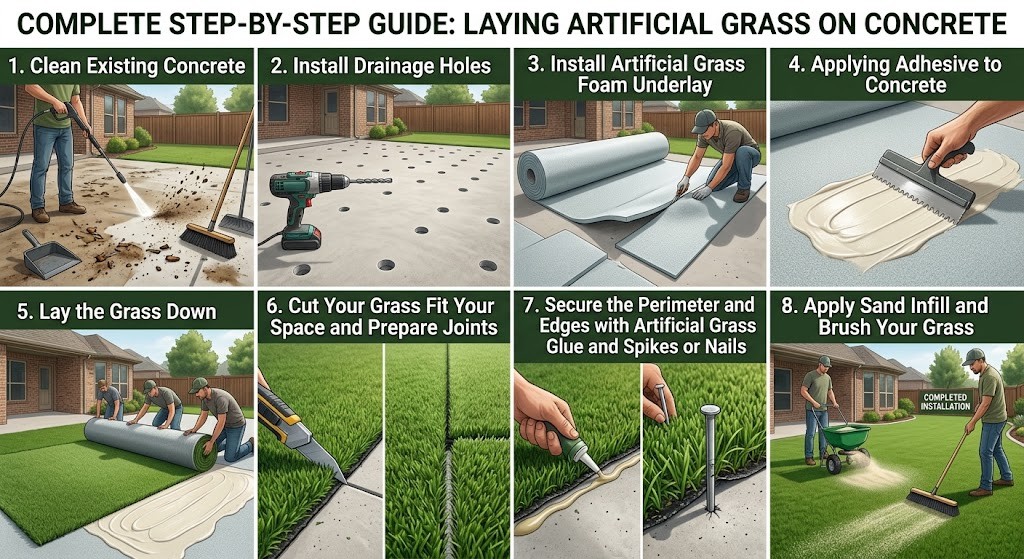
How to Put Artificial Grass on Concrete: Prep, Drainage & Installation Tips

How to put artificial grass on concrete starts with one key difference from a regular lawn install: concrete can’t absorb water on its own, so drainage has to be built in before anything else goes down. From there, it’s a straightforward process of prepping the surface, adding a foam underlay, gluing the turf into place, and finishing with infill. Done right, you can turn a stark concrete slab into a vibrant, low-maintenance green space in a weekend.

This guide walks through each step in detail, from measuring and drainage to laying, securing, and finishing the turf.

Benefits and Challenges of Installing Artificial Turf on Concrete

Installing artificial turf on concrete is a great way to enhance the look and functionality of your outdoor space. One of the key benefits is that it offers a clean, uniform appearance with minimal maintenance. Artificial grass on concrete is perfect for areas where natural grass doesn’t grow well, saving you from the hassle of watering, mowing, and fertilizing.

However, learning how to install artificial grass on concrete comes with its own set of challenges. Firstly, the surface must be smooth and level to prevent unevenness in the turf. Secondly, proper drainage must be accounted for, as improper drainage can lead to pooling and damage. Yet, these challenges can be effectively managed with the right preparation and tools.

Pre-Installation Preparation for Installing Artificial Grass on Concrete

Before embarking on your project of how to lay artificial grass on concrete, some pre-installation preparation is needed. This phase is critical to ensure a seamless installation and flawless final look.

Measure the area

Start by measuring the area where you intend to install the artificial turf. Use a tape measure to determine the length and width of the surface. It’s crucial to have accurate measurements as they will guide you in purchasing the right amount of artificial turf and other materials.

Gather the necessary tools and materials

Once you have your measurements, the next step is to gather the tools and materials necessary for the installation.artificial turf on concrete

Tools you need

Several vital tools will come in handy during the installation process. These include:

  1. Utility knife: You need this to cut the artificial turf to the correct size.
  2. Adhesive spreader: This is crucial for applying the adhesive that bonds the artificial turf to the concrete.
  3. Tape measure: This is essential for ensuring the correct fit of the turf.
  4. Stiff-bristled broom: This is useful for fluffing the grass fibers once the turf is installed.

Materials you’ll need

In addition to the tools, several materials are necessary for the installation. These include:

  1. Artificial turf: The star of the show! Ensure you have enough turf based on your measurements.
  2. Adhesive: This bonds the artificial turf to the concrete.
  3. Jointing tape: If you have a larger area where you will be using more than one piece of turf, you will need jointing tape to join the pieces seamlessly.
  4. Infill: This is applied after the turf is installed to give it a more natural look and feel.

Consider Drainage

When learning how to install artificial grass on concrete, consider drainage. Without proper drainage, water can pool on the surface of your turf, potentially leading to mold and mildew.

A slight slope of the concrete area will naturally guide water away. You should install a drainage layer if the area is flat. This consists of a layer of gravel or crushed rock underneath the turf to assist with water drainage.

how to lay artificial grass on concrete


How to Lay Artificial Grass on Concrete

Installing artificial grass on concrete can transform your outdoor space into a lush, green, and maintenance-free area. Let’s take a step-by-step look at the process.

Clean Existing Concrete

Before you embark on the task of laying artificial grass on concrete, ensure the surface is clean. Remove any debris, dirt, or loose pieces of concrete that might interfere with the smoothness of the installation. You can use a stiff-bristle broom or a power washer to clean the area thoroughly.

Install Drainage Holes

Creating appropriate drainage is crucial when learning about artificial grass installation. While concrete does not naturally absorb water, your artificial turf must drain to prevent pooling.

To solve this, you can drill drainage holes into the concrete. Space the holes about 2-3 feet apart to ensure even drainage throughout the turf. Remember to wear appropriate safety gear, including safety glasses and gloves, when using power tools.

how to put artificial grass on concrete

Install Artificial Grass Foam Underlay

Installing a foam underlay is the next step in your artificial grass on the concrete project. This foam layer helps to provide cushioning, making the artificial grass feel more like natural grass underfoot.

Roll out the underlay across your concrete surface, ensuring it covers the area entirely. Cut it to fit using a utility knife, then secure it using outdoor-grade adhesive.

Applying Adhesive to Concrete

Once your underlay is in place, the next step is to apply adhesive to the concrete. Spread the adhesive evenly across the underlay using an adhesive spreader, ensuring all parts are coated.

Remember, patience is critical when figuring out how to lay artificial grass on concrete. Allow the adhesive to become tacky before moving on to the next step, which usually takes around 15 minutes.

Lay the Grass Down

After the adhesive becomes tacky, it’s time to roll out your artificial turf. Start from one end of the space, unrolling the turf carefully over the adhesive-coated underlay. Make sure there are no wrinkles or bubbles as you go.

Cut Your Grass Fit Your Space and Prepare Joints

Trim the edges of the artificial turf to fit your space using a utility knife. Ensure the knife is sharp enough to give clean cuts, avoiding fraying edges.

If your area requires more than one piece of turf, you must prepare joints. Place two pieces together, ensuring the grass blades point in the same direction, and cut the edges to create a neat seam.

Secure the Perimeter and Edges with Artificial Grass Glue and Spikes or Nails

To secure the artificial grass on concrete, apply artificial grass glue along the edges of the turf, then press firmly down. You can also use spikes or 40 D 5” nails for additional support, especially if your space experiences heavy foot traffic. Ensure the nails or spikes do not protrude above the grass to prevent tripping hazards and maintain an even look.

Apply Sand Infill and Brush Your Grass

Applying the artificial grass infill is the final step in understanding how to install artificial grass on concrete. This process helps to weigh the grass down and keep the blades standing upright for a more natural look.

Spread the infill evenly across the turf, then use a stiff-bristled broom to brush the grass, encouraging the silica sand for artificial grass to settle at the base of the grass blades.

To sum up, installing artificial turf on concrete is relatively straightforward with the proper preparation and steps. The result is a stunning, low-maintenance lawn that brings a touch of greenery to your space all year round.

Frequently Asked Questions

Do I need to seal the concrete before installing artificial grass?

No sealing is required, but the concrete does need to be clean, level, and free of cracks or debris before you start. Any unevenness in the base will show through the turf once it’s installed.

Will artificial grass on concrete drain properly?

Yes, as long as drainage is planned for ahead of time. Since concrete doesn’t absorb water like soil does, you’ll need to drill drainage holes or add a gravel drainage layer underneath the turf to keep water from pooling.

Do I need a foam underlay for artificial grass on concrete?

Yes. A foam underlay adds cushioning so the turf feels more like natural grass underfoot, and it also helps smooth out any minor surface imperfections in the concrete.

How long does artificial grass on concrete last?

With proper installation and drainage, artificial grass over concrete can last as long as it would on soil, generally 20 to 25 years with routine care. Festival Turf backs its products with a 15-year warranty covering fading, materials, and workmanship.

Does artificial grass get hot on concrete?

Yes, concrete retains and radiates heat, so turf installed over it can run warmer than turf installed on soil. Choosing a lighter infill, adding partial shade, or rinsing the surface on hot days helps keep it comfortable, especially in warmer climates like Las Vegas and Phoenix.

Can I install artificial grass on concrete myself?

Yes, it’s a manageable DIY project with the right tools. Check out Festival Turf’s DIY installation videos for a full walkthrough, or contact us if you have questions about materials or your specific space.