Artificial Grass vs. Sod: Which Is Better and What Is the Difference

Having a well-maintained lawn is essential for a beautiful and inviting outdoor space. Artificial grass and sod are two popular solutions for homeowners and landscape designers.

If you’re thinking about enhancing the look of your lawn, you’re probably torn between these two options. Both have their advantages and disadvantages, but which is better for you? Let’s look at the differences between artificial grass vs sod.

What is Artificial Grass?

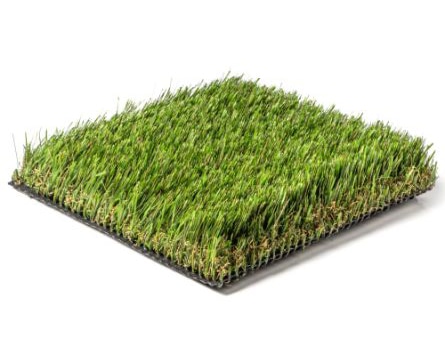
Artificial grass, also called synthetic turf, is made of synthetic materials like nylon, polyethylene, or polypropylene and is designed to resemble natural grass. It is available in different colors and textures and can be customized to fit any area or shape. It’s commonly used in sports fields, parks, playgrounds, and residential landscapes.

What is Sod?

People who aren’t familiar with landscaping often ask what is sod grass?

Well, sod is a layer of grass and soil held together by a root system, harvested and sold in rolls. It’s commonly used for landscaping, lawns, and golf courses. Sod is grown and harvested on a farm and then delivered to the customer’s location for installation.
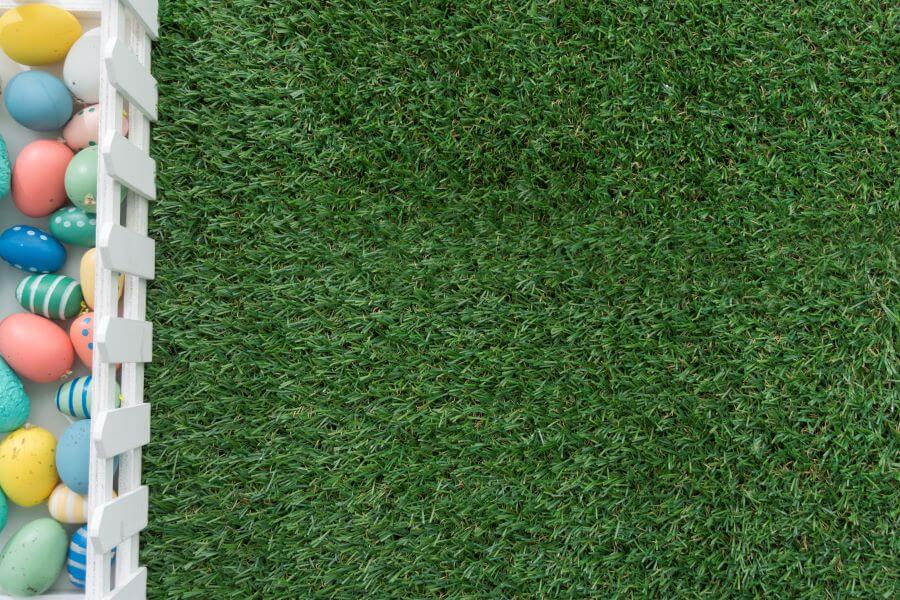
what is sod

What Are the Differences Between Artificial Grass and Sod?

The main difference between what is sod grass and synthetic turf boils down to what materials they are made from and whether humans make them or not.

Choosing between artificial grass vs sod can be challenging since each has unique advantages and disadvantages. Whether you’re looking to enhance your backyard or you’re a sports field manager, it’s essential to understand the difference between the two and decide which one is better suited for your needs.

Both options provide a lush green lawn and enhance the look of your outdoor space. They can also provide a comfortable surface for pets and kids to play on.

Which is Better?

The question of which is better depends on several factors, such as personal preference, budget, and environmental concerns. While artificial grass is low maintenance and lasts for years, sod offers a natural look and feel and can be less expensive upfront.

Both options have their pros and cons, and deciding between the two can be a daunting task. However, there are a few criteria that you could look into so you can decide which product you should get, such as:

Appearance and Aesthetics

Sod has always been the preferred choice for its natural look and feel. However, synthetic turf has come a long way over the years, and many people find it hard to tell the difference between natural and artificial turf. With a variety of colors and textures to choose from, artificial grass can be customized to fit any landscape.

Both options are even in this criteria since they have unique value propositions.

Maintenance

One of the most significant advantages of artificial grass is its low maintenance. Unlike sod, it doesn’t require watering, mowing, or fertilizing, which can save you time and money. However, it does require periodic brushing and cleaning to maintain its appearance. Sod, on the other hand, requires regular watering, mowing, and fertilizing to keep it looking healthy and vibrant.

If you don’t like maintaining your lawn, you should go for artificial grass.
sod las vegas

Factor In Environmental Concerns

If you’re environmentally conscious, the impact of your choice may be a significant factor in deciding between artificial grass and sod. Artificial grass is made from synthetic materials, so it can’t decompose and will stay in the environment indefinitely. Sod, on the other hand, is biodegradable and can be recycled.

When it comes to the environment, sod is the clear winner since it’s the more eco-friendly lawn option.

Cost

When it comes to cost, artificial grass may seem expensive at first, but it can save you money in the long run. Sod requires frequent watering, mowing, fertilizing, and pest control, which can add up over time. Artificial grass, however, requires little maintenance and can last up to 25 years. While it may be more expensive upfront, it can save you money in the long run. Contractors with turf financing may be an options as well These financing plans grant you the flexibility to have artificial grass installed in your outdoor areas and handle the expenses through convenient, staggered payments.

Artificial grass offers more bang for your buck, given that you can save money by doing less maintenance.

Health and Safety

Artificial grass is an excellent option for those with allergies or respiratory problems. It doesn’t produce pollen or require pesticides, making it a healthier option for people and pets. Sod, on the other hand, may require the use of pesticides and herbicides to maintain its appearance, which can be harmful to the environment and the people and pets who come into contact with it.

For Pets

If you have pets that love to run around and play, artificial grass and sod can provide a safe and comfortable environment. However, artificial grass for pets has an advantage in terms of maintenance and hygiene. It doesn’t require pesticides, which can be harmful to pets, and can be easily cleaned and disinfected. Sod, on the other hand, requires frequent cleaning and maintenance to prevent the growth of harmful bacteria.

what is sod grass


For Kids

When it comes to kids, both artificial grass and sod provide a safe and comfortable environment for them to play. However, artificial grass may be a better option for parents who want to minimize their children’s exposure to harmful chemicals.

Artificial grass doesn’t require pesticides or fertilizers, which can be harmful to kids and can be easily cleaned and disinfected. Sod, on the other hand, may require the use of chemicals to maintain its appearance.

Hence, synthetic grass has fewer health-related issues that may affect your children and pets. However, you need to be sure that the product you brought contains no harmful chemicals.

Installation

Artificial grass can be installed quickly and easily, with minimal preparation required. It can be cut and shaped to fit any area or shape, making it perfect for any landscape. Sod, on the other hand, requires a lot of preparation, including soil testing, leveling, and laying of the sod.

Without a doubt, artificial grass is much easier to set up as it requires little to no landscaping skills and requires less equipment during installation. Contact artificial grass installer, like Festival Turf– the leading supplier of sod Las Vegas has to offer.


In conclusion, while sod may be the more natural option, it requires more maintenance and can be more costly in the long run. Artificial grass, however, is low maintenance and can save you money in the long run. Ultimately, the decision between the two will depend on your needs and preferences.
Rock Landscaping: Types, How-tos, & Ideas

Rock landscaping transforms any yard into a low-maintenance, eye-catching space using stone, gravel, and boulders instead of (or alongside) plants and grass. It holds up year-round with no watering, mowing, or seasonal die-back, which is exactly why it’s become such a popular choice in dry, hot climates.

This guide covers the main types of landscaping rock, how to choose the right one for your project, and practical ideas for using rock in your own yard, from pathways and borders to pairing it with a low-maintenance lawn.

What is Rock Landscaping?

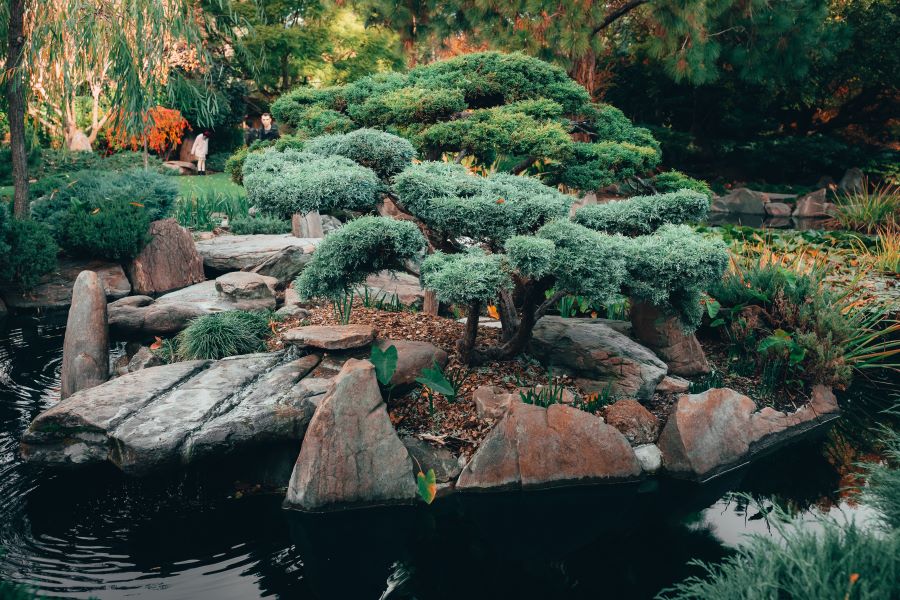
Rock landscaping is a form of gardening that uses rocks, stones, and boulders to enhance the look and feel of your garden.

The rocks can be arranged in different patterns, sizes, and colors to create a beautiful and natural-looking landscape. Rocks for landscaping often create a beautiful, practical, and low-maintenance garden.

How To Do Rock Landscaping

Determine Your Needs

Before you start rock landscaping, you need to determine your needs. Decide what kind of garden you want to create, what type of rocks you want to use, and how much space you have. If unsure of what you want, look for inspiration online or consult a landscaping professional.

Prepare Your Working Area

Once you have decided what you want, you must prepare your area. Remove any grass or plants in the area where you want to create your rock garden. This will give you a clear area to work with.

Select Your Supplies and Arrange the Rocks

After preparing your working area, select your supplies and choose the landscaping stones.

Choose the type of rocks you want to use, the size, and the color. You can use a variety of rocks, including decomposed granite, crushed granite, river rocks, black polished pebbles, and lava rocks. Arrange the rocks in a way that creates a natural-looking landscape.

Landscaping rock

Types of Landscaping Rocks

There are many landscaping rocks that you can use to create a beautiful and natural-looking landscape. Here are some of the most common types of landscaping stones:

Decomposed Granite

Decomposed granite is a popular choice for rock landscaping. It is a type of granite broken down into smaller pieces. It is available in various colors: brown, gold, and gray. Decomposed granite is easy to work with and provides a natural-looking surface for your garden.

Crushed Granite

Crushed granite is another popular choice for rock landscaping in a small area. It is similar to decomposed granite but is more finely crushed. It is also available in various colors, including brown, gold, and gray. Crushed granite is perfect for creating a natural-looking path or walkway in your garden.

Black Polished Pebbles

These are a beautiful and unique addition to any rock garden. They are smooth and polished and contrast dramatically with the other rocks in your garden. Black polished pebbles are perfect for creating a water feature or adding texture to your garden.

River Rocks

Pick river rocks are smooth and rounded and come in various sizes and colors. They are perfect for creating a natural-looking stream or water feature in your garden. River rocks are also ideal for adding texture and depth to your garden.

Boulders

Boulders are the largest landscaping rock option, and they work as both function and focal point. Use them to build retaining walls, terrace a sloped yard, or anchor a water feature, or simply place a few as standalone accents along a path or bed border. They’re low-maintenance once placed, but their size makes delivery and placement a job for professional equipment rather than a DIY afternoon.

Pea Gravel

Pea gravel is a small, rounded rock perfect for creating a natural-looking path or walkway in your garden. It is available in different colors, including beige, gray, and brown. Pea gravel is also ideal for creating a low-maintenance garden, as it requires little maintenance.

Lava Rocks

These rocks are porous and lightweight and come in various colors, including black, red, and gray. Lava rocks are perfect for creating a desert or volcanic-themed landscape. They are also excellent for creating a natural-looking pathway in your garden.

Brick Chips

Brick chips are landscaping rock made from crushed bricks. They are available in various colors, including red, brown, and gray. Brick chips are perfect for creating a rustic or traditional-looking garden. They are also ideal for creating a pathway or border in your garden.

Flagstones

Flagstones are large, flat stones perfect for creating a natural-looking pathway or patio in your garden. They are available in colorways of brown, gray, and red. These stones are ideal for creating a low-maintenance garden, as they require little maintenance.

rock for landscaping

How Much Landscaping Rock Do You Need & What Does It Cost?

Landscaping rock is typically sold by weight or by the cubic yard, and cost varies significantly by type. Decomposed granite and pea gravel are among the most budget-friendly options, while river rocks and boulders run higher due to sourcing and delivery. Lava rock tends to sit at the higher end of small decorative rock pricing.

To estimate how much you’ll need, calculate the square footage of the area you’re covering, then factor in depth. Most decorative rock applications call for 2 to 3 inches of coverage, while pathway or drainage applications may need more. A local supplier can help you convert that into cubic yards or bags based on the specific rock you choose.

Choosing Rock for Hot Climates

Not all landscaping rock performs the same way in direct summer sun. Dark-colored rocks and lava rock absorb and hold heat, which can make them uncomfortably hot to the touch and warm the surrounding soil more than lighter materials. In markets like Las Vegas, Phoenix, and the Inland Empire, lighter-colored decomposed granite or river rock tends to stay cooler underfoot and is a more practical choice near seating areas, pathways, or anywhere pets and kids will have direct contact.

Pairing rock with artificial grass is a common solution in these climates, since it gives you a cooler, softer surface immediately next to the rock for anywhere people will actually walk or sit.

Landscaping with Rocks Ideas

Rock landscaping is a beautiful and practical way to enhance the beauty and functionality of your outdoor space. You can create a stunning and unique landscape that suits your style and needs with the right mix of rocks, plants, and design elements.

Rock Path for Backyard Landscaping

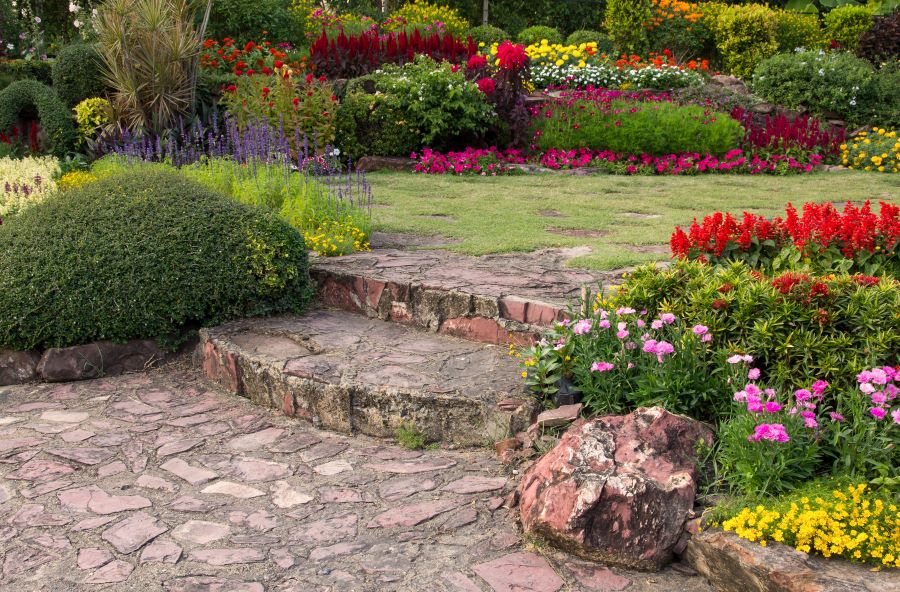
A rock path is an excellent way to add texture and interest to your backyard landscaping. Use flat, smooth stones to create a walking path that winds through your garden, leading visitors to different landscape areas.

You can also use large boulders to create a natural-looking staircase or retaining wall. Add colorful flowers or plants along the edges or between the rocks to make your rock path even more appealing.

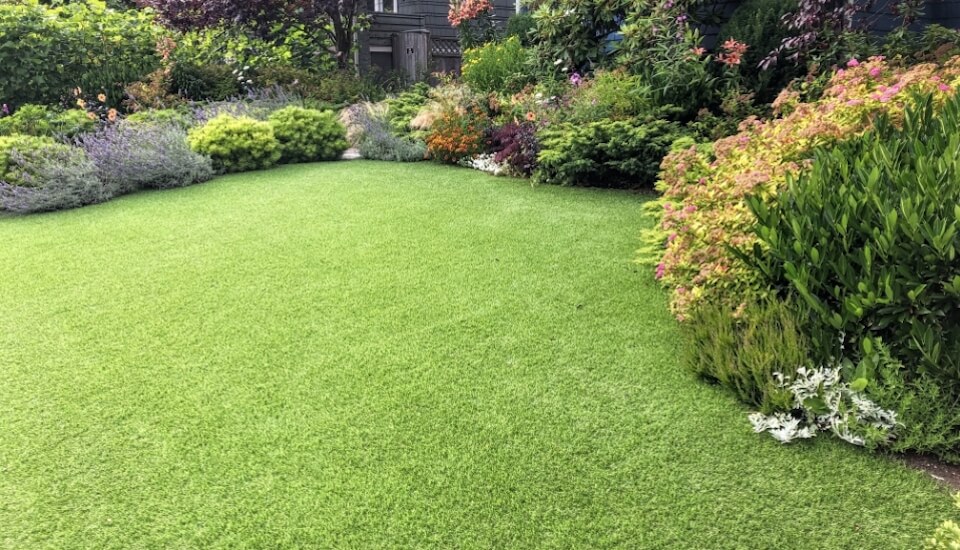
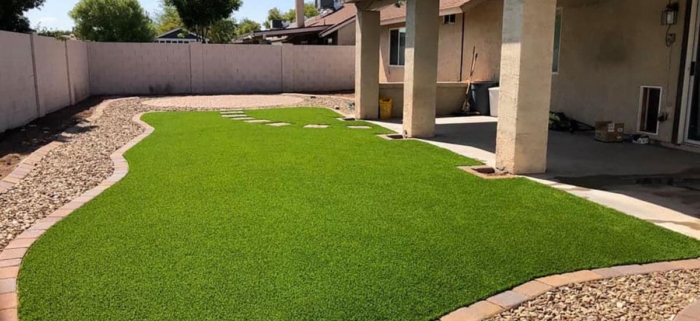
Traditional Landscape with Artificial Grass

If you love the look of a lush green lawn but don’t want to deal with the maintenance, consider using artificial grass in your landscape design. You can create a beautiful, low-maintenance landscape that lasts years by pairing synthetic grass with natural-looking landscaping rock. Add a variety of plants and flowers for color and texture.

Leveled Garden Beds

Leveled rock garden beds are a great way to use sloping terrain in your landscape. Add rock for landscaping around the edges of each level to create a natural-looking border. This is a great way to maximize outdoor space and create a beautiful and functional garden.

Water Garden with Landscaping Rocks

A water garden is a beautiful and relaxing addition to any landscape. Use landscaping rocks to create a natural-looking border around your water feature, and add different sizes and colors of rocks to create depth and texture.

You can also use boulders to create a waterfall or natural-looking stream. Add water plants and colorful fish to complete the look.

Budget-Friendly Landscape

Are you working with a tight budget? Use inexpensive materials like pea gravel or crushed stone to create a low-maintenance landscape that still looks beautiful. You can also use natural elements like fallen logs or branches to create a rustic-looking border. Mix and match different types of rocks to create a unique and exciting landscape that reflects your style.

FAQs

How much does landscaping rock cost?

Cost varies by type and region, but decomposed granite and pea gravel are generally the most affordable options, while river rock, lava rock, and boulders cost more due to sourcing and weight. Pricing is typically calculated per square foot or per cubic yard, so getting an accurate quote depends on the size of your project and the rock type you choose.

How much rock do I need for my landscaping project?

Measure the square footage of the area you’re covering, then plan for 2 to 3 inches of depth for most decorative applications. Multiply the square footage by the depth to estimate volume, then convert to cubic yards or bags based on what your supplier offers. Pathways and drainage areas may need a deeper layer than decorative beds.

What’s the best landscaping rock for drainage?

River rock and crushed granite are both strong choices for drainage, since their shape and size allow water to move through rather than pool on the surface. Avoid finer materials like decomposed granite in areas with heavy water flow, since it can compact and reduce drainage over time.

Does landscaping rock get too hot to walk on in the summer?

Yes, especially dark-colored rock and lava rock in direct sun. Lighter-colored decomposed granite and river rock stay noticeably cooler, which makes them a better choice for pathways, seating areas, or anywhere bare feet, kids, or pets will have direct contact in hot climates.


Rock landscape design is an excellent choice to enhance your curb appeal or create a serene outdoor retreat. Contact us for an excellent rock landscaping service that fits your budget.

With the correct types of landscaping rocks, you can create a beautiful, low-maintenance outdoor space that will envy your neighborhood.

Artificial Grass for Landscaping: Benefits and Uses

Artificial grass works for more than replacing a lawn. It handles slopes real sod struggles to hold, drains cleanly around pools instead of turning to mud, and stands up in dog runs, rooftop gardens, and tight side yards where watering a live lawn is impractical. If you’re weighing it for a landscaping project, here’s where it actually earns its place, what it costs, and where a live lawn might still be the better call.

Benefits of Artificial Grass for Landscaping

Cuts water use. A synthetic lawn needs no irrigation at all, which matters most in drought-restricted markets where a live lawn is one of the biggest line items on a water bill.

Removes the weekly maintenance cycle. No mowing, no fertilizing, no reseeding bare patches. Once it’s down, it stays the same height and color without a recurring schedule.

Handles conditions sod can’t. Slopes, shaded strips with poor grass growth, and high-traffic zones like dog runs and play areas all hold up better under turf than under a living lawn fighting the same conditions.

Lasts for decades, not seasons. A quality product has a lifespan of 20 to 25 years with proper care, longer than most other landscaping materials in the same yard.

Drains instead of pooling. A perforated backing handles pool splash-out, pet urine, and heavy rain without the mud and standing water sod develops in the same spots.

Where Artificial Grass Fits in a Landscaping Plan

Not every part of a yard has the same demands, and turf performs differently depending on sun exposure, foot traffic, and what the space is actually used for. The right approach is to think through each zone of the property on its own terms rather than treating the whole yard as one decision.

Front Yards and Curb Appeal

A front lawn is usually the first thing anyone sees, and it’s also the part of the yard most exposed to full sun and foot traffic from deliveries, mail, and kids cutting across the grass. Synthetic turf holds its color through the parts of summer when sod goes patchy, and it does that without a sprinkler schedule to manage. Before installing anything visible from the street, check your HOA’s guidelines on synthetic turf. Rules vary a lot by community, and some have specific requirements on pile height or product type.

Backyards, Pools, and Play Areas

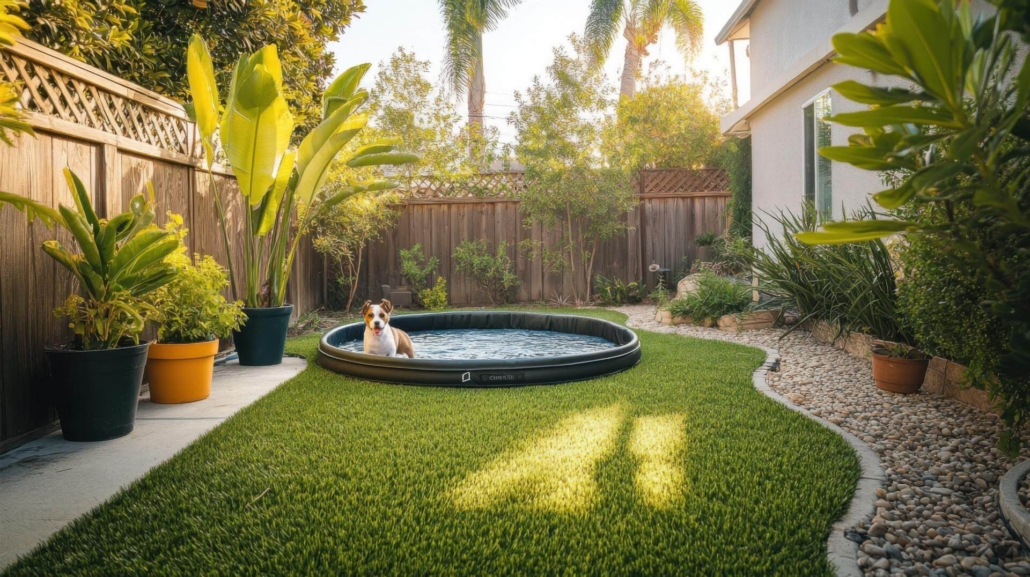
Artificial grass for pool areas

Sloped backyards, areas around a pool deck, and dedicated play zones are where turf tends to outperform sod by the widest margin. A perforated backing drains fast enough to handle pool splash-out and monsoon-style downpours without pooling, and a shock-pad underlayment under playground turf gives kids a cushioned surface that meets safety standards real grass can’t match once it’s worn thin from swing sets and slides.

Pet Areas and Dog Runs

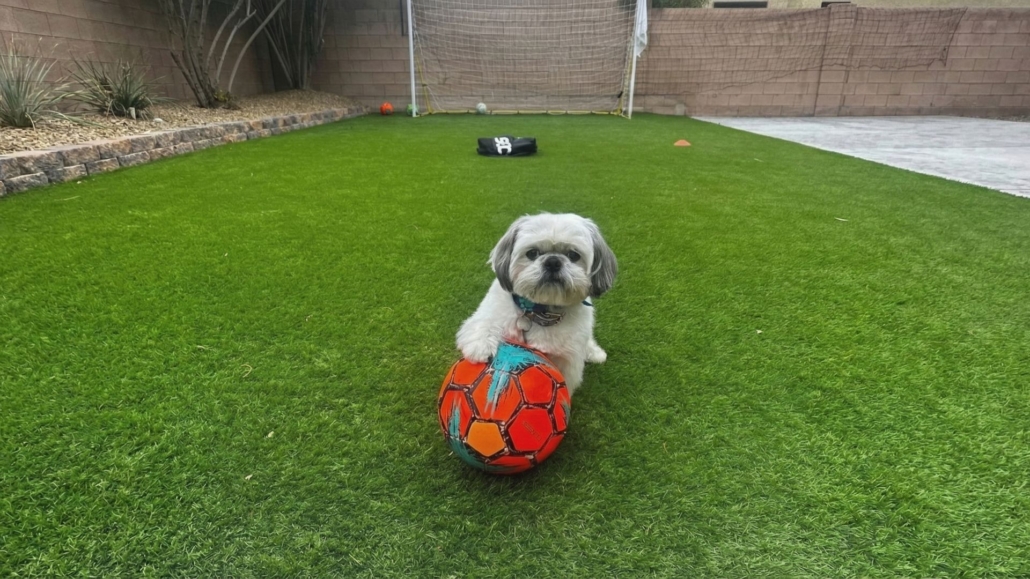
Pet-friendly artificial grass

A fenced run of synthetic grass drains urine instead of holding onto it the way soil and thatch do, which is the main reason artificial grass for dogs has become a standard choice for pet owners. It also holds up to digging and heavy paw traffic in a way that leaves natural grass bare and muddy within a season.

Commercial and Rooftop Applications

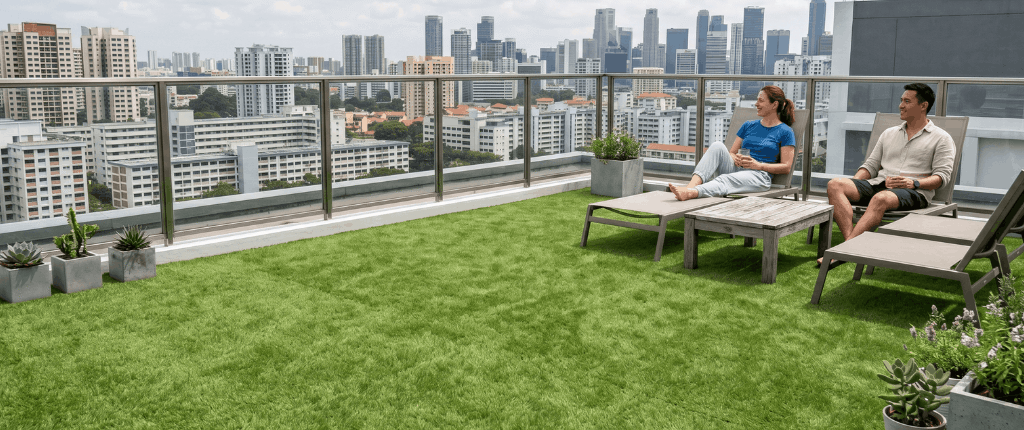
Artificial grass for rooftops

Offices, hotels, and multifamily properties use synthetic grass to keep courtyards and common areas looking finished year-round without an irrigation contract. Rooftop installations are one of the more specialized commercial uses, since a rooftop rarely has the soil depth or drainage a living lawn needs to survive.

What It Actually Costs and How Long It Lasts

Material costs vary by product line, pile height, and square footage, so pricing out artificial grass before committing to a design is worth doing early, not after the rest of the landscaping plan is set. On the other end, a quality product has a lifespan of 20 to 25 years with proper care, which is longer than most hardscaping materials in the same yard will last without repair or replacement.

Where a Live Lawn Might Still Make More Sense

Artificial grass isn’t the right call everywhere. Deeply shaded yards with poor airflow can trap moisture under turf if drainage isn’t planned correctly, and homeowners who genuinely enjoy lawn care as a hobby may not get the same satisfaction from a surface that never needs mowing. For everyone else, the tradeoff usually comes down to upfront cost versus years of water bills and weekend maintenance.

Frequently Asked Questions

Does artificial grass work on a sloped yard?

Yes. Turf performs well on slopes that are difficult to seed or mow safely, as long as the base is properly graded and compacted before installation so water drains the way it’s designed to.

How long does artificial grass used in landscaping last?

Quality synthetic grass lasts 20 to 25 years with routine care, well beyond what most homeowners get out of repeatedly reseeding or resodding the same area.

Is artificial grass safe for pets and kids in a landscaped yard?

Yes. Pet-specific infill helps manage drainage and odor for dog runs, and shock-pad underlayment makes turf a common choice under playground equipment.

Can artificial grass be combined with real plants and landscaping features?

Yes. Turf pairs well with garden beds, gravel, and hardscaping, and many landscaping designs mix turf sections with live plants for texture and lower overall water use.

For design-specific inspiration once you know where turf fits your yard, artificial grass landscaping ideas covers layout and style options in more depth.

Ready to see the quality for yourself? Order a free sample and compare it against your yard before you decide. Every Festival Turf product ships with a 15-year warranty.

Xeriscaping 101: Desert Landscaping Ideas For Your Backyard

If you live somewhere hot and dry, or you’re tired of watching your water bill climb every summer, desert landscaping is worth a serious look. It’s often called xeriscaping, a landscaping approach built around minimal irrigation and drought-tolerant design. What exactly does that involve, and what are some good desert landscaping ideas to start with? Here’s everything you need to know.

Key Takeaways

  • Desert landscaping, also called xeriscaping, replaces thirsty lawns with drought-tolerant plants, gravel, and hardscape to cut water use significantly.
  • It’s especially practical in Sun Belt climates like Las Vegas, Phoenix, and the Inland Empire, where water restrictions and summer heat make traditional lawns hard to keep alive.
  • Artificial grass can be combined with xeriscaping to keep a usable green space without the water bill that comes with natural grass.

What Is Desert Landscaping?

Desert landscaping is a form of landscaping designed for dry, hot climates with limited rainfall or irrigation access. It’s also commonly called xeriscaping, the more technical term for the same approach: minimal irrigation, drought-tolerant plants, and materials like sand, gravel, and boulders in place of thirsty lawns.

If you live somewhere like Las Vegas, where the hot, arid climate and limited water resources make traditional grass a losing battle, desert landscaping isn’t just an aesthetic choice, it’s often the more practical one. And where a natural lawn simply won’t survive without heavy watering, artificial grass in Las Vegas can fill that role without adding to your water bill.

desert landscaping

The Benefits of Desert Landscaping

So, we’ve seen the definition of xeriscaping, now let’s take a look at a few of the benefits of xeriscaping.

  • Convenient

One of the best benefits of xeriscaping is its convenience. With a xeriscape lawn or drought-resistant yard, you can enjoy beauty and curb appeal without the worry of high maintenance costs and without the need to put lots of effort into yard maintenance.

  • Ideal for Desert Regions

Another great thing about xeriscape ideas for the front yard is that they work really well in desert environments. Places like Las Vegas, for example, are great for these kinds of landscaping ideas and drought-resistant yard layouts.

  • Low-Maintenance

Once you know how to xeriscape the front yard, you’ll also see just how simple the process is. It’s quick and easy to get your yard set-up, and you won’t have to spend hours or lots of money maintaining it when you have simple decorative elements like an ornamental grass.

  • Water-Saving

These days, more and more people are concerned about their water usage. Saving water can help you save money and protect the planet, and desert landscaping ideas can help with that. The best xeriscape ideas for front yard allow you to have a drought-resistant yard without the need for expensive irrigation systems.

  • Inexpensive

Another great thing about xeriscape ideas is that they’re often quite cheap. Even the best artificial grass for backyard won’t cost excessive amounts of money, and there are lots of inexpensive desert landscaping ideas that you can use.

Desert Landscaping Ideas for Your Back and Front Yard

The benefits of xeriscaping are clear to see, but you might be wondering about how to xeriscape front yard at your home. Here are some inexpensive desert landscaping ideas to get you started.

  • Painted Desert

The Painted Desert is famously the name of a desert in Arizona, well-known for its multi-colored pigmented rocks. You can take inspiration from that same place by adding various boulders and rocks in different shades and hues to your land. Add in local desert plants like cacti and agave to bring the place to life with all sorts of colors and textures.

  • Tuscan Villa

Next, we’re heading to the Mediterranean with this Tuscan Villa theme. For this idea, you’ll want to focus on plants and decorative elements that are synonymous with the classic Tuscan landscape. Use olive trees and structured garden beds of annuals to create a Tuscan vibe in your own front yard.

  • Mediterranean Oasis

Last but not least, we have the Mediterranean Oasis theme. This kind of xeriscaped front yard is focused on the concept of a natural, desert-inspired scene, with tall pineapple palms and date palms, which may be centered around a primary water feature, like a pool or pond, which should serve as a great focal point.

desert landscaping ideas

Desert Plants for Landscaping

When it comes to desert landscaping, you can’t just use any plants. You have to be selective, choosing plants that will survive with minimal amounts of water.

  • Desert Trees and Shrubs

Some examples of desert-friendly trees and shrubs you can include in your xeriscaped yard are saguaro, aloe, yellow oleander, desert willow, sotol, Texas olive, and the boojum tree.

  • Colorful Drought Tolerant Plants

Some great drought-resistant plants to add color and vibrancy to your outdoor spaces include the likes of agave, African daisies, black-eyed Susans, bugleweed, butterfly weed, cacti, Mexican creeper, and desert roses.

Where Artificial Grass Fits Into Desert Landscaping

Not every part of your yard has to be rock and cactus. Many homeowners combine xeriscaping principles with a section of artificial grass, whether that’s a play area for kids, a spot for pets, or just a patch of green to break up the hardscape.

Unlike a natural lawn, artificial grass doesn’t fight your water restrictions, and it holds up to the same heat and sun exposure that makes desert landscaping necessary in the first place. It’s one of the few ways to get a lawn-like look in an arid climate without the water bill that comes with it.

How to Maintain Your Drought-Resistant Yard

Next, you need to know how to keep your xeriscape lawn well-maintained. Here are a few tips and tricks to help out.

  • Know Your Plants – Even drought-resistant plants like agave and cacti still have needs. Learn about your plants so you know what to give them and how to help them survive.
  • Soil Care – Soil quality is key for xeriscaped or landscaped yards. Carry out soil tests and make adjustments to give your plants the best conditions to grow.
  • Mulch – You may want to add some organic mulch to your yard every now and then to help improve fertility and support the growth of your plants.

If you’re not sure about any aspect of yard maintenance, or if you want help bringing your xeriscape ideas into reality, contact our artificial grass specialists for guidance.

Frequently Asked Questions

What’s the difference between xeriscaping and desert landscaping?

They’re essentially the same approach. Xeriscaping is the more technical term for a landscaping method built around minimal irrigation, while desert landscaping is the more general term for the same style, especially in arid regions like the Southwest.

Can I use artificial grass in a xeriscaped yard?

Yes, many homeowners combine xeriscaping with a section of artificial grass for a play area, pet space, or a patch of green to break up the rock and gravel. It fits the same low-water goal without giving up a lawn entirely.

Does desert landscaping increase home value?

In arid regions, a well-designed desert landscape can be an asset, since it signals lower water bills and less maintenance to future buyers. Whether it increases your home’s value specifically depends on your market and how well the design is executed. Our guide on whether landscaping increases home value breaks this down in more detail.

How much water can desert landscaping actually save?

Savings vary by yard size, plant choice, and climate, but replacing a traditional lawn with drought-tolerant landscaping is one of the most effective ways to lower outdoor water use in a hot, dry climate.

Alternative Grass: Eco-friendly Lawn Options for your Garden

An alternative to grass is any landscaping option that replaces a traditional lawn without the water, mowing, and upkeep grass demands, including ground covers, wildflowers, and artificial grass. Your lawn requires dozens of gallons daily to retain its lush, vibrant color, and maintaining a grass lawn can cost thousands of dollars a year depending on where you live. If you want an eco-friendly alternative grass option for your yard, installing synthetic turf as one of several lawn alternatives to grass is highly recommended.

What Does “Eco-Friendly Lawn” Mean?

An eco-friendly lawn is a type of yard that can decrease energy usage, conserve water, and reduce pollution. The term “eco-friendly” generally refers to something that doesn’t harm the environment.

Most eco-friendly lawns are designed to consume less water and require little maintenance. They also don’t require as many pesticides, herbicides, or fertilizers as a regular lawn.

The most popular alternative to grass in the backyard is to replace it with drought-resistant plants such as wildflowers, clovers, perennials, and herbs.

Other eco-friendly grass alternatives include ground covers and artificial turf, both of which hold up well in hot, dry climates and mild ones alike.

eco-friendly lawn alterantive

Why Choose an Alternative to Grass in the Backyard?

According to the U.S. Environmental Protection Agency (EPA), the average American household consumes about 320 gallons of water daily, with roughly 15 percent, or 48 gallons, going toward watering lawns. That share runs even higher in hot, arid climates like Las Vegas, Phoenix, and Denver, which is why many cities in these regions offer rebates or restrictions that push homeowners toward lower-water landscaping.

Choosing alternative grass, such as synthetic grass or artificial turf, can help reduce residential water consumption significantly no matter where you live. Synthetic turf lasts 20 to 25 years when properly maintained, and its aesthetic value holds up just as well as real grass. You can also choose the design elements of your synthetic turf based on its texture, color, blade length, and materials.

Overall, choosing eco-friendly alternative grass is not only good for the environment, it’s also good for your wallet.

Some Types of Alternative Grass

We are aware that conventional lawns are bad for the environment. The lush, carpet-like grass that covers a large portion of suburban North America needs to be cut frequently, which uses up resources and creates pollution. It also consumes water and pollutes our rivers with dangerous runoff from chemical fertilizers.

Eco-Friendly Ground Covers

Ground covers are one of the most popular lawn alternatives to grass since they spread across the ground but don’t grow tall. These low-maintenance plants spread fast, smother weeds, and fill up cracks in the ground. Which ground covers work best in your yard depends heavily on your local climate. Options like Kurapia, dichondra, and micro clover are common choices in hot, dry regions like Las Vegas, while cooler or wetter climates favor different species.

The tradeoff with any ground cover is durability. They thin out under heavy foot traffic and need a full growing season to establish before they look consistent, so yards with dogs or kids in daily use tend to show wear exactly where coverage matters most.

Artificial Turf as an Alternative to Grass Lawn

Artificial grass is among the lowest maintenance surfaces available. Synthetic turf emerged in the 1970s and has evolved into a modern, eco-friendly landscaping alternative that requires no upkeep. Today’s variations are remarkably lifelike and don’t need to be watered, fertilized, mowed, or treated for weeds, which is why it holds up equally well in a hot climate like Las Vegas and in milder regions where grass struggles for other reasons.

Quality synthetic turf uses a polypropylene or polyurethane backing rather than latex, which matters since latex tends to hold onto pet odor, especially in warmer weather. Drainage rates on a properly installed product run 40 or more inches per hour per square yard, so it handles heavy rain and daily pet use without pooling. For yards with dogs, a pile height between 1.25 and 1.65 inches tends to hold up best under regular traffic while still feeling soft underfoot.

Many homeowners pair artificial turf with mulch or gravel borders for added texture and drainage, though these materials work best as accents rather than a standalone grass substitute since they don’t offer the same soft, green surface a lawn does. You can also select from various backyard artificial grass and pavers options to round out the look.

Wildflowers

Wildflowers are a great alternative to lawns since they only need to be mowed once each season and require minimal upkeep or additional water once established. Some landscapers advise homeowners to blend wildflowers, combining various species and placing them side by side on the lawn.

Although wildflower seeds can be sown in the fall, some are lost to water, birds, and other animals. Direct-sow annual species in early spring to get the most out of them.

You could pick a fescue seed option if you want something that more closely resembles a typical lawn and can withstand foot traffic. Fescues belong to the Poaceae grass family, and because of their deep roots and slower growth, they require less watering and mowing overall than standard turfgrass.

Traditional lawns can do more harm than good given the amount of water and other resources required to keep them alive. Choosing alternative grass and other eco-friendly lawn alternatives to grass can help solve this problem, no matter your climate.

Why Homeowners Choose Artificial Turf Over Every Other Alternative Grass Option

Every alternative on this list solves part of the problem. Artificial turf is the only one that solves all of it at once: no watering, no mowing, no dead patches from heat or cold, and no re-establishing plants every season. It also holds up under the two things that wear out every other option fastest, which are kids and dogs.

FAQs

What can I use instead of grass?

The main alternatives to grass are ground covers, wildflowers, and artificial turf. Each trades some level of water use and maintenance for a lawn that still looks green and usable.

What is the best alternative to grass for water savings?

Artificial turf offers the largest water savings of any alternative to grass since it needs no irrigation at all once installed, compared to ground covers and drought-tolerant grasses, which still require some regular watering.

Do any cities restrict traditional grass lawns?

Some do. Las Vegas, for example, requires the removal of “nonfunctional turf,” meaning decorative grass with no recreational use, on properties not zoned for single-family homes, such as HOA common areas and commercial landscaping. Private single-family lawns aren’t affected, but it’s a sign of where water policy is heading in drought-prone regions.

Are lawn alternatives to grass more expensive than a traditional lawn?

Most alternatives cost more upfront but less over time. Artificial turf has the highest initial cost but the lowest long-term maintenance, since it never needs watering, mowing, or reseeding.

Festival Turf carries the largest synthetic turf inventory in the country, backed by a 15-year warranty on materials and workmanship, with showrooms across the Southwest where you can see and feel every product before buying. Before you commit to a full yard, order a free sample shipped straight to your door so you can check the texture, color, and feel against your actual space, or read the full warranty terms before you buy. Have questions about which alternative grass option fits your yard? Contact us and our team will help you find the right match.

Artificial Garden Walls: How to Build a Vertical Garden?

An artificial vertical garden is a wall mounted panel system that mimics real plants without the water, soil, or upkeep a living wall needs. Homeowners and businesses use it to turn a bare wall, fence, or balcony into a green feature instantly, at a lower long-term cost than building and maintaining a real vertical garden. This guide covers what an artificial vertical garden is made of, how to install one step by step, and how to keep it looking full for years. Whether you need artificial ivy for a small balcony or a full accent wall, the process below works the same way.

What Is An Artificial Vertical Garden?

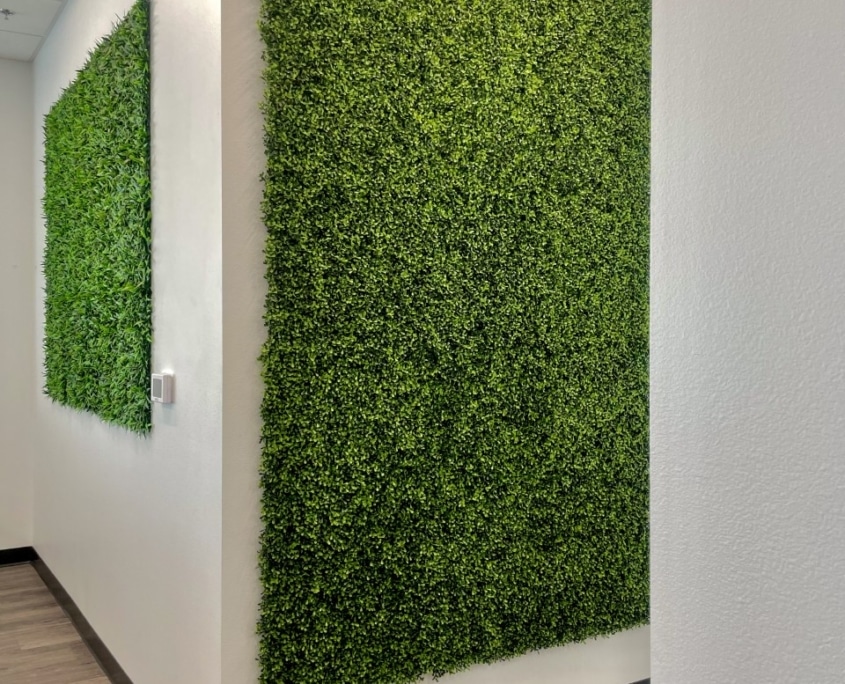
Artificial vertical gardens are a decoration that mimics living plants but is made of paper, silk, or plastic. They are meant to be placed in vertical spaces such as brick walls, timber cladding walls, and paling fences.

The synthetic plants that make up the vertical garden are supported vertically by interlocking plates.
Low-quality ones could seem too shiny and synthetic, while high-quality ones are lifelike, low-maintenance, and long-lasting.

Artificial Vertical Garden vs. Real Living Wall: Cost and Maintenance

A real living wall costs more to build and more to keep alive. It needs an irrigation system, soil or a growing medium, and ongoing fertilizer and pest control. An artificial vertical garden skips all of that. You pay once for the panels, mount them, and the ongoing cost is close to zero.

The table below breaks down where the two options differ most.

Factor Real Living Wall Artificial Vertical Garden
Upfront cost Higher (irrigation, soil, live plants) Lower (one-time panel purchase)
Ongoing cost Water, fertilizer, pest control None
Maintenance time Weekly watering and pruning, replacing dead plants A rinse a few times a year
Lifespan Plants die and need replacing Backed by a 5-year warranty on Festival Turf ivy panels, and holds up well beyond that with basic care
Light requirements Needs adequate natural or grow light Works in sun, shade, or no natural light at all

Step by Step Introduction on How to Build a Faux Vertical Garden

Building a faux vertical garden is easy since installing it is less tenuous than natural plants. You can also put it almost anywhere in your house, from your balcony to your backyard. Furthermore, you can order a specific size depending on your needs or customize it based on your preference.

Here is a simple guide on how to install an artificial vertical garden anywhere on your property:

Find Location and Measure

Go to the area or section of the house where you want to install the fake garden walls. Use a tape measure to get the length and width of the place where you want to put the artificial vertical garden.

Take note of the measurements, especially if you intend to connect multiple faux vertical gardens over the said area.

Calculate and Connect the Panels

Next, perform some calculations to ensure that the Las Vegas artificial grass panels cover the area you intend to decorate. The great thing about these panels is that you can resize them by cutting any excess. They also stick to any surface, and you can bend them to form a curved or contoured section.

Cut the grid panel based on the measurements you obtained earlier. Fix the grid panel using nails into the wall. When installing, make sure to interlock the panels to one another. You can also use zip ties to secure each panel better.

Fix the Panels Together to the Requested Size

Next, fix the panels together using a steel wire grid to help put the panel in place without damaging the wall. You can also use a staple gun to fix the panel into a timber cladding wall.

Ensure you get the size that best fits the area you want to decorate, so you won’t have to cut it down to pieces later.

Design Your Fake Wall Garden As You Wish

Finally, make adjustments, so every aspect of the fake garden wall follows your initial design. You can add a few elements to make it stand out, such as a frame or other accessories. You can design your artificial vertical garden based on your style preferences.

artificial green wall

Where to Use an Artificial Vertical Garden

An artificial vertical garden works indoors and outdoors, and the right placement depends on the space. Indoors, it fits well in living rooms and dining rooms, where it balances out darker furniture without taking up floor space. It’s also common in offices, restaurants, and hotel lobbies, where a reception area or waiting room needs greenery but has no natural light or staff to maintain live plants.

Outdoors, it holds up well on balconies, patio walls, and fences, as long as the panels are UV resistant. A shaded patio wall is the easiest outdoor placement since it avoids constant direct sun. If you’re finishing a full outdoor renovation, an artificial vertical garden pairs naturally with Las Vegas artificial grass, giving you a low-maintenance green space from the lawn to the fence line.

What Are Artificial Garden Walls Made Of?

An artificial vertical garden panel is built from two parts, a grid backing and the foliage attached to it. The backing is usually plastic or steel mesh, strong enough to hold the foliage in place while light enough to mount with nails, screws, or a steel wire frame. The foliage is where quality varies the most. Lower cost panels use thin, glossy plastic that looks flat up close. Higher quality panels use UV stabilized material with varied leaf shapes and shading, so the wall reads as real plants rather than a green sheet.

Artificial ivy is the most common foliage style for vertical gardens because it drapes naturally and fills a wall evenly without gaps. Mixed foliage panels, which combine ivy with small flowers or ferns, work well when a larger wall needs more texture and color variation.

The Benefits of Having a Vertical Garden

Installing artificial vertical garden panels has several advantages over fixing natural plants on your walls. Such as:

  • It does not require artificial turf maintenance
  • Vertical garden artificial does not need pest control, fertilizer, and even water
  • A fake wall garden can be customized and shaped much more easier
  • They typically last longer since insects aren’t interested in them
  • A faux vertical garden does not cause pollen allergies

Overall, you don’t have to be a green thumb to ensure that the artificial vertical garden wall always looks best.

Tips on Maintaining your Artificial Wall Garden

Low-maintenance artificial vertical garden only requires to be cleaned a few times a year; if you have a green plastic wall, make sure to use a cloth dipped in warm water and multi-purpose cleaner spray and rub it on the surface.

However, if you have a silk or paper green wall, use a duster or dry cloth instead since these materials are not meant to get wet. If your artificial plant or green wall is UV resistant or stabilized, let it out in the sun for a while. Meanwhile, if it’s not, let the wall dry inside for a little while.

For more information about artificial wall gardens, please contact artificial ivy providers. If you are seeking more details about the fake grass for wall in Las Vegas our professionals are ready to assist you.

FAQs

What is an artificial vertical garden?

It’s a panel system of synthetic foliage, often artificial ivy, mounted on interlocking plates that attach to a wall or fence. It creates the look of a living wall with no soil, water, or sunlight required.

Is an artificial vertical garden cheaper than a real one?

Yes, over time. A real vertical garden needs irrigation lines, ongoing plant replacement, fertilizer, and pest control. An artificial one is a one-time panel cost with no recurring maintenance spend.

How long does an artificial vertical garden last?

Festival Turf’s artificial ivy is backed by a 5-year warranty. Quality UV-stabilized panels typically hold their color and shape well beyond that, especially indoors or in partial shade.

Can I install an artificial vertical garden outdoors?

Yes, as long as the panels are UV-resistant. Direct sun exposure without UV protection will cause cheaper materials to fade or look shiny and artificial faster.

Does an artificial vertical garden need any maintenance?

Very little. A rinse with warm water and a multi-purpose cleaner a few times a year is usually enough. No watering, fertilizing, or pest control needed.

Can artificial vertical gardens be used indoors, in offices, or in commercial spaces?

Yes, artificial vertical gardens work well in living and dining rooms, and are commonly used in commercial spaces like office reception areas, restaurants, and hotels to add greenery without a maintenance plan.

How many panels do I need for my wall?

Measure the height and width of the space in feet, multiply for total square footage, then check that figure against the panel size you’re ordering. Order a free sample first to confirm color and texture before buying panels for the full wall.

Landscaping Ideas for Small Areas

Landscaping a small area can feel like it’s working against you. Every plant, path, and patch of lawn competes for the same few square feet, and it’s easy to end up with a space that looks cluttered instead of intentional. The good news is that landscaping a small area doesn’t need less design, it needs smarter design.

From ground cover materials to low-maintenance plants to swapping high-upkeep grass for something that stays green year-round, here’s how to make a small front or backyard feel bigger and work harder for you.

Small Backyard Landscaping Ideas

Your backyard should be your personal sanctuary, a place of peace and serenity. To get the most out of your backyard, there are a few landscaping ideas to consider to elevate the overall aesthetic beauty of this space truly.

landscaping a small area


Mix Ground Cover Materials

When it comes to ground cover materials, there are tons of visually attractive options to choose from. Gravel, pebbles, bark, and slate are a few great options, as they are easy to lay and instantly give your garden more character.

Mixing ground cover materials into patterns or even sporadically can create a truly eye-catching layered effect. This will help make your small garden space unique and ambient with little effort.

If you are concerned that your ground cover materials will harm your grass, consider installing artificial grass instead; it requires no maintenance and remains green all year.

If you are looking at installing artificial grass or other artificial elements such as artificial ivy, contact us!

Select the Right Plants

Choosing the correct selection of plants for a garden with minimal space may seem complicated, but the truth is there are tons of beautiful plants suited to smaller areas.

There are indeed hundreds of plants to choose from that are friendly for small spaces, but a few of our favorites include lavender trees, Japanese maple trees, bamboo, Mexican orange blossoms, and wild olive trees.

These options do not take up much space and do not grow exceptionally tall either, all while being incredibly colorful and easy on the eye. If you do not have the time to maintain your garden often, consider using low-maintenance plants like smaller shrubs and aloes.

Install an In-Ground Plunge Pool

Don’t let your lack of garden space prevent you from installing an attractive and useful fixture or two.

A small in-ground plunge pool is something you can make work in a garden of any size and add a little bit of functionality to your small backyard. Plants and trees may be wonderful to admire, but a small plunge pool is a great way to ensure that your garden can be a place where social gatherings can be hosted, and memories can be made. We all love a little outdoor living.

small space landscaping ideas

Raised Garden Beds

If you don’t have much space to work within your backyard, you may want to consider planting your greenery in raised garden beds.

This gives your backyard a contemporary and visually striking look and is also a great way to maximize the space available.

Raised garden beds will separate your plants from the ground, giving you more room to walk around your own little sanctuary and add other sections like a seating area.

Why Artificial Grass Works So Well in Small Yards

Small yards have less room for error. A patchy or unevenly worn lawn stands out far more in a compact backyard than it would across a full acre, and there’s rarely space to rotate seating areas or furniture around a struggling section of grass while it recovers.

Artificial grass removes that problem entirely. It stays a consistent, even green year-round, so a small backyard always looks finished instead of like a work in progress. It also holds up well against the heavier foot traffic that’s unavoidable in a tight space, since paths, seating areas, and play zones tend to overlap more when the yard is small.

Festival Turf backs every product with a 15-year warranty, so a small-yard investment stays protected long after installation. If you’re still deciding whether it’s the right fit, request a free sample and see how it looks alongside the ground cover materials and plants you’re already considering.

Small Front Yard Landscaping Ideas

Use Garden Edging to Zone Your Front Yard

When it comes to your front yard, garden edging is your best friend. Garden edging is a simple yet effective way to create crisp divisions among the different sections of your garden.

When used effectively, garden edging creates a clean-looking front yard by separating your grass from your flower beds, trees, and shrubs and is, therefore, a great way to go about landscaping a small area.

Consider the Hardscape

When you think of landscaping, trees, plants, and grass likely come to mind, but hardscape is equally essential to consider.

While greenery may be the focal point when landscaping a small area, hardscape adds a nice touch of variation and contrast to the front yard’s overall aesthetic. Tiles, pebbles, and paving are all striking hardscape elements to incorporate into the overall design of your small front yard.

small front yard landscaping ideas

Plant Trees and Shrubs

No garden is complete without trees and shrubs, not even smaller landscapes. Adding trees and shrubs to your front yard will help add volume to the space and truly make it pop.

When selecting what trees and shrubs to go with, it is essential to choose options that do not take up too much space, such as pompon trees or hydrangeas.

Create an Interesting Pathway

The focal point of any front yard should always be the pathway leading to your home. After all, this is the first thing guests will see when they arrive at your residence, so try and make it interesting!

Pebbles, crushed stone, and cobblestone tiles are a few of the many excellent materials you may want to consider for this aspect of your landscaping, as they look beautiful alongside the rich green of your front yard.

Frequently Asked Questions

What’s the best landscaping option for a small backyard?

A mix of ground cover materials, low-maintenance plants, and artificial grass usually works best. Artificial grass in particular helps a small backyard look consistently finished since it doesn’t develop the bare or uneven patches that natural grass can in high-traffic, low-space areas.

Does artificial grass work in oddly shaped or small yards?

Yes, artificial grass can be cut and fitted to irregular shapes, tight corners, and narrow side yards where a lawn mower often can’t maneuver easily. This makes it a practical option for small or unusually shaped spaces.

Is artificial grass a good choice if I already have hardscape and garden beds?

Yes, artificial grass pairs well with gravel, pavers, and raised garden beds because it creates a clean, even backdrop that doesn’t compete with the other textures in a small design. It also won’t get damaged or worn down at the edges where it meets hardscape materials.

A Complete Guide to a Drought Tolerant Landscaping

Landscaping in a hot, dry climate comes with real limits. Many plants that thrive in wetter regions simply can’t survive a Nevada, Arizona, or Southern California summer without constant watering. Drought tolerant landscaping solves this by working with your climate instead of against it, and for many Sun Belt homeowners, that means rethinking the lawn itself.

This guide walks through what drought tolerant landscaping actually means, how it differs from xeriscaping, and practical ways to build a yard that stays green and attractive without draining your water bill. That includes where artificial grass fits in, since it’s one of the few options that removes water use from the equation entirely. Whether you’re starting from scratch or replacing a struggling lawn, you’ll find ideas that fit any budget.

What’s the Difference Between Drought Tolerant, Drought Resistant, and Xeriscape Landscaping?

These three terms get used interchangeably, but they mean different things.

Drought tolerant plants have evolved to survive on very little water. Succulents, cacti, and agave fall into this category. Once established, they need almost no supplemental watering, even during extended dry spells.

Drought resistant plants can survive dry periods but perform best with moderate, regular water. Coneflower, salvia, and lavender are good examples. They’ll tolerate a missed watering here and there, but they’re not built to go without water entirely.

Xeriscaping is broader than plant choice alone. It’s a complete landscape design approach that combines drought tolerant and drought resistant plants with efficient irrigation, soil improvement, mulch, and hardscape elements like gravel and stone. A xeriscaped yard is designed from the ground up to use minimal water, not just planted with the right species.

Understanding this difference helps you set realistic expectations. If you want a yard that needs almost zero maintenance, xeriscaping with true drought tolerant plants is the way to go. If you want more variety and color, drought resistant plants give you that flexibility with slightly more water investment.

inexpensive drought tolerant landscaping

Improve Your Soil Before You Plant

A drought tolerant garden starts below the surface. Healthy soil holds moisture longer, which means less frequent watering and stronger root systems.

Work compost or other organic matter into your soil before planting. Compost acts like a sponge, absorbing water when it’s available and slowly releasing it to plant roots as the soil dries out. You can make your own compost, buy it from a garden center, or check if your city offers a free compost program.

Avoid applying fertilizer during hot weather. It can dry out and harden the soil, working against the moisture retention you’re trying to build. Save fertilizing for cooler months when plants can actually use the nutrients without added heat stress.

Once your soil is prepped, a layer of mulch on top locks in that moisture and keeps roots insulated from surface heat.

Inexpensive Drought Tolerant Landscaping

The best thing about Drought Tolerant Landscaping is that it’s an affordable solution to creating a magnificent garden. Instead of a lush lawn, you fill your front yard with gravel, river stones, permeable paving, and low-maintenance plants that don’t require irrigation.

Below are some ways you can use inexpensive drought tolerant landscaping techniques on your lawn:

  • Reduce Your Lawn

A healthy lawn requires constant watering. However, if you only have minimal water at your disposal, then it’s best to reduce your lawn. The most direct way to shrink your lawn is to cut the ground into square sections using a shovel.

  • Consider Artificial Grass

If you still want the look of a green lawn without the water bill, artificial grass is one of the most effective drought tolerant landscaping upgrades you can make. Today’s synthetic turf is built with UV-resistant fibers and drains at over 40 inches per hour per square yard, so it holds up in full desert sun without pooling water. It never needs mowing, fertilizing, or watering, and it comes backed by a 15-year warranty.

Not sure which turf fits your yard? Order a free sample shipped straight to your door before you commit.

  • Make the Most of Mulch

Mulch is often used to cover the surface of the soil. They are made from dead plant parts such as tree bark, leaves, compost, and grass clippings. They can improve soil quality and suppress weeds. Moreover, you can use them to keep the sun’s rays from drying out the ground, saving water.

front yard drought tolerant landscaping

Choose Ideal Drought-Resistant Plants for Your Drought Tolerant Landscape

When choosing plants for your Sun Belt yard, look for species that are proven to handle extreme heat and minimal water.

Coneflower tolerates full sun and reflected heat from patios and driveways, making it a strong choice for Nevada and Arizona yards.

Agastache attracts pollinators while requiring very little water once established, a good fit for gardens near Phoenix or Las Vegas.

Salvia comes in dozens of varieties, most of which handle both heat and short dry spells without stress.

Lavender thrives in the dry, well-draining soil common across Southern California and the desert Southwest.

Drought-tolerant shrubs like Texas sage and desert marigold add structure and require almost no supplemental watering after their first year.

For areas where you want a lawn-like look without relying on any of these care requirements, artificial grass fills that role without needing water at all.

Group Plants by Water Zones (Hydrozoning)

Not all drought tolerant plants need the exact same amount of water, and grouping them correctly makes a real difference in how much you’ll water overall. This practice is called hydrozoning.

Divide your yard into three simple zones. A high-water zone near the house can hold a small cutting garden or a few flowering plants that need regular attention. A moderate-water zone can house your drought resistant plants like coneflower and salvia, watered every week or two. A no-water zone, once established, relies entirely on rainfall and holds true drought tolerant plants like agave and succulents.

There’s also a zero-water zone worth planning for: any part of your yard covered in artificial grass needs no irrigation line at all. Many homeowners use turf to eliminate the high-water zone altogether, replacing a thirsty front lawn with synthetic grass and reserving their actual water budget for a smaller planting bed.

Rock Gardens and Hardscape Focal Points

Plants aren’t the only way to add visual interest to a drought tolerant yard. Boulders, river rock, and gravel create focal points that need zero water and add texture year-round. These elements are part of what’s called hardscaping, the non-living structural features of your landscape, and it’s one of the most effective ways to reduce water use without sacrificing curb appeal.

A cluster of boulders with low-growing ground cover planted around the base gives your yard structure without demanding maintenance. Gravel beds work well as a stand-in for traditional mulch in xeriscaped areas, and they double as a walking surface when paired with stepping stones. Read more on rock landscaping ideas.

If your yard has a slope, terracing with retaining walls turns an awkward grade into usable planting beds. It also slows water runoff, giving rain a chance to soak in instead of running off before it reaches your plants’ roots.

Tips for Simple Drought Tolerant Landscaping

If you want to create simple drought-tolerant landscaping in your front yard, it’s best to consult a professional to create a landscape design with a drought-tolerant garden. Furthermore, the garden should be able to adapt to dry conditions and the lack of irrigation systems.

  • How to Help Your Plants Survive with Minimal Water

Front yard drought-tolerant landscaping is predicated on the fact that you only need to use minimal water. Below are some things you can do to reduce the amount of water to maintain the plants and flowers in your yard.

    • Use Organic Matter

Gardening materials that are made of organic matter absorb less heat than inorganic ones like plastic and steel. Using organic matter will lower the garden’s temperature and lower the risk of your plants withering because of the heat.

    • Plant Small Specimens Early

The best time to plant your drought-tolerant plants is in the morning when it’s relatively colder. This method will ensure they won’t dry out as easily during the hotter hours of the day.

Capture Rainwater with Permeable Paths and Rain Gardens

Every drop of rain that lands on your property is an opportunity, if it has somewhere to go besides the storm drain.

Permeable paving, like gravel, spaced pavers, or porous concrete, lets rainwater soak into the soil instead of running off a hard surface. This is a simple swap for driveways, walkways, and patios that doesn’t sacrifice function. Quality artificial grass drains well too, most perforated backing handles 40 or more inches of rainfall per hour per square yard, so it won’t pool or flood during a heavy storm the way a poorly-drained yard might.

A rain garden takes this a step further. It’s a shallow planted depression positioned to catch runoff from a roof, driveway, or sidewalk. The plants in a rain garden are chosen to handle both occasional standing water and long dry spells, which makes them a smart complement to the rest of your drought tolerant design.

Don’t Forget These Overlooked Areas

Side yards, driveways, and parking strips are some of the most neglected parts of a property, and also some of the easiest to convert.

Narrow side yards often struggle to grow real grass because of limited sunlight and foot traffic. This is a spot where artificial grass makes more sense than fighting with a patchy lawn. It stays green in shade or sun and holds up to being a walkway.

Driveways can include a planted strip down the center or along the edge to capture runoff instead of losing it to storm drains. Parking strips between the sidewalk and curb are notoriously hard to mow and easy to neglect. Swapping that strip for drought tolerant plants or gravel turns a problem area into something that actually looks intentional.

FAQs

What is the difference between drought tolerant and drought resistant plants?

Drought tolerant plants can survive on very little water once established, including long dry periods. Drought resistant plants can handle short dry spells but perform best with regular, moderate watering.

Is artificial grass considered drought tolerant landscaping?

Yes. Artificial grass requires no irrigation once installed, which makes it one of the most effective ways to reduce a yard’s water use while keeping a green, lawn-like appearance.

How much water can drought tolerant landscaping save?

The amount varies by yard size and plant selection, but replacing a traditional lawn with drought tolerant plants, hardscape, or artificial turf can significantly cut outdoor water use, since lawn irrigation is typically the largest source of residential water consumption.

Do I need professional help to install drought tolerant landscaping?

Many drought tolerant upgrades, like adding mulch, grouping plants by water needs, or installing gravel paths, can be done as a DIY project. Larger changes like grading, terracing, or full artificial turf installation are usually best handled by a landscaper or licensed contractor of your choosing.

Are there rebates for converting my lawn to drought tolerant landscaping?

Some areas offer rebates for turf replacement. Las Vegas and Henderson residents can access the Southern Nevada Water Authority’s Water Smart Landscapes rebate. Rebate availability varies by city, so check with your local water authority before starting your project.

Simple Halloween Ideas For Your Front Yard

Halloween is one of our favorite holidays. And since it’s almost that time of the year, you need some scary yard decorations for Halloween ideas! But, when it comes to Halloween ideas for the front yard, remember that you don’t need to spend a fortune.

Simple DIY ideas for the front porch, front door, and other areas in your front yard can be quick, easy, and cheap! So get the spray paint, tools, and creativity ready; we’re about to start this scary Halloween party!

Create Yard Signs

Front yard outdoor Halloween decorations start with the yard signs. And the spookier they are, the better. You might want to go for a specific theme – Spider webs, skeleton decorations, scary facial features, vampires – Whatever you choose, get creative with the yard signs and place as many as possible. You can add these signs around your front yard, on playground turf, or anywhere else, so just be creative.

Start outside your property with scary riddles that the kids see as they enter. You could also include “Enter at your own peril” and other spooky messages. Scary yard decorations for Halloween should be a combination of creepy, frightening, and, most all, lots of fun.

Install Halloween Tombstones

One of the best Halloween ideas for your front yard is Halloween tombstones. You could also include characters in Halloween costumes who crawl out from their graves.

You can also mark the tombstones with funny names of characters to add some humor to the mix. Finally, outdoor Halloween decor like Halloween tombstones can add the finishing touches to your front yard decorations. If you decide to apply the idea be careful not to damage your artificial grass.

front yard halloween decorations outdoor

Add Spooky Lighting

Your DIY outdoor Halloween decor isn’t complete without some suitably spooky lighting! Reds, blacks, greens, and white lights can add the perfect scary ambiance to your scary yard decorations for Halloween.

A great idea is to include the lighting over the strategically placed Halloween tombstones, lighting up the funny names written on them. Using the lighting to highlight the other aspects of your scary front yard Halloween decorations would be best. You can also add some lighting to your fake ivy wall which will create an autumn festive mood.

Use At Least One Ghost

Ghosts should be on top of the list of Halloween front lawn ideas. Halloween isn’t Halloween without at least one ghost to frighten that front yard! The more, the merrier, but as long as there’s one, you’ll be OK.

Ghosts, of course, are probably one of the most accessible DIY outdoor Halloween decorations to make. You can use essential items like plastic bags, white sheets, and even paper to shape and mold scary ghosts to place in your front yard. Get creative and include lighting and sound effects to give the trick-or-treaters an extra scare!

Look For Simple Yard Skeleton Ideas

Outdoor skeleton decoration ideas don’t need to be complicated or expensive. You can make use of materials you probably already have at home. Cardboard or standard paper is the perfect base. Trace and then cut out the various parts of the skeleton.

Once you have all the various components, you can tape or glue them together and hang them from the porch or anywhere else in the front yard. Remember that it doesn’t have to be perfect – Halloween is all about creepy and strange things, and a skeleton falling apart in the wind might even be scarier than one that isn’t!

Make Fun Costumes

It’s all about the costumes, so make sure you get creative with this one. These costumes can be displayed in your front yard or worn by you and your family while you parade around the lawn waiting for your visitors!

halloween ideas for front yard

Here are some spooky costume ideas:

  • Stranger Things
  • The Avengers
  • Minions
  • She-Hulk
  • Catwoman
  • Vampires
  • Clowns
  • Skeletons
  • Werewolves
  • Zombies
  • Harley Quinn
  • Cruella De Ville

Turn Your Garage Into a Haunted House

Another great idea is to make use of your garage space. Leave the cars outside for Halloween and turn the space into your haunted house feature! Here’s how to do it.

  • Clear space

The first step is clearing out the vehicles and other unnecessary items. Think of it as an opportunity to get some cleaning done too! Make sure that there’s nothing that can harm the kids. Remember that people should be scared by your decorations, not the terrible state of your garage!

  • Blackout

The best way to set the scene is to use black material to cover the various items left in the garage. Black would work perfectly for this.

  • Make blind corners

Create a little maze inside your garage using plywood and other materials you have handy. This will allow you to place scary traps and surprises along the pathway!

  • Hang ghouls and ghosts from above

You can go crazy here – Secure ghosts, monsters, and other scary characters from the ceiling to create a truly terrifying haunted house experience.

  • Black lights and fog

Get some black lights and a fog machine if you want to go the extra mile. This will add the perfect finishing touches to the scariest haunted house ever.

FAQ

How Can I Decorate My Yard For Halloween?

As mentioned, you don’t need to break the bank. Instead, using the tools and items you have at home, and maybe just one or two extra purchases, you can turn your front yard into Salem’s Lot!

When Should You Decorate For Halloween Outside?

That’s entirely up to you – But we suggest that the sooner you start planning, the better. The ideas may be pretty straightforward, but you probably have a busy schedule, so you’ll need some time to plan it out and set it up. So a month before might be a good time to start the ball rolling.

How Do I Make My Yard Look Spooky For Halloween?

There are many ways to up the scare factor in your front yard. We’ve mentioned lighting, props, ghosts, tombstones, costumes, haunted garages, skeletons, and yard signs.

What Do People Put on Porches And in Doorways on Halloween?

Carved pumpkins are a tradition, but the sky’s the limit. Think cobwebs, creatures, moss, ominous signs, fake blood, scary faces, and anything that ups the spooky factor.

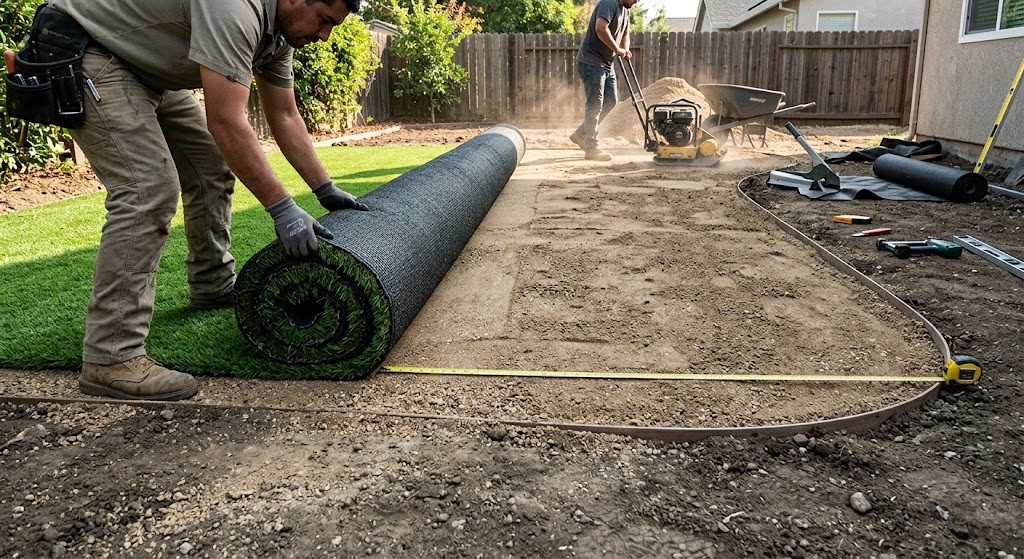
How to Install Artificial Turf On Dirt

Installing artificial turf on dirt is one of the most common backyard projects homeowners take on, and yes, you can do it yourself with the right prep. Organic grass takes constant work to keep alive through summer heat and drought, and kids or pets running around only speeds up the damage.

Artificial grass solves that problem, and dirt is one of the easiest surfaces to install it over once it’s properly leveled and prepped. This guide walks you through exactly how to install artificial turf on dirt, step by step, so the finished lawn looks flawless and drains the way it should.

Can You Put Artificial Grass Over Dirt?

The short answer is yes, but it’s essential to keep reading for an explanation. Dirt is an uneven surface, so it’s necessary to flatten and prepare it first. That will ensure optimal drainage and minimize the risk of tears and other damage. If you do the turf preparation task well, your fake lawn will look impressive for years!

What You’ll Need

Before you start, gather your materials and tools. Having everything on hand before you begin prevents mid-project trips back to the store and keeps the base prep moving while conditions are right.

Materials:

  • Artificial turf, enough to cover your measured area plus a few inches of overage on each side
  • Infill: silica sand, zeolite, or rubber depending on your climate and whether you have pets
  • Weed barrier or landscape fabric
  • Base material, such as decomposed granite or crushed aggregate
  • Seaming tape for joining multiple rolls of turf
  • Outdoor-rated adhesive
  • Turf nails or galvanized stakes

Tools:

  • Utility knife
  • Broom or push broom
  • Hand tamper or plate compactor
  • Shovel or rake

Order free samples before you commit to a full roll, it’s the easiest way to check pile height, backing, and color against your yard before you buy.

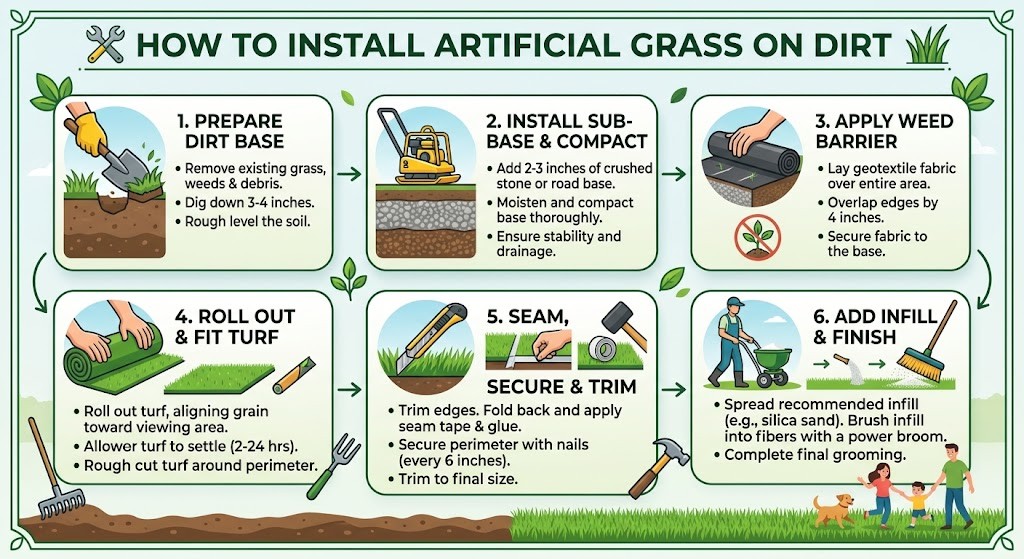
How to Install Fake Grass on Dirt

Check out the steps you’ll do during the installation!

Measure the Area

The first thing you want to do is measure the area you want to be covered with artificial grass. It ensures you identify the right lawn size to acquire. Additionally, you’ll know the exact surface that requires preparation.

The dimensions are your call, and aesthetics should be the primary consideration. Do you plan fake grass to be the only thing to put above the dirt surface? Perhaps you have a plan for a pathway, fountain, or other fixtures? It’s essential to have a comprehensive landscaping plan. Once that’s ready, you can keep reading our guide on how to install fake grass on dirt.

Prepare the Surface

It might be mostly dirt, but you’ll likely find weeds, patches of grass, or leftover plants scattered across the area. Clear all of it before you start. Leftover vegetation will push up through your turf over time and ruin the flat, even look you’re going for.

If weeds are established or the area has a history of regrowth, treat it with a herbicide a few days before digging so the roots die off completely rather than just the visible growth.

Dig Out the Old Soil

Once the surface is clear, dig down 3 to 4 inches across the entire area. This removes the old topsoil along with any remaining roots, grass, and debris that could work their way back up through your turf later. Pull every root you find rather than just the visible plant — roots left behind will regrow and push through the seams.

This depth also leaves enough room for your base material and turf without raising the finished surface above nearby patios, walkways, or garden beds.

Add Subbase Material

If you are installing turf on dirt, it’s now necessary to prepare the subbase material. You can put artificial lawns directly on the surface. Now that you’ve removed all vegetation, you have native soil. It will probably include clay, which expands and contracts throughout the year.

Native soil can lead to uneven surfaces and soft spots. If you want to avoid that happening, it’s necessary to have a subbase material. Decomposed granite is the most common material because it makes an excellent base for artificial lawns. It keeps the soil together and provides a perfect foundation.

While you’re placing the base material, grade it with a slight slope, about 1 to 2 percent, angled away from your house or any other structure. This keeps water moving off the surface instead of pooling underneath the turf, which is one of the most common causes of odor, mold, and soft spots over time.

Make the Dirt Surface Flat

Begin by adding about 0.25 inches of decomposed granite to the surface. It will act as a foundation. The next step is putting another inch of this material. You want to add granite an inch at a time. Once you place it on the surface, make it wet and use a sod roller to roll the material. The recommendation is that the granite should be level to your grass deck. It reduces the risk of mishaps when someone steps off the lawn.

Compact the Base

Once the decomposed granite is down and level, compact it before laying any turf. Use a hand tamper for smaller areas or a plate compactor for larger ones, working in the same rows you used to spread the material. Lightly wetting the surface first helps the granite bind and settle more evenly under the compactor.

Skipping this step is one of the most common reasons DIY turf installations fail early an uncompacted base shifts over time, and that movement shows up as dips, wrinkles, and soft spots in the turf itself. A properly compacted base stays flat and stable for years.

Cut the Fake Grass to Size

Before you cut anything, unroll the turf and let it sit in direct sun for an hour or two. This lets the material relax and expand naturally, so you’re cutting it at the size it’ll actually hold once it’s down, not while it’s still tight from the roll.

All steps until now were preparation, and now it’s time to learn how to install artificial turf on dirt. Lay the grass and cut it to the desired size. The entire idea is that you don’t want it to go on top of the deck. Overlapping isn’t visually attractive, so cutting the fake turf to the desired dimensions is essential.

Layout the Synthetic Grass and Trim the Edges

You are now ready to unroll your artificial grass. You need to check the edges and make the necessary adjustments. You can use a joining tape to connect multiple grass segments together, and don’t forget the importance of an adhesive.

Now, add infill to weigh down the turf and help the blades stand upright. Silica sand or durafill both work well for general use. If you have dogs or cats, use a zeolite-based infill instead, it actively neutralizes urine odor rather than just absorbing moisture, which makes a real difference over time in a yard that gets regular pet traffic.

how to install artificial grass on dirt, infographic

Brush the New Turf

The final step is to ensure the infill settles. You’ll need a broom to brush everything properly. It shouldn’t be difficult since you only need to go back and forth.

Brushing isn’t a one-time step. Go back over high-traffic areas every few weeks with a stiff broom, working against the grain to lift the fibers back up. This keeps the lawn looking full and prevents matting in the spots that get walked on most.

Artificial turf installations aren’t complex, and they require minimal effort. You also need little time maintaining fake lawns, making them a wise long-term solution. If that like the perfect option for your yard, don’t hesitate to contact us and get the best-quality synthetic grass in the area!

FAQs

How deep should you dig before installing artificial turf on dirt?

Plan to dig out 3 to 4 inches of soil. That gives you enough depth for a compacted base layer plus the turf itself, without raising the finished surface above nearby patios, walkways, or garden beds.

Do you need a base layer if you’re installing turf on dirt?

Yes. A compacted base of decomposed granite or crushed aggregate keeps the surface stable, improves drainage, and prevents the dips and soft spots that raw dirt develops over time. Skipping this step is the most common reason DIY turf installations fail early.

How long does artificial turf last when installed on dirt?

With proper base preparation and drainage, artificial turf installed on dirt typically lasts 20 to 25 years. Every turf order from Festival Turf is backed by a 15-year warranty covering fading, workmanship, and materials.

Can you install artificial turf without gravel or a base material?

You can lay turf directly on dirt, but it isn’t recommended. Without a gravel or decomposed granite base, the ground will shift over time, drainage will suffer, and the turf is far more likely to develop wrinkles, standing water, or weed growth underneath.